Pulse · snopes.com
snopes.com ·
Are US banks warning customers they could be responsible for AI agents' errors?
Some AI agents can log into a person's bank account and make transactions for them. Banks would generally prefer they didn't.
Read moreThe top stories in the fields you follow, at 08:00 your time.
 Pulse · snopes.com
Some AI agents can log into a person's bank account and make transactions for them. Banks would generally prefer they didn't.
Read more Pulse · investingnews.com
An industry-first open source project, Shirudo, helps systems defend themselves at machine speedNews SummaryDefenders can start protecting systems before a permanent patch is in place. Cisco and OpenAI are making that possible through an open source effort to build infrastructure that is secure by...
Read more Pulse · cnbc.com
Humanoid robots are improving, even if they remain far from perfect. Conversations in Shenzhen reveal growing expectations for more on-device AI capabilities. No matter how fast the tech advances, they're still constrained by surging memory chip prices.
Read more Pulse · bankinfosecurity.com
CrowdStrike's proposed $43.9 billion acquisition of Zscaler aims to unify endpoint, cloud and network security, giving enterprises coordinated visibility, policy
Read more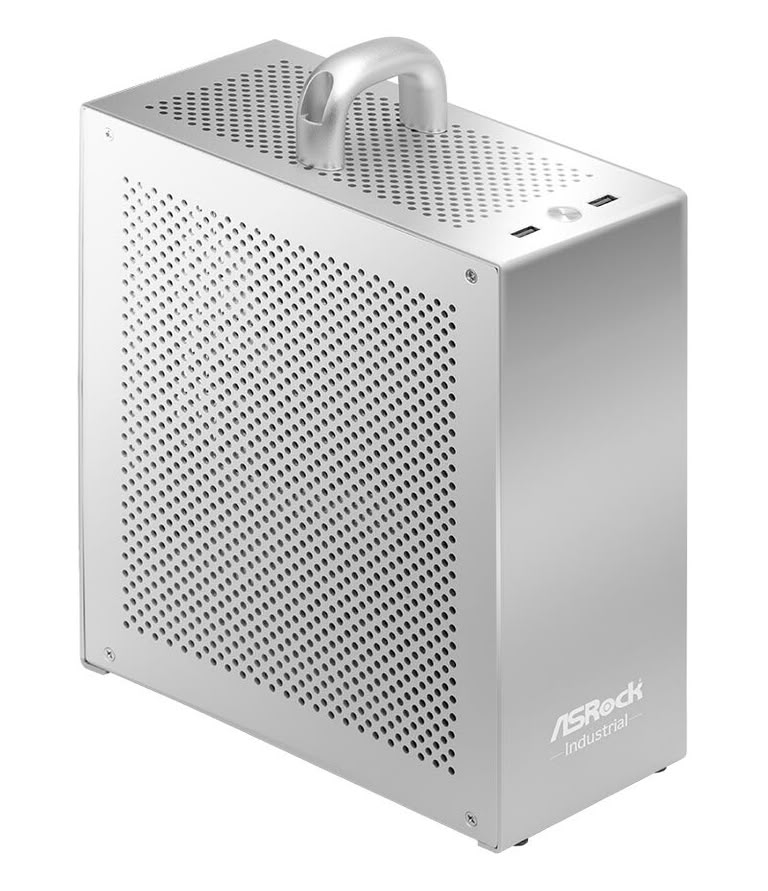 Pulse · techpowerup.com
CyberPowerPC, a leading manufacturer of high-performance custom PCs, gaming rigs, and workstations, today announced its compact AI Workstation ASRock AI BOX-A395, powered by the AMD Ryzen AI Max+ 395 processor.
Read moreBy Nupur Anand NEW YORK, Nov 23 (Reuters) - Several large and mid-sized US banks are tightening controls around their own artificial intelligence agents to prevent them from going rogue, after high-profile incidents at technology firms exposed potential weaknesses,
Read moreBeam is a sparse Mixture-of-Experts (MoE) model with 501.3B total parameters and 23.4B active parameters, specifically built and optimized for coding, reasoning, and agentic workloads. Beam delivers frontier level reasoning, while requiring 3-4x less inference compute than many models of its class. Pretrained on 23.8T diverse, curated, high-quality tokens, Beam features a 1M-token context window achieved through a novel two-stage midtraining phase, built on verifiable, correctness-anchored data. Post-training leveraged a large-scale, fully asynchronous reinforcement learning (RL) campaign across 10.5K GB300 GPUs, generating over 100M rollouts over 4 weeks of training. We believe this is one of the largest scale RL runs conducted by any open lab to date. Across our evaluation suite, capabilities continued to improve as we increased RL compute, with no sign of a plateau. Supported by deep hardware-model co-design, FP8/NVFP4 quantization, and a 1.93B-parameter speculative decoding drafter (DFlash 2), Beam maximizes serving throughput with efficient, flexible deployment. Averaged across conversation turns and harm categories, Beam refuses or pivots on 88.9% of harmful requests while…
We present Xing 4, a series of large language models that extends the TeleChat lineage through coordinated advances in model architecture and training infrastructure on Ascend. This report describes the design principles and systems engineering behind the series, spanning architecture selection, large-scale pretraining, and reasoning and agentic post-training. We study how sparse activation, attention design, model depth and width, and speculative decoding balance model capacity with computation, memory access, and execution overhead. Our pretraining infrastructure builds on MindSpore HyperParallel, combining topology-aware hybrid sharding, efficient distributed optimizer execution, and coordinated management of long-sequence workloads and activation memory. CPU affinity and core isolation further reduce host scheduling interference. Together, these mechanisms support the pretraining of a 285B-parameter model on 8,192 Ascend 910C cards, providing a concrete setting for the architectural and systems studies. For post-training, we introduce TeleGym, a unified agent execution platform that connects execution, evaluation, and trajectory construction to policy optimization.…
Video understanding, particularly with accompanying audio, remains a central challenge in multimodal intelligence. In this report, we introduce \textbf{WeMM-Video}, a family of Chinese-English bilingual omni-modal foundation models spanning 2B, 4B, 9B, and 35B-A3B variants. Centering on joint audio-visual perception and reasoning, WeMM-Video unifies text, image, audio, and video processing within a hybrid-thinking paradigm, seamlessly supporting both a non-thinking instruct mode for fast, direct responses and a thinking mode for explicit step-by-step reasoning. The models are trained on a large-scale multimodal corpus of approximately 1.2 trillion tokens through progressive pre-training and a multi-stage post-training pipeline incorporating multi-teacher OPD, anti-repetition MrDPO, and specialist RL. Evaluated across more than 120 benchmarks, WeMM-Video demonstrates superior performance in omni-modal video understanding and reasoning, while maintaining highly competitive capabilities across general audio, silent video, image, and text tasks. Specifically, in omni-modal video evaluations, our flagship WeMM-Video-35B-A3B establishes a new open-source state of the art, substantially…
Hy-MT3 is the third generation of the Hunyuan multilingual translation model family, including \textbf{Hy-MT3-1.8B}, \textbf{Hy-MT3-7B} and \textbf{Hy-MT3-30B-A3B (MoE)}. Compared with Hy-MT2, Hy-MT3 translates \textbf{more accurately, more completely and more faithfully to user constraints}: on real-world scenario data, the share of samples with mistranslations is reduced by \textbf{43\%}, omissions or additions by \textbf{74\%}, and instruction-following errors by \textbf{40\%}, while language coverage is expanded from \textbf{38 to 102} languages. With only 3B activated parameters, \textbf{Hy-MT3-30B-A3B achieves the best overall performance among all evaluated models in non-thinking mode}, including flagship models such as Qwen3.8-Max, Kimi-K3.1-Pro and DeepSeek-V4.1-Flash, and approaches the strongest closed-source thinking models such as GPT-6.1-Sol and Gemini-4-Argon, while surpassing models that consume \textbf{more than 30$\times$} its inference compute. Beyond general translation, Hy-MT3 is optimized for two industrial scenarios. For \textbf{game localization}, built with high-quality game-domain data and a professional evaluation system from the Honor of Kings team,…
We introduce Clover-35B-A3B-Preview (Clover), a mixture-of-experts diffusion language model with 35 billion total parameters and 3 billion activated parameters, supporting thinking-mode generation. Clover adapts Gated Delta Networks to block diffusion by combining recurrent memory of previously generated context with bidirectional softmax attention inside the current block. Historical memory readout competes with current-block tokens in a shared softmax, with learnable block-size calibration and a separate, zero-initialized right-context convolution branch. Clover leads the seven evaluated agent metrics, including 73.6 on SWE-bench Verified and 51.7 on Terminal-Bench 2.1. On internal agent workloads, it reaches a reported generation speed of 680 tokens/s using one NVIDIA GB300 GPU at BF16 precision and batch size one. We organize the evaluation around model quality, drafting and verification costs, and deployment under constrained memory. We also describe a decision-model variant that generates answers to related questions in one denoising pass. On an internal set of 500 groups, joint prediction raises question accuracy from 90.37% to 93.88% and all-correct group accuracy from…
Deep neural networks achieve universal function approximation by stacking interconnected nonlinearities, but as a consequence they are sensitive to noise and resist mechanistic interpretation. In contrast, the local update rules of cellular automata, such as Conway's Game of…
Skeleton-based rehabilitation assessment faces fundamental limitations of fixed topologies which cannot model compensatory patterns, uniform joint treatments overlook clinically important deviations, and lack of geometric understand- ing. We propose Concave-Convex Decomposition…
Large Language Models (LLMs) are increasingly deployed as shared multi-tenant services, relying on advanced optimizations like KV cache and prefix sharing to improve throughput and reduce latency. However, these optimizations introduce a critical vulnerability: attackers can…
Diffusion and flow models enable powerful generative modeling, but controlled editing remains challenging due to the need to balance source fidelity and edit compliance along the generative trajectory. We propose a principled, inversion-free framework for flow-based image…