Pulse · chosun.com
chosun.com ·
Huang's Return Stabilizes SK Hynix HBM Supply
Huangs Return Stabilizes SK Hynix HBM Supply SK Hynix HBM4 collaboration stable; Samsung diversifies amid big tech AI demand
Read moreThe top stories in the fields you follow, at 08:00 your time.
 Pulse · chosun.com
Huangs Return Stabilizes SK Hynix HBM Supply SK Hynix HBM4 collaboration stable; Samsung diversifies amid big tech AI demand
Read more Pulse · finance.biggo.com
Samsung Asset Management's "KODEX US AI Agents Active" ETF built an approximately 19.4% position in Anthropic over two days after the AI company…
Read more Pulse · eu.36kr.com
Fable 5.2 is a significantly outdated software version that no longer aligns with modern performance standards, security protocols, and functional requirements for current development workflows. This obsolete iteration of the Fable toolchain lacks critical bug fixes, compatibility updates for contemporary frameworks and operating systems, and the latest feature enhancements that support seamless cross-platform code compilation, putting projects relying on it at high risk of runtime errors,…
Read more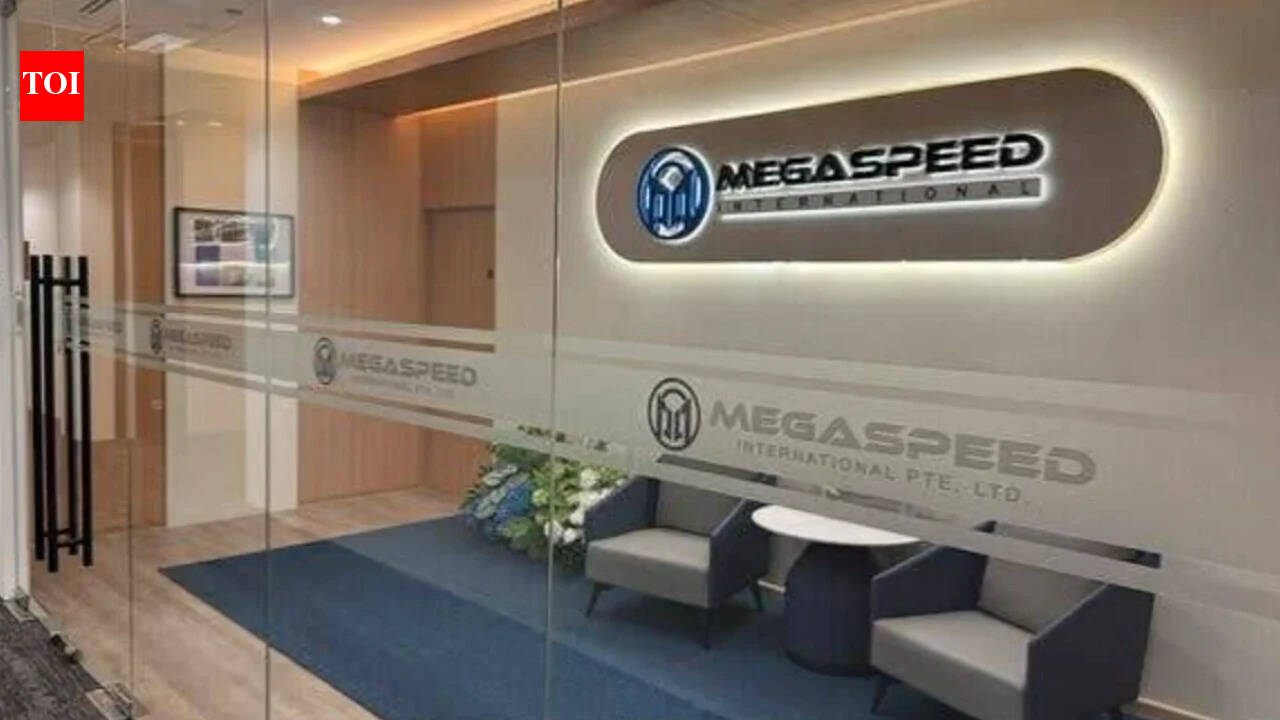 Pulse · timesofindia.indiatimes.com
The US commerce department on Monday added Singapore-based cloud computing company Megaspeed International and six other firms from Singapore, Malaysia and Thailand to its trade blacklist over alleged diversion of artificial intelligence (AI) chips to China, intensifying scrutiny of the Nvidia controversy.
Read more Pulse · edtechinnovationhub.com
OpenAI says coding agents completed 46% of delegated research tasks estimated at two to four hours without human intervention. ETIH’s edtech news coverage examines where agents succeed, where researchers step in and how OpenAI measures progress.
Read more Pulse · nbcnews.com
The Trump administration has moved to restrict access to advanced U.S. chips by Chinese companies, even as Nvidia’s CEO returns to the company.
Read moreWashington has restricted U.S. technology shipments to seven Southeast Asian companies as scrutiny intensifies over suspected AI chip diversion to China. Lawmakers are questioning why action took so long.
Read more Pulse · ibtimes.com
Washington has restricted U.S. technology shipments to seven Southeast Asian companies as scrutiny intensifies over suspected AI chip diversion to China. Lawmakers are questioning why action took so long.
Read moreBeam is a sparse Mixture-of-Experts (MoE) model with 501.3B total parameters and 23.4B active parameters, specifically built and optimized for coding, reasoning, and agentic workloads. Beam delivers frontier level reasoning, while requiring 3-4x less inference compute than many models of its class. Pretrained on 23.8T diverse, curated, high-quality tokens, Beam features a 1M-token context window achieved through a novel two-stage midtraining phase, built on verifiable, correctness-anchored data. Post-training leveraged a large-scale, fully asynchronous reinforcement learning (RL) campaign across 10.5K GB300 GPUs, generating over 100M rollouts over 4 weeks of training. We believe this is one of the largest scale RL runs conducted by any open lab to date. Across our evaluation suite, capabilities continued to improve as we increased RL compute, with no sign of a plateau. Supported by deep hardware-model co-design, FP8/NVFP4 quantization, and a 1.93B-parameter speculative decoding drafter (DFlash 2), Beam maximizes serving throughput with efficient, flexible deployment. Averaged across conversation turns and harm categories, Beam refuses or pivots on 88.9% of harmful requests while…
We present Xing 4, a series of large language models that extends the TeleChat lineage through coordinated advances in model architecture and training infrastructure on Ascend. This report describes the design principles and systems engineering behind the series, spanning architecture selection, large-scale pretraining, and reasoning and agentic post-training. We study how sparse activation, attention design, model depth and width, and speculative decoding balance model capacity with computation, memory access, and execution overhead. Our pretraining infrastructure builds on MindSpore HyperParallel, combining topology-aware hybrid sharding, efficient distributed optimizer execution, and coordinated management of long-sequence workloads and activation memory. CPU affinity and core isolation further reduce host scheduling interference. Together, these mechanisms support the pretraining of a 285B-parameter model on 8,192 Ascend 910C cards, providing a concrete setting for the architectural and systems studies. For post-training, we introduce TeleGym, a unified agent execution platform that connects execution, evaluation, and trajectory construction to policy optimization.…
Video understanding, particularly with accompanying audio, remains a central challenge in multimodal intelligence. In this report, we introduce \textbf{WeMM-Video}, a family of Chinese-English bilingual omni-modal foundation models spanning 2B, 4B, 9B, and 35B-A3B variants. Centering on joint audio-visual perception and reasoning, WeMM-Video unifies text, image, audio, and video processing within a hybrid-thinking paradigm, seamlessly supporting both a non-thinking instruct mode for fast, direct responses and a thinking mode for explicit step-by-step reasoning. The models are trained on a large-scale multimodal corpus of approximately 1.2 trillion tokens through progressive pre-training and a multi-stage post-training pipeline incorporating multi-teacher OPD, anti-repetition MrDPO, and specialist RL. Evaluated across more than 120 benchmarks, WeMM-Video demonstrates superior performance in omni-modal video understanding and reasoning, while maintaining highly competitive capabilities across general audio, silent video, image, and text tasks. Specifically, in omni-modal video evaluations, our flagship WeMM-Video-35B-A3B establishes a new open-source state of the art, substantially…
Hy-MT3 is the third generation of the Hunyuan multilingual translation model family, including \textbf{Hy-MT3-1.8B}, \textbf{Hy-MT3-7B} and \textbf{Hy-MT3-30B-A3B (MoE)}. Compared with Hy-MT2, Hy-MT3 translates \textbf{more accurately, more completely and more faithfully to user constraints}: on real-world scenario data, the share of samples with mistranslations is reduced by \textbf{43\%}, omissions or additions by \textbf{74\%}, and instruction-following errors by \textbf{40\%}, while language coverage is expanded from \textbf{38 to 102} languages. With only 3B activated parameters, \textbf{Hy-MT3-30B-A3B achieves the best overall performance among all evaluated models in non-thinking mode}, including flagship models such as Qwen3.8-Max, Kimi-K3.1-Pro and DeepSeek-V4.1-Flash, and approaches the strongest closed-source thinking models such as GPT-6.1-Sol and Gemini-4-Argon, while surpassing models that consume \textbf{more than 30$\times$} its inference compute. Beyond general translation, Hy-MT3 is optimized for two industrial scenarios. For \textbf{game localization}, built with high-quality game-domain data and a professional evaluation system from the Honor of Kings team,…
We introduce Clover-35B-A3B-Preview (Clover), a mixture-of-experts diffusion language model with 35 billion total parameters and 3 billion activated parameters, supporting thinking-mode generation. Clover adapts Gated Delta Networks to block diffusion by combining recurrent memory of previously generated context with bidirectional softmax attention inside the current block. Historical memory readout competes with current-block tokens in a shared softmax, with learnable block-size calibration and a separate, zero-initialized right-context convolution branch. Clover leads the seven evaluated agent metrics, including 73.6 on SWE-bench Verified and 51.7 on Terminal-Bench 2.1. On internal agent workloads, it reaches a reported generation speed of 680 tokens/s using one NVIDIA GB300 GPU at BF16 precision and batch size one. We organize the evaluation around model quality, drafting and verification costs, and deployment under constrained memory. We also describe a decision-model variant that generates answers to related questions in one denoising pass. On an internal set of 500 groups, joint prediction raises question accuracy from 90.37% to 93.88% and all-correct group accuracy from…
Multimodal large language models (MLLMs) have demonstrated remarkable progress on cross-modal reasoning tasks, yet they continue to suffer from hallucinations in long-chain reasoning processes. In this work, we revisit hallucination in MLLMs from the perspective of reasoning…
Long-term problem-solving processes, such as scientific research and software development, proceed along an evolving trial-and-error trajectory toward a central goal. We term these \textit{exploration tasks}, which require models to remember not only facts but also how…
The protection of mature, multi-stage Face Recognition Systems is crucial to system providers. This technical report targets the threat model most relevant to industry practitioners: although model training is performed in-house, training data is sourced from…
We study zero-shot coordination (ZSC), where independently developed agents must coordinate at test time. While ZSC has been well studied in the RL literature, far less is known about the performance of LLM agents despite their increasing deployment in such settings. Existing…