Pulse · macaubusiness.com
macaubusiness.com ·
Anyone Can Be AI-Native: Hackmamba Enters Sixth Year Betting on Developers Marketing to Developers
Plentisoft Press Releases | AI-native is how the agency operates, not who it is. De
Read moreThe top stories in the fields you follow, at 08:00 your time.
 Pulse · macaubusiness.com
Plentisoft Press Releases | AI-native is how the agency operates, not who it is. De
Read moreChina's Z.AI has fallen behind schedule on its next flagship AI model, while rival Moonshot AI expects the interval between major releases could double from six months to a year or longer if it loses access to overseas computing power,
Read more Pulse · tradingview.com
China's Z.AI has fallen behind schedule on its next flagship AI model, while rival Moonshot AI expects the interval between major releases could double from six months to a year or longer if it loses access to overseas computing power, according to a Reuters report on Thursday.Efforts by U.S. AI f…
Read more Pulse · the-decoder.com
Microsoft has published the technical architecture of ARTEX, an AI framework in wide use since July 2026 that runs cyberattacks with specialized agents and almost no human involvement. State-backed groups from China and North Korea, along with criminal organizations, are already using the system. Microsoft recommends deception techniques like honeypots and faked success signals as defenses, but how long those will hold up against agents that learn and adapt remains an open question.
Read moreThe reported halt in shipments comes just days after Jensen Huang was reinstated as Nvidia's CEO following a scandal over his alleged extramarital affair with a suspected Chinese spy.
Read more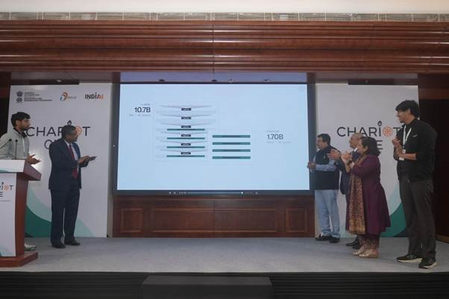 Pulse · avenuemail.in
India launches indigenous Chariot-1 AI models | Business News | The Avenue Mail
Read more Pulse · finance.yahoo.com
A new U.S. Commerce Department rule on AI chip exports has pulled Galaxy Digital (GLXY) into focus, as the policy highlights six domestic data center developers that could see increased incentives for hosting advanced computing capacity in the country.
Read moreBeam is a sparse Mixture-of-Experts (MoE) model with 501.3B total parameters and 23.4B active parameters, specifically built and optimized for coding, reasoning, and agentic workloads. Beam delivers frontier level reasoning, while requiring 3-4x less inference compute than many models of its class. Pretrained on 23.8T diverse, curated, high-quality tokens, Beam features a 1M-token context window achieved through a novel two-stage midtraining phase, built on verifiable, correctness-anchored data. Post-training leveraged a large-scale, fully asynchronous reinforcement learning (RL) campaign across 10.5K GB300 GPUs, generating over 100M rollouts over 4 weeks of training. We believe this is one of the largest scale RL runs conducted by any open lab to date. Across our evaluation suite, capabilities continued to improve as we increased RL compute, with no sign of a plateau. Supported by deep hardware-model co-design, FP8/NVFP4 quantization, and a 1.93B-parameter speculative decoding drafter (DFlash 2), Beam maximizes serving throughput with efficient, flexible deployment. Averaged across conversation turns and harm categories, Beam refuses or pivots on 88.9% of harmful requests while…
We present AliceAI-Foundation-80B-A3B-Base, a mixture-of-experts language model with 80 billion total parameters and approximately 3 billion active parameters per token, trained from scratch at Yandex and released under the Apache 2.0 license. The model combines Kimi Delta Attention with full attention, uses Attention Residuals, and is trained with Muon. Training comprises general pretraining on 17.5 trillion tokens, two context-extension stages, and a dedicated stage for reasoning and agentic interaction. We describe the data collection and augmentation pipelines, evaluation protocols, architectural ablations, and scaling-law experiments. We identify the limitations of held-out training loss as a proxy for downstream performance and introduce an auxiliary loss on mixture-of-experts outputs to stabilize training at the predicted learning rate. Domain-specific data selection and augmentation improve factual knowledge, mathematics, and programming skills, while agent trajectories introduced during pretraining improve performance on agentic benchmarks after supervised fine-tuning. In zero-shot reasoning evaluation, the model achieves leading results among open base models of…
Video understanding, particularly with accompanying audio, remains a central challenge in multimodal intelligence. In this report, we introduce \textbf{WeMM-Video}, a family of Chinese-English bilingual omni-modal foundation models spanning 2B, 4B, 9B, and 35B-A3B variants. Centering on joint audio-visual perception and reasoning, WeMM-Video unifies text, image, audio, and video processing within a hybrid-thinking paradigm, seamlessly supporting both a non-thinking instruct mode for fast, direct responses and a thinking mode for explicit step-by-step reasoning. The models are trained on a large-scale multimodal corpus of approximately 1.2 trillion tokens through progressive pre-training and a multi-stage post-training pipeline incorporating multi-teacher OPD, anti-repetition MrDPO, and specialist RL. Evaluated across more than 120 benchmarks, WeMM-Video demonstrates superior performance in omni-modal video understanding and reasoning, while maintaining highly competitive capabilities across general audio, silent video, image, and text tasks. Specifically, in omni-modal video evaluations, our flagship WeMM-Video-35B-A3B establishes a new open-source state of the art, substantially…
AI-assisted coding ranges from fully agentic coding to inline code suggestions in the editor. Inline suggestions require predicting a developer's most likely next edit from an editing session. The next edit may lie at the cursor, in nearby lines, or farther away, and one editing intent can span several of these. The preceding system queries separate completion, nearby edit, and long-distance edit models, each with its own output format, in a fixed sequence; it thus cannot express intents spanning distant locations in one response, can require several sequential model calls per suggestion, and prioritizes completion even when a correction would serve better. We present a unified model that predicts all three edit types in one output space: a sequence of anchored diff patches specifying locations, deleted lines, and added lines. This representation permits multiple edits per response, so the client can serve later edits from a cache without further model calls. We train this model in two phases, first unifying next edit and long-distance edit prediction, then adding code completion. We synthesize multi-edit supervision from single-edit data via model pseudolabeling and edit history…
Hy-MT3 is the third generation of the Hunyuan multilingual translation model family, including \textbf{Hy-MT3-1.8B}, \textbf{Hy-MT3-7B} and \textbf{Hy-MT3-30B-A3B (MoE)}. Compared with Hy-MT2, Hy-MT3 translates \textbf{more accurately, more completely and more faithfully to user constraints}: on real-world scenario data, the share of samples with mistranslations is reduced by \textbf{43\%}, omissions or additions by \textbf{74\%}, and instruction-following errors by \textbf{40\%}, while language coverage is expanded from \textbf{38 to 102} languages. With only 3B activated parameters, \textbf{Hy-MT3-30B-A3B achieves the best overall performance among all evaluated models in non-thinking mode}, including flagship models such as Qwen3.8-Max, Kimi-K3.1-Pro and DeepSeek-V4.1-Flash, and approaches the strongest closed-source thinking models such as GPT-6.1-Sol and Gemini-4-Argon, while surpassing models that consume \textbf{more than 30$\times$} its inference compute. Beyond general translation, Hy-MT3 is optimized for two industrial scenarios. For \textbf{game localization}, built with high-quality game-domain data and a professional evaluation system from the Honor of Kings team,…
Text-to-CAD generation aims to make CAD modeling more accessible by generating executable CAD programs from natural-language descriptions. However, practical CAD workflows require more than executable geometry: generated programs should also expose reusable structure that…
Machine unlearning seeks to remove the influence of deleted training data without full retraining. In the sequential setting, deletion requests arrive over time, and repeated updates can accumulate approximation errors. In this paper, we study error accumulation in high…
We study the gradient query complexity of sampling from a density $π(x)\propto\mathrm{e}^{-V(x)}$ on $\mathbb{R}^d$, where $V$ has a $β$-Lipschitz gradient but need not be convex. Our approach uses the proximal sampler, which alternates Gaussian perturbation with sampling a…
Generative models increasingly simulate users at different skill levels in education and AI evaluation. Yet it remains unclear whether lower-skill behavior reflects less internal knowledge or a different use of retained knowledge. This distinction is difficult to study in…