Pulse · geekwire.com
Latest in AI and developer tools
The top stories in the fields you follow, at 08:00 your time.
A University of Washington project that uses AI agents to fit AI models onto small, low-power chips won the Madrona Prize at the Allen School's annual Research Showcase. Other honorees included AI agents that write custom software for AI chips,
Read more Pulse · americanbazaaronline.com
Two 18-year-old Indian entrepreneurs skip college, build an AI startup and secure $1.3 million from Y Combinator.
Read moreNot only is AI driving up demand for semiconductors, it is also becoming integrated into their manufacture, corporate leaders say Artificial intelligence is no longer merely the driving force behind global semiconductor demand,
Read more Pulse · finance.yahoo.com
Intel beat third-quarter earnings expectations, but warned of a prolonged PC slump, sending shares to their worst daily decline in 50 years.
Read more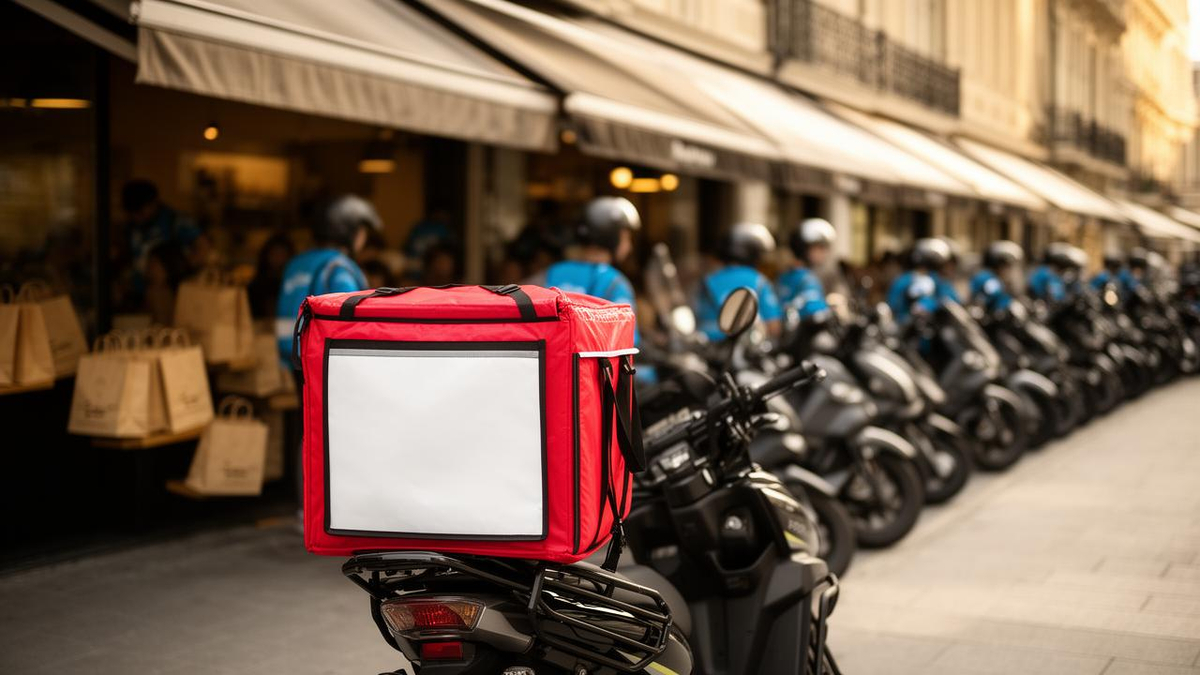 Pulse · finance.biggo.com
DoorDash said third-party AI agents have produced only "several hundred" orders since becoming available, a tiny fraction of the roughly 1 billion…
Read moreAgentic transformation in the business has implications far beyond simply employing agents as personal assistants.
Read moreData attribution methods for Language Models (LMs) are typically evaluated using downstream tasks like fact retrieval. However, existing evaluations vary multiple dataset properties simultaneously, making it impossible to isolate exactly why an attribution algorithm fails. To diagnose these failures, we explore the design space of LLM data attribution, with a primary focus on evaluation. We introduce the Controlled Attribution Benchmark (CATT) for fact tracing, in which we fine-tune LLMs on entirely fictitious knowledge, providing unambiguous ground truth for attribution. This synthetic setup allows us to systematically alter one dataset configuration at a time, such as document redundancy and lexical distractors. With this configurable evaluation, we demonstrate that redundancy and distractors consistently degrade attribution performance. Rather than proposing a new estimator, we examine two design choices that are underexplored: the loss used to compute gradients and how per-token attribution scores are aggregated into a document score. We find that the true causal evidence within a training document is highly localized, but standard methods dilute this evidence into noise by…
In film editing, every frame matters. While macro, content-level edits shape the high-level narrative of a film, small local edits often control timing and direct visual attention. For example, editors can adjust the precise timing of clips to control the length of a meaningful silence, or cut to shots that highlight a specific character's reactions to important moments. These small, detailed edits are slow and tedious to make in standard editing tools because users have to map high-level narrative goals to low-level frame-by-frame adjustments. At the same time, these fine-scale adjustments, which we call micro-edits, can be nuanced and expressive, with different choices serving different creative goals. In this work, we start by conducting a formative study with professional editors to understand the structure of micro-edits and how they are used. We then derive a mathematical formalization for this structure to develop tools that leverage AI and optimization to make exploring micro-edits simpler and more efficient for users. Finally, we validate our tools in multiple user studies and a wide range of video examples.
An estimator can be accurate and stable on typical data, yet sensitive to a few possible records. Differentially private mechanisms commonly scale their noise to the worst-case influence of a single record, which lets these records dictate the noise even when the remaining data would allow far less. Removing them first would restore the smaller scale, but the removal must itself be private. We introduce \emph{propose-filter-release} (PFR), which, by privately filtering its input, turns a mechanism that protects the addition or removal of a typical record, one that fits the remaining data, into one that is differentially private in the standard sense, on every input. Using our novel filtering step, PFR requires only a concave friendliness score, which measures how well a record fits a dataset, and a release mechanism that is friendly-DP, that is, private when the changed record fits the remaining data. For every such score and release mechanism, it guarantees differential privacy under public conditions on the number of records, so it is a general privacy primitive, comparable to propose-test-release, and FriendlyCore can be viewed as one of its implementations. We illustrate the…
The Neural Thickets hypothesis posits that pretrained language models lie in dense neighborhoods of task-specific experts in weight space, which random Gaussian perturbations can uncover. We reproduce the reported gains, but show that they do not require this geometric explanation. Perturbing a single decoder block already recovers much of the improvement, while keeping the model entirely frozen and adding a random bias to its output logits matches or exceeds full-weight perturbations on most reasoning tasks. This suggests an alternative explanation based on output diversity, validation-based selection, and voting. We formalize this view as Perturb-Select-Vote (PSV), a general procedure that generates perturbed predictors, selects high-performing members on a small validation set, and aggregates their predictions. This interpretation connects Neural Thickets to established inference-time methods, including sampling, self-consistency, and verifier-guided selection. A first-order analysis further shows that small weight perturbations act primarily through their induced logit shifts. We extend this analysis to vision, where logit PSV substantially improves performance under domain…
Pixel-space generative Transformers typically use one token per image patch, so capturing finer detail requires more tokens and makes global attention increasingly expensive. We observe that finer detail does not necessarily require more global communication: low-frequency structure benefits from global exchange, while high-frequency detail can be modeled locally. Based on this insight, we introduce SpecSlot, a pixel-space rectified-flow Transformer that decouples output detail from the length of the global attention sequence. SpecSlot expands each spatial anchor into multiple slots, each assigned a disjoint band of DCT coefficients; this separates anchor density from spectral subdivision. Only the lowest-frequency slot from each anchor participates in global attention, while all slots interact locally. This allows the model to increase spectral detail without enlarging the global sequence. A spatial head further adds a local correction to the spectral prediction, while the generative state, target, and loss remain in pixel space. On ImageNet-256, SpecSlot achieves a comparable final FID to a FLOPs-matched JiT control while converging faster. On ImageNet-512, it improves FID by…
Despite significant progress, current models struggle to generate comprehensive video captions, constrained primarily by coarse-grained supervision, which often fails to capture spatial-temporal dynamics and the underlying logical intent. To address this issue, we introduce…
In this paper, we introduce a model-based boosting approach for fitting structured additive distributional copula regression models for bivariate responses, with particular emphasis on jointly modeling insurance claim frequency and severity. The approach uses regression-type…
Concept Bottleneck Models (CBMs), which route predictions through a layer of human-interpretable concepts, have substantially improved the interpretability of visual classification by exposing an explicit, language-based rationale for each prediction. Most existing work focuses…
Leading GUI grounders score 93 to 96% on ScreenSpot-v2, and reported gaps between new and prior models are about a point. At this level the useful question is what the remaining errors are. Benchmarks count a click as correct only inside one annotated box, but interfaces often…