Google opens Genie 4 to Gemini API developers with paid live world generation
Google has opened Genie 4 to developers through the Gemini API, adding a paid route for building interactive, AI-generated worlds into applications. The…
Read moreThe top stories in the fields you follow, at 08:00 your time.
Google has opened Genie 4 to developers through the Gemini API, adding a paid route for building interactive, AI-generated worlds into applications. The…
Read moreIBM watsonx.governance identifies potential AI agent security risks and proposes, empowering teams to proactively mitigate them.
Read moreNvidia and AMD's AI chip export licenses to China were revealed amid high demand. Nvidia's market cap below $4 trillion by 2026 at 68.7% YES.
Read moreUntil now, the general perception of AI was that of a 'chat partner that returns text or ideas when asked a question.' While that alone is convenient, the 'final manual tasks'—such as checking files or adding appointments to a calendar—still had to be done by a human.
Read moreCompanies can give AI agents a budget and rules to follow in selecting software to purchase.
Read moreWASHINGTON, D.C. - This afternoon, Chairman Brian Mast exercised his authorities under the Export Control Reform Act to publicly reveal export control license application information regarding NVIDIA and AMD's AI chip licenses for the People's Republic of China.
Read moreGive your agents access to hundreds of tools while using fewer tokens with Tool Retrieval, now in preview in the Gemini API.
Read moreEverful announced a $48.5 million Series A on November 19, 2026, co-led by Vertex Ventures Southeast Asia & India and January Capital, with participation from existing investors Square Peg and Lightspeed.
Read moreThe clues are hidden in the random numbers that form an AI model's starting point—and hint at a new way to trace its origins
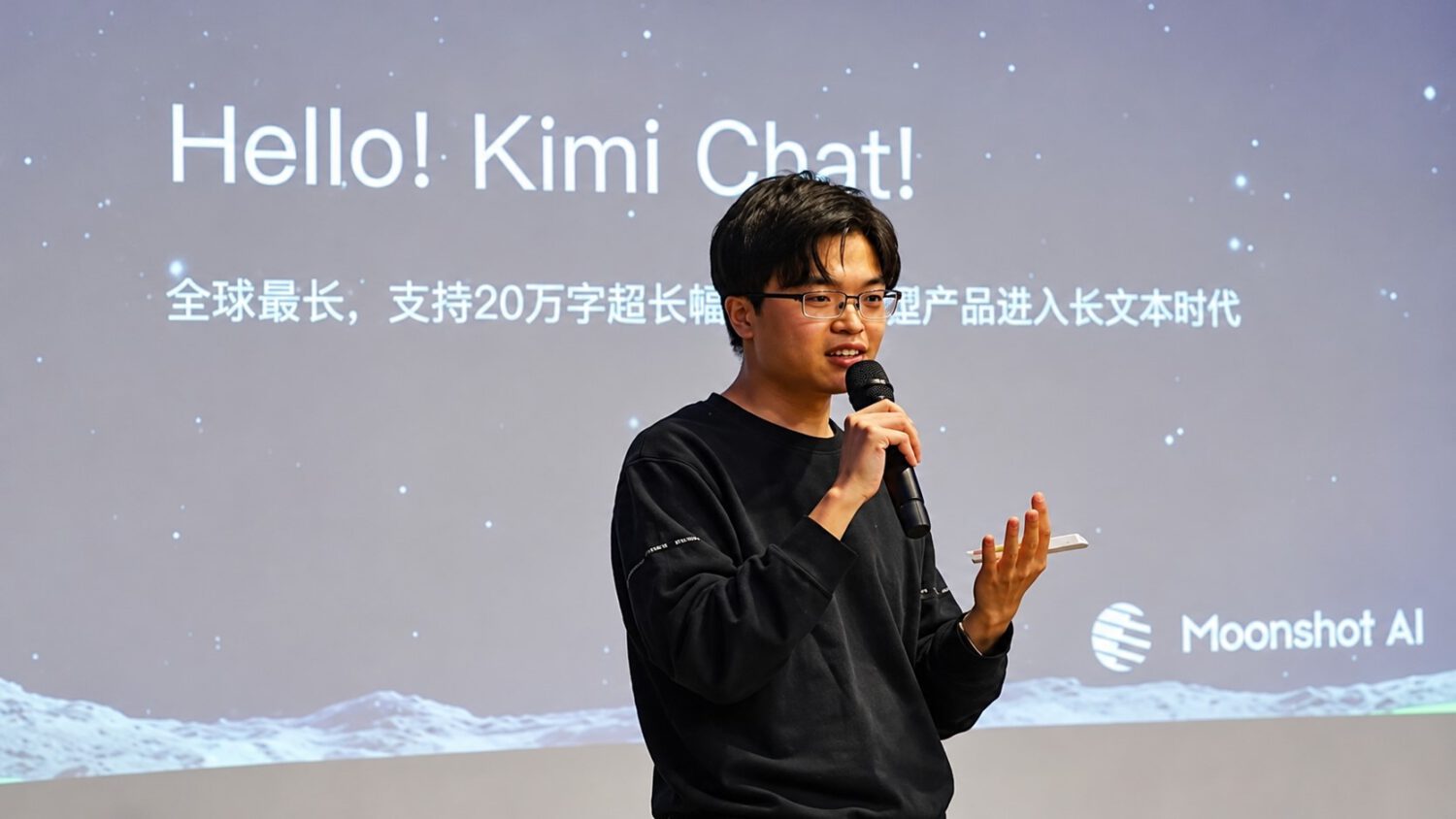
Read moreMoonshot AI scrapped a $150M GPU rental deal after a new U.S. rule extended export licensing to remote chip access in Southeast Asia.
Read moreGenerating physically based rendering (PBR) texture maps for a 3D mesh from a single reference image is highly ambiguous, as the observed appearance entangles material identity, surface reflectance, and illumination. While current generative methods produce realistic albedo maps, they still struggle to infer accurate metallic and roughness attributes for relighting. We present UltraTex, a cascaded multi-view framework that moves beyond appearance matching by integrating physical knowledge into multi-view diffusion-based PBR generation. UltraTex first jointly predicts albedo and world-space shading normals to generate more detailed albedo maps, and then predicts metallic-roughness (MR) maps conditioned on the generated albedo, reference image, and material semantic priors. To inject material semantics, a lightweight adapter transforms hidden-layer features of a vision-language model (VLM) into intrinsic material representation tokens, providing part-level knowledge anchors for MR estimation. To model material-light interaction, photometric representation alignment guides intermediate diffusion features toward ground-truth material renderings under controlled lighting. This makes…
We introduce $Z$-sight, a unified robot foundation model that couples vision-language-action (VLA) and generative latent world modeling. Video-based world action models (WAMs) show the value of joint future-and-action generation for control, yet inherit the heavy cost of video generators. Recent latent-space policies avoid pixel generation, yet typically align intermediate features or rely on frozen target encoders, decoupling future prediction from the VLM's native feature space. $Z$-sight instead predicts the future directly in the visual token space in which its VLM perceives the present. Coupling a foresight expert and a continuous action expert with the VLM in a mixture-of-transformers, $Z$-sight jointly denoises future spatial tokens and actions at inference without pixel reconstruction or external encoders. Trained on human video and robot trajectories, $Z$-sight achieves 81.9% success on SIMPLE (+9.6 points over the strongest baseline) and 73.3% across six Unitree G1 tasks (+20.0 points) at 110 ms per chunk, while remaining competitive on tabletop benchmarks.
Jailbreak attempts and harmful prompts remain a challenge for the safe deployment of large language models. We study whether contrastively learned representations can support safety detection without training an additional downstream classifier. We propose Jailbreak Detection with Prototype Inference (JDPI), which uses binary safety labels to construct harmful and benign prototypes and makes predictions from relative prototype distances. JDPI uses only binary safety labels for encoder adaptation, prototype construction, and validation. In our setup, it uses fewer labeled examples than the classifier baseline (Method A) by avoiding the separate split used to train the downstream classifier. Across four benchmarks covering different input formats, contrastive fine-tuning improves JDPI's detection accuracy by 9.1-18.0 percentage points. Using the same encoder, JDPI achieves slightly higher ROC-AUC on one benchmark and stays within 0.017 of the baseline across all four. With dataset-specific adaptation, JDPI exceeds the released Llama Guard 3-8B baseline by 0.173-0.310 in ROC-AUC across the four benchmarks. In multi-turn replay on TomGibbs, JDPI uses accumulated user history as the…
When a capable model and a human reviewer cooperate on the same decision, which human still adds value? We argue this is a question about a single cognitive trait, metacognitive calibration: the alignment between a reviewer's behavioral confidence and the actual correctness of their judgments. We develop a trait theory of reviewer value to make it precise. The theory makes five claims: value is governed by calibration rather than by activity, speed, agreement, or tenure; calibration leaves observable traces in behavioral telemetry; those traces are non-diagnostic on their own, because the fast, low-revision signature of a calibrated expert is indistinguishable from that of a confident novice until it is gated by outcomes; human calibration and a model's self-knowledge are the same construct, so the joint system should defer to whichever agent is better calibrated on each item; and individual calibration is causally identifiable only above the level of the single judgment. We ground each claim in a six-month production window of an AI-assisted accounting system (541621 reviewer events, 483 reviewers), and find that a purely behavioral expertise profile inverts the ground truth,…
AI systems are built across many organizations that contribute models, data, compute, capital, talent, and other assets. While the layers of the AI stack are relatively well understood, the relationships between actors and components across layers remains sparsely documented. In this work, we focus on the organizations that make up the AI supply chain: the complex network of actors that contribute to the development and deployment of AI. We motivate the examination of the organizational AI supply chain---highlighting concerns about concentration, power, chokepoints, cascading failures, fragmented accountability, and risk---then describe our pipeline for mapping the AI supply chain. Our pipeline yields our main contribution: a multilayered, large-scale dataset of actors and relationships in the AI ecosystem, annotated with dates, descriptions, types, tags, and more. This work takes a step toward systematically mapping and measuring the AI supply chain and its properties, cataloging how models, data, chips, infrastructure, capital, and even talent flow between organizations. This data enable critical examinations of industry relationships and yield insights into the political…

AI Neuronal ablation study in LLMs mimicking aphasia patterns.
AI Improved decompiler evaluation benchmark with fidelity fixes.
AI Region-guided food-package evidence extraction with selective VLM review.
AI Multi-agent framework for conversational text-to-motion generation.