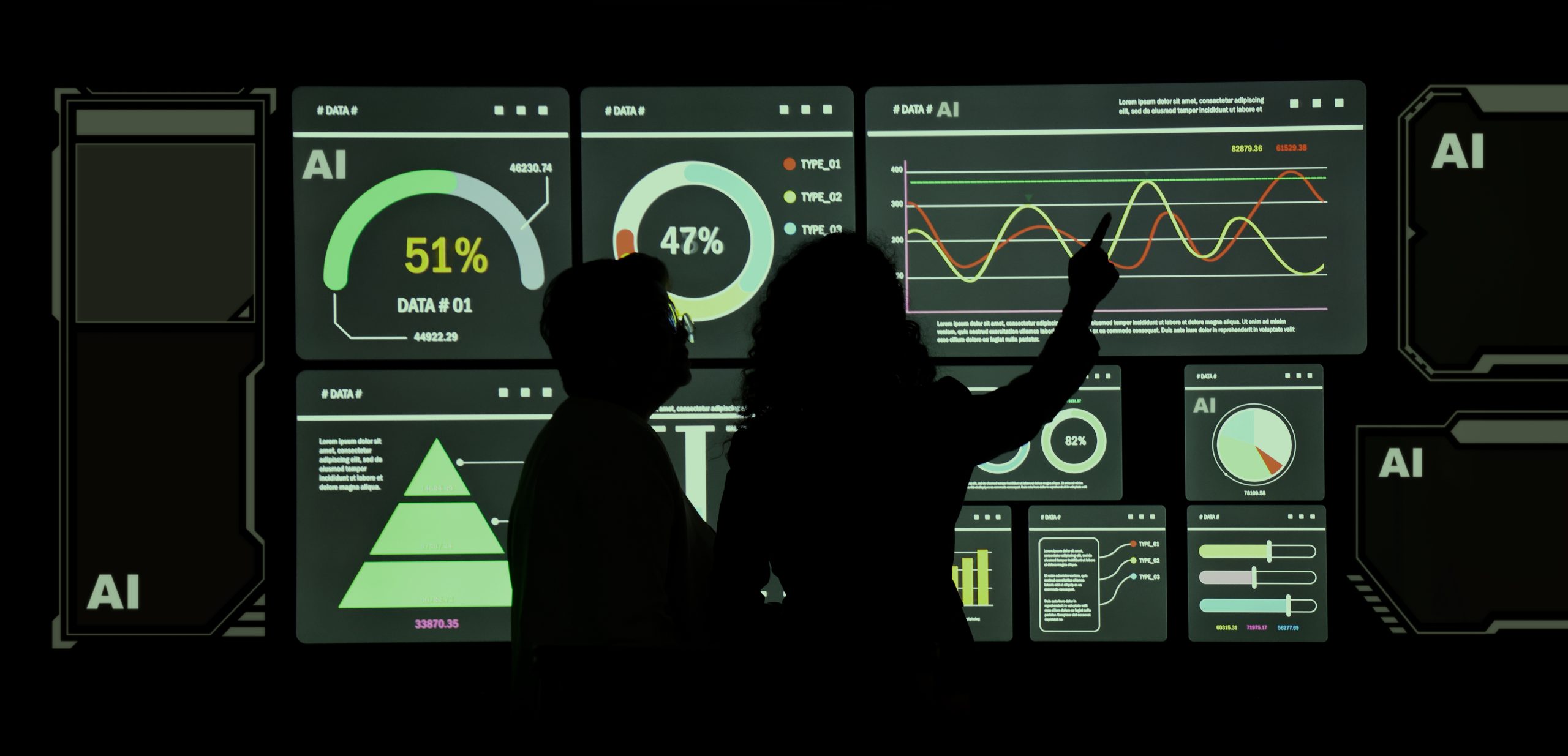
More than half of surveyed IT professionals said monitoring data cost more than the infrastructure being watched, while many struggled to measure AI performance
PerturbAI, an AI-native biotechnology company, today announced results from its year-long collaboration with OpenAI to advance biomedical research and drug discovery. Working with Scripps Research, the teams developed an AI reasoning framework that helps scientists interpret large experimental datasets,
This paper presents our system for Track 2 of the NLPCC 2026 Shared Task 10 on citation-level faithfulness in AI-assisted scientific reporting. Given an atomic scientific claim and the structured full text of its cited paper, the task requires both a four-way relation label and…
Recent advances in Audio LLMs have achieved human-level speech recognition, yet existing systems struggle to capture paralinguistic aspects such as speaker traits, expressive variations, and environmental acoustic conditions. To address this, we design a framework of 22…
We study a parameterized hybrid ranker that fuses a dense embedding list and a sparse lexical list. The method has a small, explicit parameter vector: a dense prior $α\in [0,1]$, a score-versus-rank mix $λ\in [0,1]$, an RRF smoothing parameter $κ> 0$, optional list-geometry…
The IEEE BigData Cup benchmark combines three prediction problems with different output structures: ordinal suicide-risk classification, multi-label psychosocial factor detection, and extraction of supporting phrases. We introduce heterogeneous readout decomposition (HRD),…