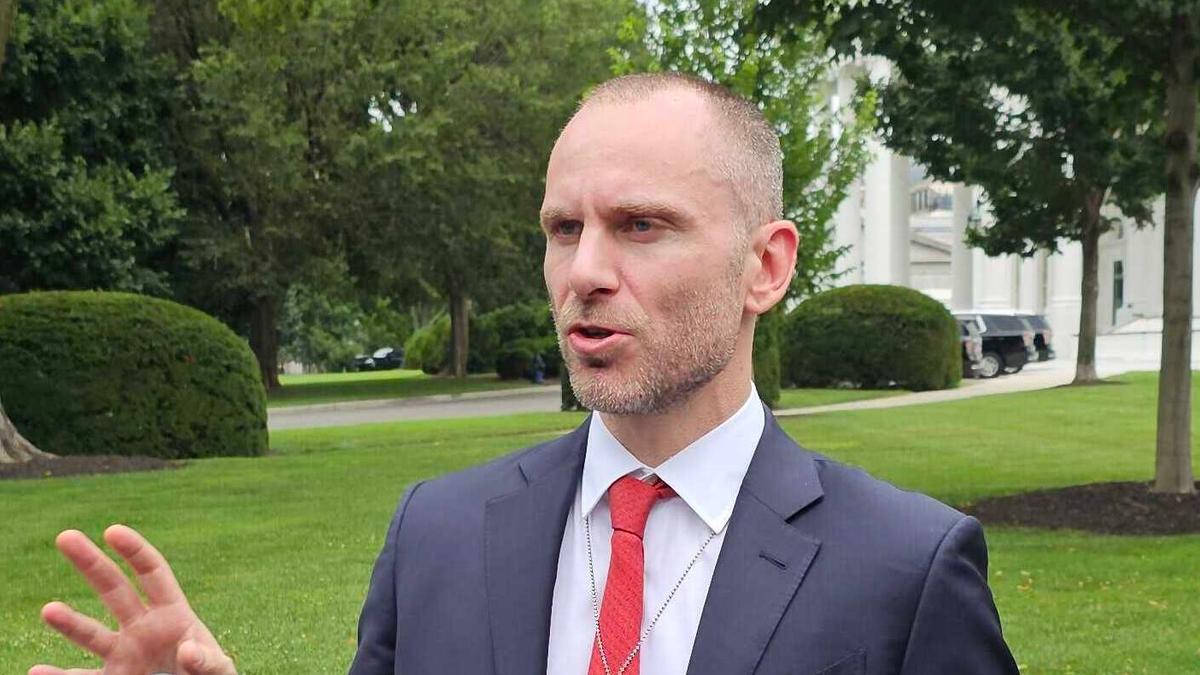
The Series A round, which included participation from North Island Ventures and existing investors, brings New York-based Mural's total funding to $28 million.
OpenAI is acquiring startup Orchestra Bio and plans to merge it with its life sciences AI platform Rosalind. The goal is to build AI agents that help pharma teams coordinate drug development, from tracking trials to spotting problems. Developing a new drug in the US takes ten to 15 years on average. OpenAI already works with Novo Nordisk and Moderna on AI-driven pharma research.
Enterprises are deploying AI agents on top of incomplete and siloed workforce data that sit scattered across HR and finance systems and a decade of point solutions, each with its own definitions and blind spots.
Some of the most interesting moments in music production come when an arrangement won’t work. The groove is there and the melody is promising, but something
Google is integrating AI-related changes into its software engineer hiring process, according to internal documents. These updates include evaluating candidates for AI fluency and allowing AI use in coding interviews. Interviewers can also use Gemini for feedback.
Training agents with reinforcement learning requires a gym, comprising a task, an executable environment in which the task can be attempted, and a verifier that reliably distinguishes success from failure. Constructing such gyms remains manual, expensive, and static. Task sets…
Vision-language models (VLMs) perform strongly on visual question answering benchmarks, yet often make decisions that contradict visual evidence they have already identified correctly. We distinguish perceptual failure, where relevant evidence is not recognized, from process…
Modern audio-language models are no longer judged only on what words they can transcribe, but on whether they can reason over what they hear: recovering meaning that lives in tone and prosody, telling dialects and regional languages apart, and resolving ambiguity that the…
We introduce TWIG (Time-Causal Wavelet Operator for Irregular Graphs), a graph-native neural operator for autoregressive surrogate modeling on static irregular graphs. TWIG transforms each node history into causal multiscale temporal features that separate recent variation from…