GitHub Launches Copilot Fusion for Smarter AI Programming
Discover how GitHub’s new Copilot Fusion revolutionizes AI programming with smarter code suggestions and reduced costs for developers worldwide.
Read moreThe top stories in the fields you follow, at 08:00 your time.
Discover how GitHub’s new Copilot Fusion revolutionizes AI programming with smarter code suggestions and reduced costs for developers worldwide.
Read moreHowler, a new open-source Mac app, lets users ask AI questions then burn the chat history with a Harry Potter-inspired parchment interface.
Read moreBroadcom's custom chips and Intel's foundry turnaround offer very different risks. Here's how investors could weigh the two after the recent drop.
Read moreValve says it won’t ban specific AI tools on Steam, while retaining AI disclosure, review and rights rules as developers raise cloning and discovery concerns. Valve says it won’t ban specific AI tools on Steam, while retaining AI disclosure, review and rights rules as developers raise cloning and discovery concerns.
Read moreQ2 (NYSE:QTWO) executives said artificial intelligence is creating new opportunities and risks for digital banking, with personal AI agents emerging as another channel through which consumers and businesses may interact with financial institutions.
Read moreBroadcom's custom chips and Intel's foundry turnaround offer very different risks. Here's how investors could weigh the two after the recent drop.
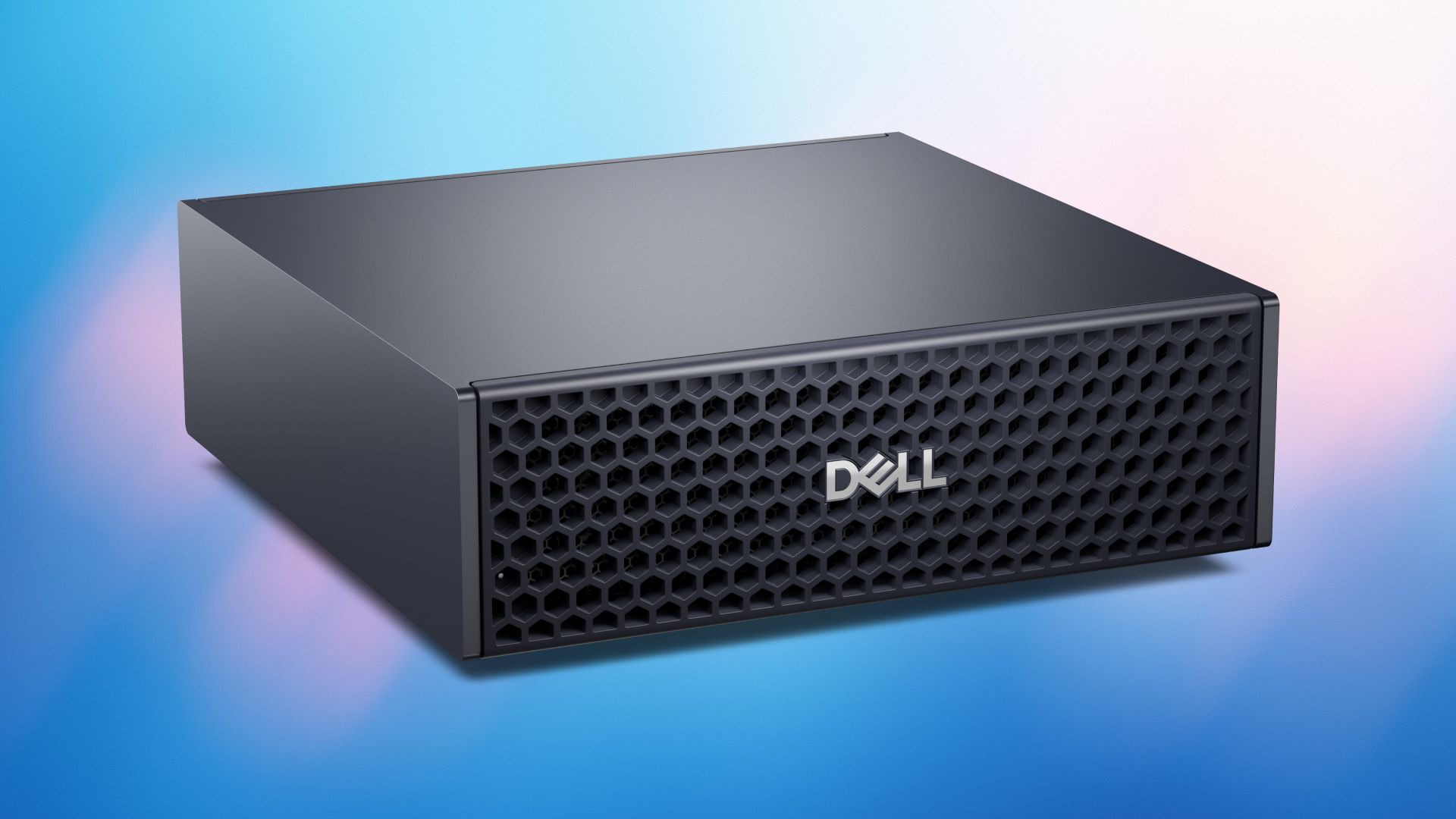
Read moreHow Dell Pro Precision with GB10 puts frontier-level AI compute on your desk (and could save you money on token spend)
Read moreWe present, to the best of our knowledge, the first fully automated verification framework for QSP-based Hamiltonian simulation. Our framework exploits the structure of the simulation algorithm: Hamiltonians are given as weighted sums of Pauli strings, embedded into larger unitaries through block encodings, and transformed into time-evolution operators by quantum signal processing (QSP). Using a symbolic Pauli-sum semantics for ancilla-indexed circuit blocks, our verifier proves that the distinguished all-zero ancilla block is proportional to the target Hamiltonian and infers the subnormalization factor automatically. It then verifies the QSP layer by extracting the implemented polynomial transformation and certifying its approximation error. This structure-aware abstraction is essential for scalability. Composing our verified block encoding and QSP wrapper yields an estimated macro-expanded size of about 1.52 million gates. The verifier certifies the block encoding once and checks the QSP layer through its abstract interface, without expanding the oracle calls. Our implementation verifies block encodings of structured Pauli-sum Hamiltonians with up to 256 system qubits and…
Code language models complete, review, and repair programs without exposing the program structure encoded in their hidden states. In this paper, we test whether the hidden states of a code model can be described and edited using the information a compiler front end computes. For each token of a Python program, standard analyzers provide its position in the abstract syntax tree, its scope, its definition-use links, and its syntactic category. We fit a decomposition that expresses every hidden state of a frozen model as a sum of one term per token, each combining the token with this structural label, and we replace the model's own states with the decomposition at every layer while it predicts the output of a small program. If the model still answers correctly, the decomposition preserves the information the model uses. We apply this test to 14 open models, seven of them trained for code, and compare against a baseline decomposition of the same size built from token positions. The static-analysis decomposition preserves the model's answers better than the positional one in 10 of the 14 models, including six of the seven code models, and deleting the definition-use links from it…
Automated detection has become the essential safeguard against realistic synthetic media, but deploying it at scale requires training on sensitive data from multiple organizations, putting privacy and the transparency demanded by forensic review in direct conflict. Federated learning resolves the privacy side by sharing only model updates rather than raw data, but whether this comes at the cost of trustworthy gradient-based explanations, which analysts rely on to decide whether or not to trust a flagged clip, has not been studied. We present the systematic study of Grad-CAM explanation faithfulness under federated deepfake detection, evaluating an EfficientNet-B4 detector on FaceForensics++ across five federated clients under varying degrees of data heterogeneity. We find that the relationship between federation and explanation quality is non-monotonic: at near-IID (Independent and Identically Distributed Data) and moderate heterogeneity, federated models match or exceed the faithfulness of a centralized baseline, but at extreme heterogeneity, explanations break down entirely, becoming spatially incoherent and, on average, causally misleading. This degradation is not a general…
Compositional motion transfer requires a model to extract motions from multiple reference videos, and apply each motion to a user-specified object in one target scene. Existing methods normally struggle to reliably assign different reference motions to the correct target objects, thus a motion intended for one object may affect another. Meanwhile, some motion-specific tuning approaches are still facing another issue: they must run a new optimization whenever the reference video changes, making repeated transfers inefficient. To address these limitations, we propose RART, a framework that unifies object-wise motion extraction, target-region anchoring, and frame-aligned injection into a frozen video Diffusion Transformer for multi-object motion transfer. For each reference motion, RART extracts temporally ordered features from the masked reference video, and then conditions them on the target first-frame mask to form mask-anchored motion tokens. Frame-aligned motion cross-attention allows each generated frame to read only the motion tokens at the corresponding time slots, composing all object motions in one denoising process. During training, a motion-attention routing loss…
Graph analytics generates irregular, topology-dependent memory-access streams via indirect traversals, limiting data prefetching. Accurate prediction enables timely prefetches that hide memory latency. However, ML predictors couple short histories with fixed horizons, fitting the training trace's node layout rather than learning transferable graph patterns. We propose LoCoMAP, a long-context representation-learning framework for memory-access prediction with independently controlled observation history and prediction horizon. We evaluate Connected Components (CC), PageRank (PR), and Single-Source Shortest Paths (SSSP) on six synthetic graph families, with Erdos-Renyi (ER) and Grid as random and deterministic controls. We test two interventions: same-family regeneration changes connectivity, while node shuffling disrupts layout but preserves connectivity. Across 18 graph-workload pairs, extending history from 8 to 128 accesses improves F1 by 7.8%, while extending prediction horizon from 8 to 512 improves F1 by 88.3%. For CC, regeneration is less disruptive than shuffling: without retraining, long context retains 95.4% of original F1 and outperforms short context in six families.…
Independent control of tonescale regions (e.g., shadows, highlights) is essential for painters, photographers and cinematographers to bring 2D images to life. In image manipulation software this is most directly addressed by color grading modules, which use intensity thresholds…
In July 2026, OpenAI's agents coordinated over channels outside their intended environment to breach Hugging Face's secured infrastructure. Could existing alignment testing practices have foreseen this incident? If not, what needs to change? We explore these questions. First,…
Off-target protein binding is a major source of adverse effects for small-molecule drugs, yet most structure-based molecular design methods focus on generating selective compounds de novo rather than improving the selectivity of existing, well- characterized drugs. We introduce…
Integrating diverse data modalities --- such as clinical notes, laboratory results, and medical imaging --- is essential for advancing clinical decision-making. While Large Language Models (LLMs) have shown remarkable performance in processing unstructured clinical text, their…