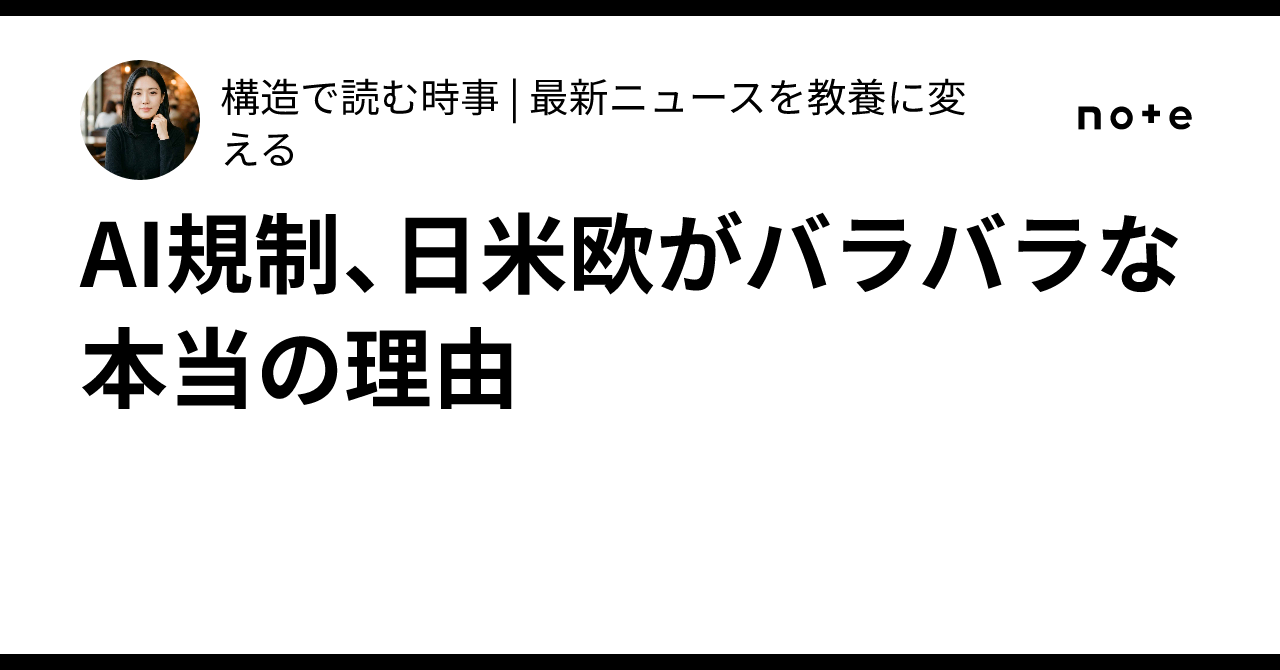
When it comes to AI regulation, this article reported by Newsweek actually organizes the structure the best. > In a nutshell, the correct approach to AI regulation is moving toward "decentralization" rather than "unification.
Cowork and ChatGPT Work can already handle tasks. Still, Muse is intriguingOn October 23, 2026, Meta's personal AI agent "Muse" became available in Japan. Outside of North America, where it launched in September,
At the 2026 Android Dev Summit, Google has announced some interesting features coming to both Android XR and Android CLI. Developers can now build and test apps for smart glasses without owning the hardware,
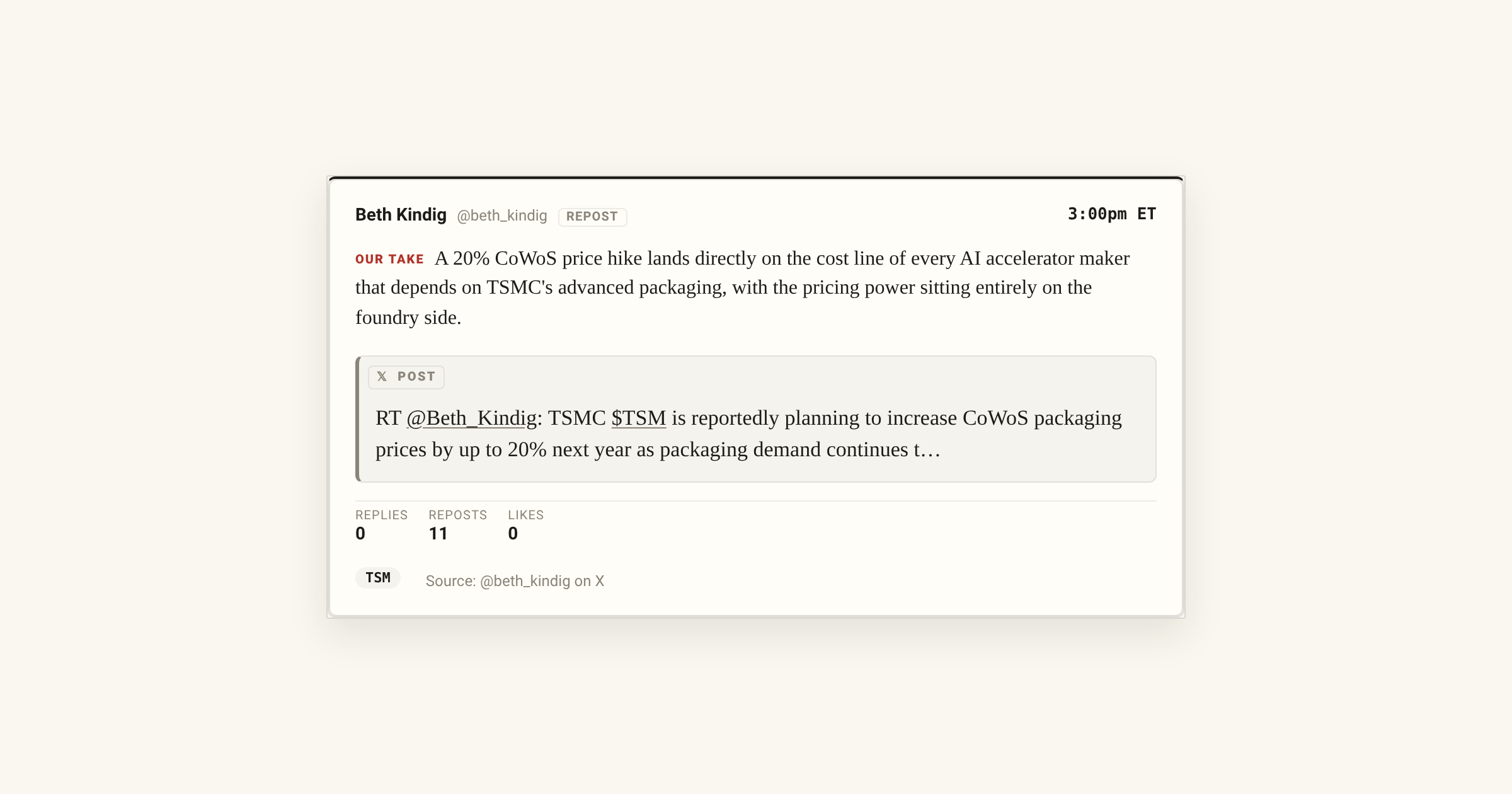
TSMC is reportedly planning to raise prices for its CoWoS advanced packaging by up to 20% next year, according to analyst Beth Kindig, as demand for the technology continues to climb. CoWoS, or Chip on Wafer on Substrate,
OpenAI's AI model produced 722 mathematical manuscripts across 372 families of results on October 6, 2026. Mark Derho on proof, verification and discovery.
Data attribution methods for Language Models (LMs) are typically evaluated using downstream tasks like fact retrieval. However, existing evaluations vary multiple dataset properties simultaneously, making it impossible to isolate exactly why an attribution algorithm fails. To diagnose these failures, we explore the design space of LLM data attribution, with a primary focus on evaluation. We introduce the Controlled Attribution Benchmark (CATT) for fact tracing, in which we fine-tune LLMs on entirely fictitious knowledge, providing unambiguous ground truth for attribution. This synthetic setup allows us to systematically alter one dataset configuration at a time, such as document redundancy and lexical distractors. With this configurable evaluation, we demonstrate that redundancy and distractors consistently degrade attribution performance. Rather than proposing a new estimator, we examine two design choices that are underexplored: the loss used to compute gradients and how per-token attribution scores are aggregated into a document score. We find that the true causal evidence within a training document is highly localized, but standard methods dilute this evidence into noise by…
The prompt is built automatically as "" * num_pages + "Multi page parsing.", and each page is encoded as one global view (base mode). The output contains one per input page, in the same order as image_files.
How We Took Over ChatGPT Accounts Parameter Labs describe an exploit they found against ChatGPT's implementation of the artifacts pattern (OpenAI used to call this "Canvas" but it looks like the latest revision is called HTML previews ), where interactive custom HTML apps are…