US stock markets face a massive selloff as AI and technology stocks plunge, wiping out earlier market gains. The Nasdaq hits its lowest level since April 2025, while fears grow over a possible data center moratorium following the Democrats' election victory.
At the end of 2025, its debt-to-equity ratio was approximately 0.2x, and its current ratio was 2.5x. TSMC generated roughly $32 billion in free cash flow during the year, despite investing more than $40 billion in capital expenditures.
By Noel Randewich and Utkarsh Hathi Nov 5 (Reuters) - The Nasdaq Composite tumbled on Thursday, on track for its deepest one-day drop in 19 months and set to confirm it was in a correction, as chipmakers sank on fears of tougher AI regulation after Democrats won control of the US Congress.
Rep. Ansari's AI bill targets superintelligence with 20-year prison penalties and a compute threshold, challenging years of voluntary industry pledges.
The chip selloff triggered by the Democrats' midterm sweep is likely to deepen in the coming days as investors price in higher energy and financing costs for the AI buildout, though indiscriminate selling now risks punishing the sector's strongest companies alongside its weakest.
Phaze, a technology company developing high-performance remote computing infrastructure for employees and artificial intelligence agents, has raised $8.75 million in seed funding led by a16z, with participation from Indie,
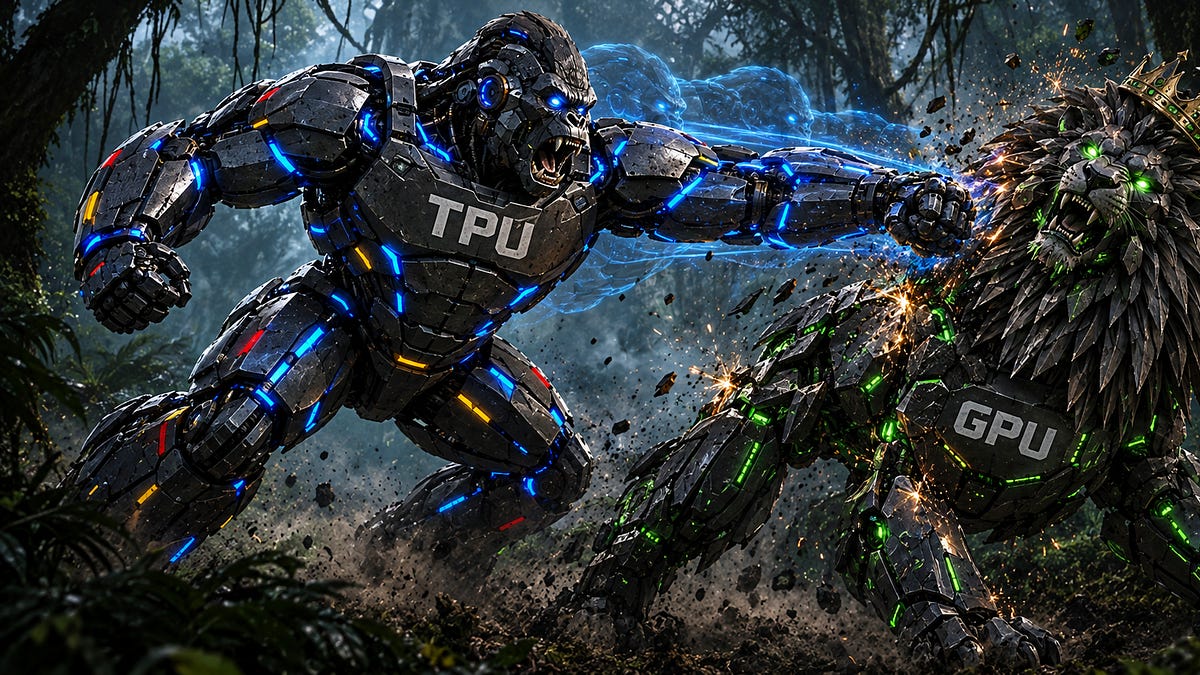
Viable Alternative of CUDA Moat, NVIDIA scared and working nights & weekends, Jensen’s Counter Submission, Kimi K3, Muse Spark Open, Qwen, GLM5.3, TorchTPU, vLLM, SGLang, llm-d, Ray
Bots in Kiro Crew are long-running agents with a name, a memory, and a narrow set of permissions. AWS says the idea came from habits its own engineers already had.
Remote sensing change detection requires both global reasoning across bitemporal images and precise localization of changed regions. However, dense attention is computationally expensive for high-resolution imagery, while conventional feature fusion and coarse decoding may…
We consider the problem of learning risk scores to prioritize individuals for scarce resources or interventions, from historical observational data affected by unobserved confounding. Decisions about who receives scarce resources are often guided by risk scores based on…
Infrastructure-based radar systems offer robust and long-range solutions for traffic monitoring, yet their detection and tracking performance under real-world conditions remains insufficiently evaluated. This study introduces DRaT (Drone and Radar Trajectories), a dual-modality…
Text-to-image retrieval with frozen dual encoders degrades when the query names a small, visually subordinate object in a cluttered scene: a single global image embedding underrepresents the localized visual evidence. We present MINER, a training-free inference framework that…