Pulse · computing.co.uk
Latest in AI and developer tools
The top stories in the fields you follow, at 08:00 your time.
 Pulse · fool.com
Artificial intelligence (AI) stocks have soared over the past few years, driving gains in the S&P 500, and the momentum has continued this year -- to a certain degree. Many of these players continue to advance, but the path has involved downs as well as ups.
Read more Pulse · ventureburn.com
Sentra raises $150 million led by Capital One Ventures to protect enterprise data from AI agents. This is what it means for AI security.
Read more Pulse · thenextweb.com
The European Commission has launched a €525M chip design platform, with grants of up to €16m for start-ups bringing their own chips to market.
Read more Pulse · pymnts.com
AI agents have crossed the company threshold. Getting permission to do the work is taking longer. "The Agentic Edge Index: How Leading Companies Put AI to
Read more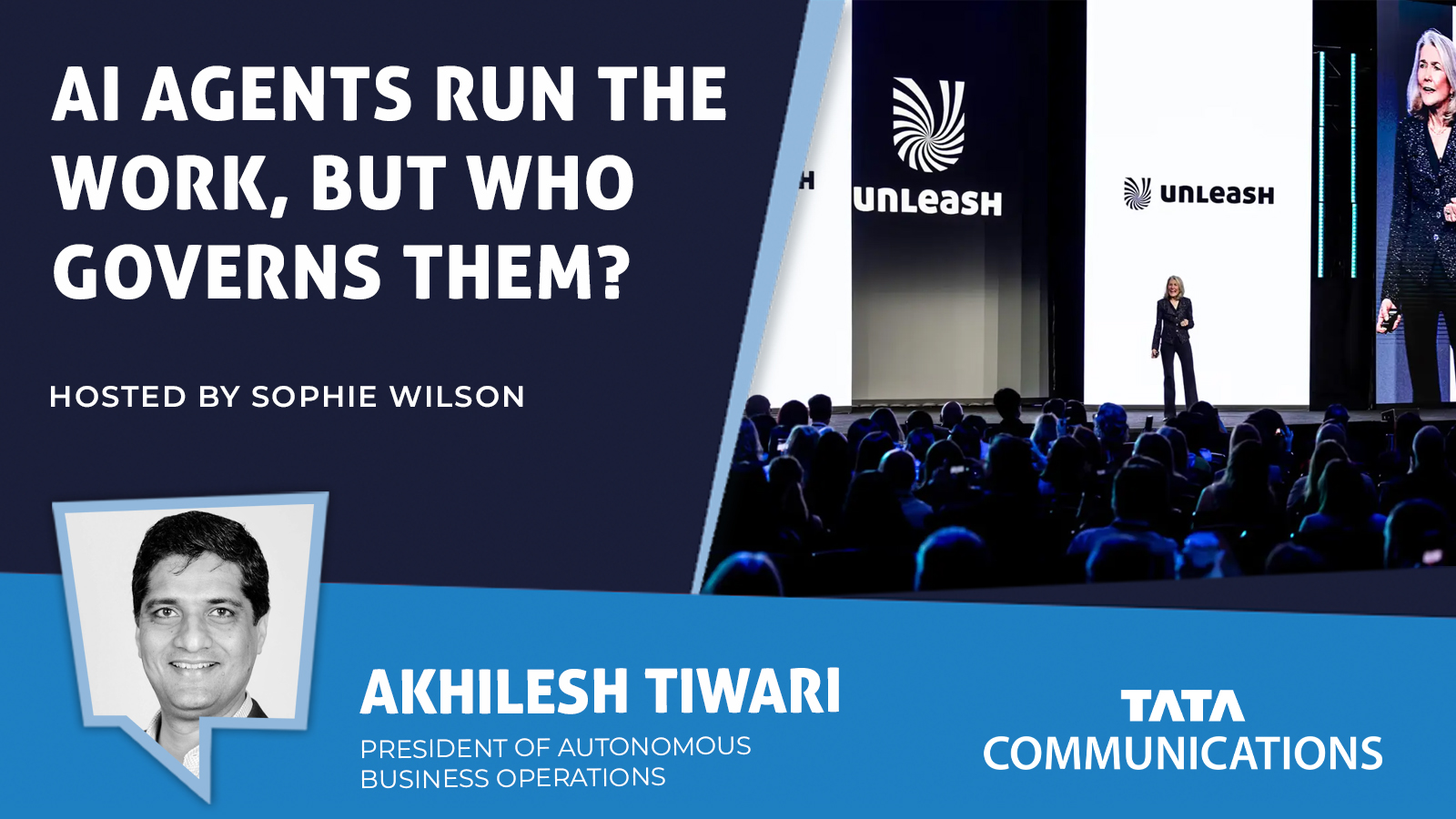 Pulse · uctoday.com
Tata Consultancy Services says AI agents should augment HR judgment, not replace it. Learn how autonomous HR keeps people in control of decisions.
Read moreHe's not alone in what he's feeling. When we delegate increasingly significant tasks to AI agents, or welcome their presence and input in team channels, we allow them (knowingly or not) to profoundly influence our decision-making and relationships at work. We need a way to steer that wisely.
Read more Pulse · wazzup.ph
Overseas customer base doubles amid triple-digit growth in demand for AI products and services. Tencent previews upcoming Hy4 model releases and expands its enterprise AI portfolio. Tencent has unveiled the enterprise capabilities of its AI office productivity agent, WorkBuddy, while offering a preview of its upcoming Hy4 and Hy4 Flash models at the 2026 Tencent […]
Read more Pulse · finance.yahoo.com
Shares of chipmakers, neocloud operators, and key AI infrastructure firms fell as Democrats, who back AI regulations, won in both the House and Senate.
Read moreVision-language-action models are typically built on a simple premise: perception is first compressed by visual encoders, and action reasoning begins only afterwards. Yet manipulation often hinges on precisely the visual signals most vulnerable to this abstraction, e.g., local geometry, boundaries, depth, and subtle state changes. This raises a fundamental question: should action policies inherit a fixed visual endpoint, or directly access evolving visual computation? We introduce NEO-VLA, a structurally encoder-free vision-language-action framework. Images are tokenized by lightweight patch convolutional layers and evolve jointly with language throughout the backbone, allowing a flow-matching action expert to draw from instruction-conditioned visual representations at different depths. This simple change reveals a consistent pattern. Native architectures outperform encoder-based counterparts under controlled comparisons; full fine-tuning reduces but does not erase the gap, and additional scale alone cannot recover it. More strikingly, layer-wise probing shows that the action-critical signals often peak well before the final visual representation. Across diverse manipulation…
Researchers use large language models as agents in social simulations, where agents are prompted with observations and background information intended to shape their actions. Yet LLM agents have been shown to substantially change their behavior under meaning-preserving prompt variations, creating a validation problem for social simulation. One plausible hypothesis is that this brittleness reflects a lack of grounding and can be reduced by enriching the context provided to the agents. Whether richer context improves robustness remains unclear, in part because context richness and robustness are rarely defined in ways that support controlled comparisons. We address the first need with controlled context enrichment, a set of prompt substitution rules that systematically enriches distinct types of context: neutral padding, generic social background, descriptive decision grounding, and normative decision grounding. We address the second by introducing selective robustness as a validation criterion: insensitivity to meaning-preserving prompt variation combined with a directional response to decision-relevant changes in the social world. We demonstrate the framework in a Prisoner's…
Reconstructing full flow fields from sparse sensors requires prior assumptions about unmeasured regions and physical variables. Yet it remains unclear when learned models outperform classical estimators and which aspects of their predictions can be trusted. FlowReconBench evaluates ten learned and five classical methods on three regimes: a laminar cylinder wake across Reynolds numbers, two-dimensional Kolmogorov turbulence and a large-scale three-dimensional (3D) isotropic turbulence. Methods share leakage-controlled splits and sensor draws and are scored on per-channel error, ensemble spread, calibration, spectra and cost. The leading method changes for each regime. Classical methods perform strongly in low-order and dense-sensing regimes. On the cylinder wake, linear stochastic estimation and gappy proper orthogonal decomposition lead, including for unobserved pressure. In 3D, inverse-distance weighting matches the best learned methods on observed channels. Data-driven methods become superior at decreasing sensor density or poor sensor observability. On Kolmogorov flow, continuous ranked probability score and error yield different method rankings: generative models offer…
Self-Driving Chemical Laboratories (SDCLs) are moving chemical experimentation toward embodied automation, where machines must perceive laboratory scenes, reason about experimental states, and act under physical, procedural, and safety constraints. Although Multimodal Large Language Models (MLLMs) are increasingly considered as embodied brains for such systems, existing laboratory benchmarks mainly focus on safety, anomaly detection, or general scientific understanding, leaving their execution-oriented embodied capabilities underexplored. To fill this gap, we introduce BEAKER, a Benchmark for evaluating Embodied Actionability, Knowledge, Experimentation, and Reasoning in SDCLs. BEAKER contains 1,000 expert-curated question-answer samples across 11 image and video task types, covering key judgments required for chemical laboratory execution, including affordance grounding, trajectory planning, equipment, state, and safety recognition, apparatus setup, operation and step reasoning, and temporal procedure reasoning. All questions and annotations are manually created and reviewed by chemistry and embodied Artificial Intelligence (AI) experts, without AI-assisted generation or…
AI agents are playing an increasingly important role in physics research. However, existing physics benchmarks only evaluate fixed questions, isolated sub-tasks, or paper reproduction with given solutions, and rarely check research quality alongside correctness. We introduce FrontierPhysics, an end-to-end benchmark with 56 tasks made by 42 physicists based on their own research, covering nine domains across theoretical, computational, and experimental physics. Each task requires agents to review the literature, develop a research plan, conduct research and experiments, and produce structured outputs and scientific manuscripts. Combining deterministic verifiers with expert-authored rubrics, FrontierPhysics evaluates whether agents' research is correct and publishable. Across 22 models in 26 configurations, no configuration passes more than 46 of its 168 rollouts. Manual review of agent trajectories shows that frontier agents' main weaknesses are insufficiently rigorous reasoning and limited expert intuition, rather than gaps in physics knowledge or execution errors.
Many vision applications ask several independent, forced-choice questions about the same image. Visual Jev encodes the image and public context once, executes isolated question suffixes as a batch, and reads candidate probabilities from the backbone's language-model head.…
Modern conformal forecasting systems often maintain several adaptive pipelines that differ in base forecasters, conformity scores, calibration windows, and update rules. Comparing them is difficult because coverage is a hard constraint, whereas efficiency should be optimized…
Metric reasoning is a critical and challenging task for Vision Language Models (VLMs), playing a pivotal role in embodied AI tasks such as robotic manipulation and autonomous navigation. However, current spatial reasoning remains bottlenecked by rigid pixel-level supervision;…
Flow-matching schedules affect both sampling dynamics and the variance of the regression target. For centered commuting Gaussians, we show that a direction-dependent schedule decomposes into two independent design choices: a variance path, which fully determines the…