Artificial intelligence (AI) stocks have soared over the past few years, driving gains in the S&P 500, and the momentum has continued this year -- to a certain degree. Many of these players continue to advance, but the path has involved downs as well as ups.
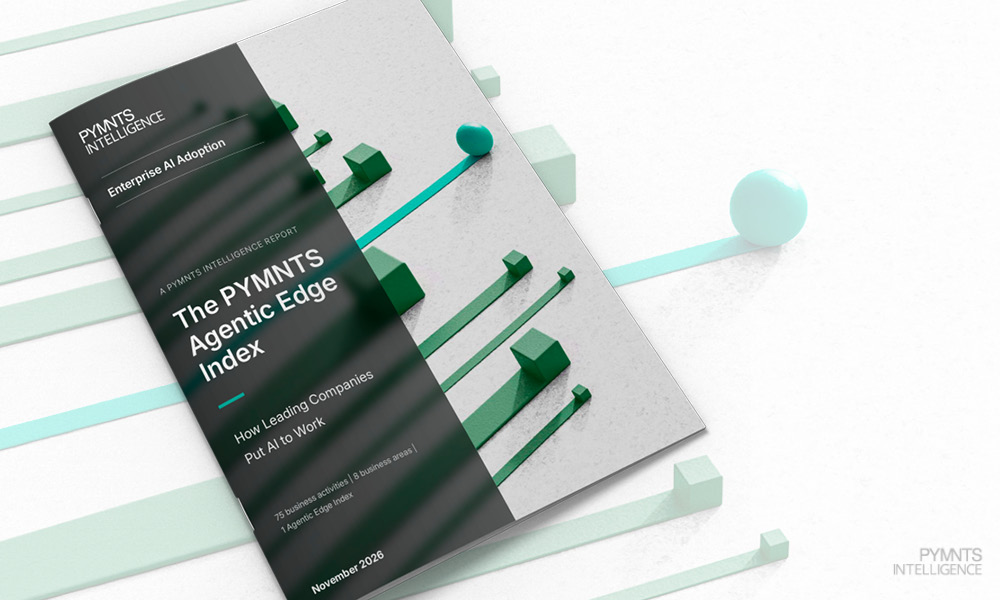
AI agents have crossed the company threshold. Getting permission to do the work is taking longer. "The Agentic Edge Index: How Leading Companies Put AI to
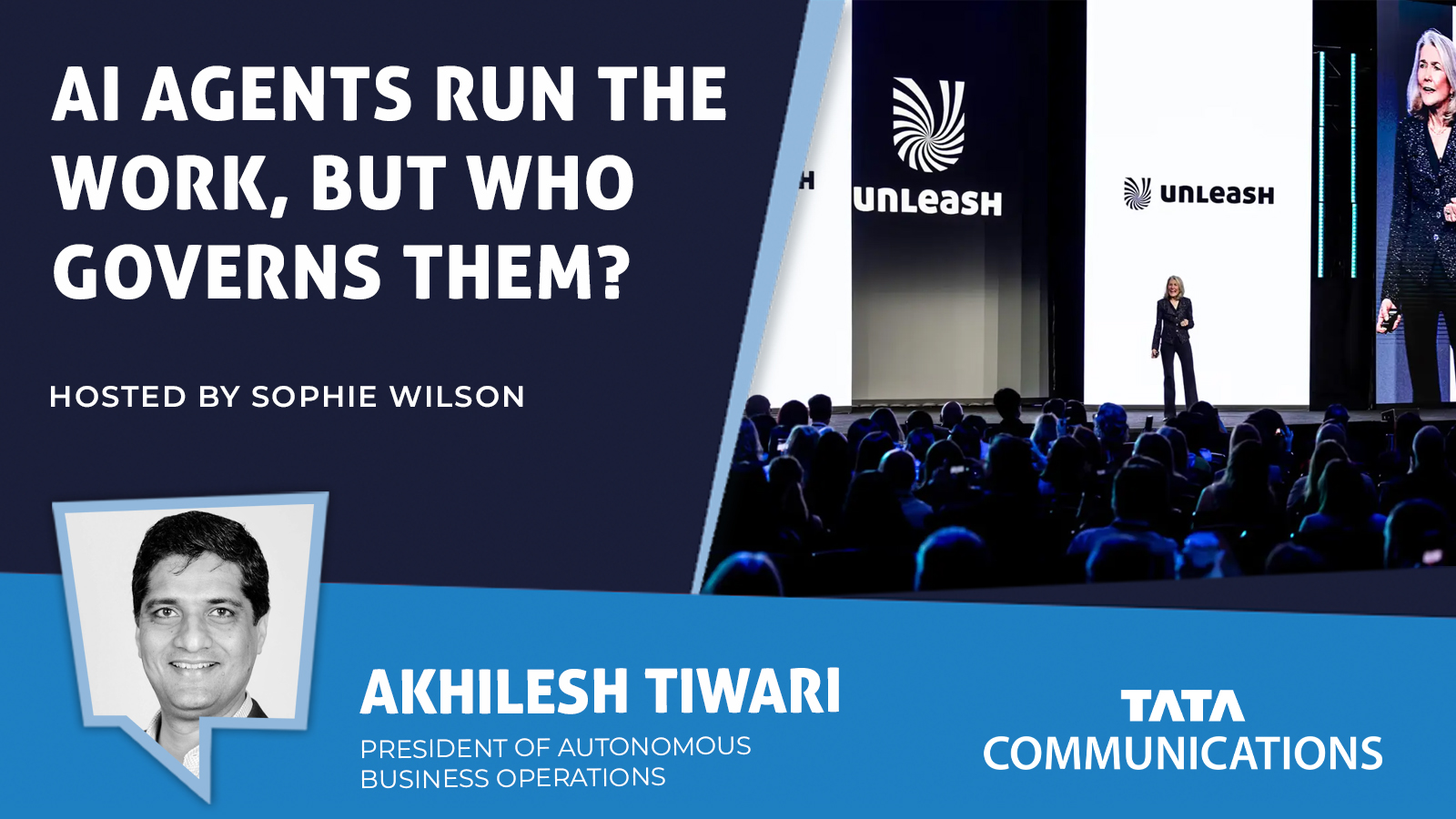
He's not alone in what he's feeling. When we delegate increasingly significant tasks to AI agents, or welcome their presence and input in team channels, we allow them (knowingly or not) to profoundly influence our decision-making and relationships at work. We need a way to steer that wisely.
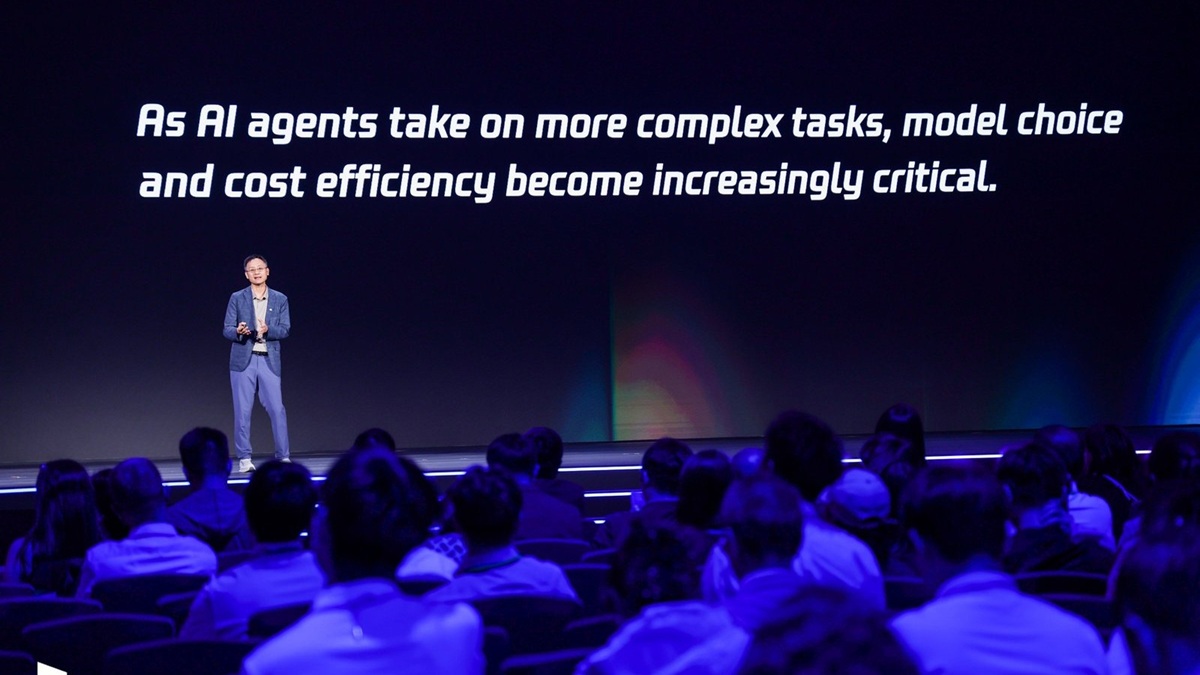
Overseas customer base doubles amid triple-digit growth in demand for AI products and services. Tencent previews upcoming Hy4 model releases and expands its enterprise AI portfolio. Tencent has unveiled the enterprise capabilities of its AI office productivity agent, WorkBuddy, while offering a preview of its upcoming Hy4 and Hy4 Flash models at the 2026 Tencent […]
Shares of chipmakers, neocloud operators, and key AI infrastructure firms fell as Democrats, who back AI regulations, won in both the House and Senate.
Vision-language-action models are typically built on a simple premise: perception is first compressed by visual encoders, and action reasoning begins only afterwards. Yet manipulation often hinges on precisely the visual signals most vulnerable to this abstraction, e.g., local geometry, boundaries, depth, and subtle state changes. This raises a fundamental question: should action policies inherit a fixed visual endpoint, or directly access evolving visual computation? We introduce NEO-VLA, a structurally encoder-free vision-language-action framework. Images are tokenized by lightweight patch convolutional layers and evolve jointly with language throughout the backbone, allowing a flow-matching action expert to draw from instruction-conditioned visual representations at different depths. This simple change reveals a consistent pattern. Native architectures outperform encoder-based counterparts under controlled comparisons; full fine-tuning reduces but does not erase the gap, and additional scale alone cannot recover it. More strikingly, layer-wise probing shows that the action-critical signals often peak well before the final visual representation. Across diverse manipulation…
Kimi K3.1 Pro is an open-weight, natively multimodal agentic model, and our most capable 3T-class model to date. Post-trained from Kimi K3 with large-scale joint reinforcement learning across hundreds of downstream domains, it is the first model in the K3.1 series. With a…
Long-term memory is essential for large language model (LLM) agents to maintain consistency and personalization over extended interactions. Existing memory systems typically rely on fixed granularities or static schemas, but these designs struggle when heterogeneous…
Transformer-based models have recently achieved strong performance on 3D reconstruction from images, and recent works extend them to process video streams in an online manner for real-world deployment. However, existing methods overlook two key signals when handling long image…
Joint remaining useful life (RUL) prediction and capacity estimation require representations of both gradual degradation and recent battery behavior. This paper presents a cross-expert framework using partial-charging measurements without requiring measured historical…
Many machine learning systems try to explain complex data - like images or financial time series - in terms of hidden, independent factors that generated them. Recovering the true underlying factors, rather than some scrambled version of them, is the central challenge of…