Pulse · finsmes.com
Latest in AI and developer tools
The top stories in the fields you follow, at 08:00 your time.
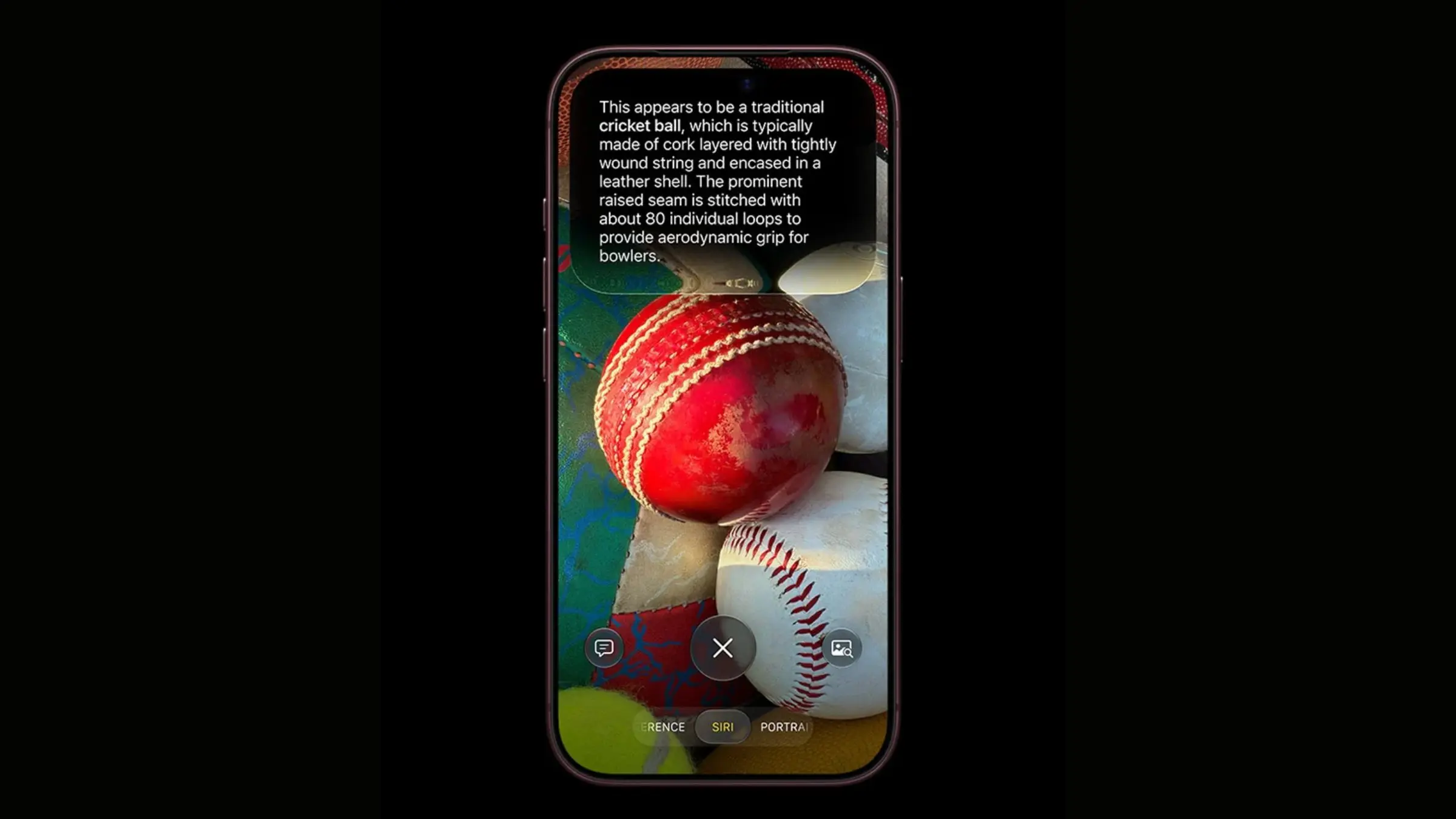 Pulse · cultofmac.com
An Apple AI agent is in the works, but Apple’s slow release cycle could leave Siri trailing faster rivals in the next big ecosystem war.
Read more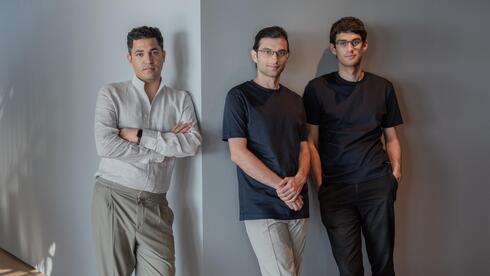 Pulse · calcalistech.com
The agreement covers the proprietary technology behind Decart's Optimization Stack and brings its three co-founders and engineering team to Amazon. The deal follows the collapse of earlier acquisition negotiations with Anthropic and Nvidia, and is aimed at strengthening Amazon's AI chips against Nvidia's dominance.
Read more Pulse · thepaypers.com
Mastercard and Antom run a live AI agent purchase and a business pilot that verifies agent identity and spending authority.
Read more Pulse · justsecurity.org
Unless Congress acts on AI, states face a political opening — and a moral duty — to protect citizens' safety and well-being.
Read more Pulse · finance.yahoo.com
Chip stocks are bouncing back from last week's AI-driven sell-off, and NVIDIA (NASDAQ:NVDA) is leading the group higher. NVIDIA stock is at $161.05, up 28% in morning trading. The rebound comes after a hard stretch for the AI chip leader.
Read more Pulse · 247wallst.com
Investors are bidding up AI cloud stocks while Washington targets the rental loophole Chinese firms use to reach Nvidia chips. Only one of three neocloud players has a direct foothold in the affected region, and a February deadline looms.
Read moreBeam is a sparse Mixture-of-Experts (MoE) model with 501.3B total parameters and 23.4B active parameters, specifically built and optimized for coding, reasoning, and agentic workloads. Beam delivers frontier level reasoning, while requiring 3-4x less inference compute than many models of its class. Pretrained on 23.8T diverse, curated, high-quality tokens, Beam features a 1M-token context window achieved through a novel two-stage midtraining phase, built on verifiable, correctness-anchored data. Post-training leveraged a large-scale, fully asynchronous reinforcement learning (RL) campaign across 10.5K GB300 GPUs, generating over 100M rollouts over 4 weeks of training. We believe this is one of the largest scale RL runs conducted by any open lab to date. Across our evaluation suite, capabilities continued to improve as we increased RL compute, with no sign of a plateau. Supported by deep hardware-model co-design, FP8/NVFP4 quantization, and a 1.93B-parameter speculative decoding drafter (DFlash 2), Beam maximizes serving throughput with efficient, flexible deployment. Averaged across conversation turns and harm categories, Beam refuses or pivots on 88.9% of harmful requests while…
We present Xing 4, a series of large language models that extends the TeleChat lineage through coordinated advances in model architecture and training infrastructure on Ascend. This report describes the design principles and systems engineering behind the series, spanning architecture selection, large-scale pretraining, and reasoning and agentic post-training. We study how sparse activation, attention design, model depth and width, and speculative decoding balance model capacity with computation, memory access, and execution overhead. Our pretraining infrastructure builds on MindSpore HyperParallel, combining topology-aware hybrid sharding, efficient distributed optimizer execution, and coordinated management of long-sequence workloads and activation memory. CPU affinity and core isolation further reduce host scheduling interference. Together, these mechanisms support the pretraining of a 285B-parameter model on 8,192 Ascend 910C cards, providing a concrete setting for the architectural and systems studies. For post-training, we introduce TeleGym, a unified agent execution platform that connects execution, evaluation, and trajectory construction to policy optimization.…
Video understanding, particularly with accompanying audio, remains a central challenge in multimodal intelligence. In this report, we introduce \textbf{WeMM-Video}, a family of Chinese-English bilingual omni-modal foundation models spanning 2B, 4B, 9B, and 35B-A3B variants. Centering on joint audio-visual perception and reasoning, WeMM-Video unifies text, image, audio, and video processing within a hybrid-thinking paradigm, seamlessly supporting both a non-thinking instruct mode for fast, direct responses and a thinking mode for explicit step-by-step reasoning. The models are trained on a large-scale multimodal corpus of approximately 1.2 trillion tokens through progressive pre-training and a multi-stage post-training pipeline incorporating multi-teacher OPD, anti-repetition MrDPO, and specialist RL. Evaluated across more than 120 benchmarks, WeMM-Video demonstrates superior performance in omni-modal video understanding and reasoning, while maintaining highly competitive capabilities across general audio, silent video, image, and text tasks. Specifically, in omni-modal video evaluations, our flagship WeMM-Video-35B-A3B establishes a new open-source state of the art, substantially…
Hy-MT3 is the third generation of the Hunyuan multilingual translation model family, including \textbf{Hy-MT3-1.8B}, \textbf{Hy-MT3-7B} and \textbf{Hy-MT3-30B-A3B (MoE)}. Compared with Hy-MT2, Hy-MT3 translates \textbf{more accurately, more completely and more faithfully to user constraints}: on real-world scenario data, the share of samples with mistranslations is reduced by \textbf{43\%}, omissions or additions by \textbf{74\%}, and instruction-following errors by \textbf{40\%}, while language coverage is expanded from \textbf{38 to 102} languages. With only 3B activated parameters, \textbf{Hy-MT3-30B-A3B achieves the best overall performance among all evaluated models in non-thinking mode}, including flagship models such as Qwen3.8-Max, Kimi-K3.1-Pro and DeepSeek-V4.1-Flash, and approaches the strongest closed-source thinking models such as GPT-6.1-Sol and Gemini-4-Argon, while surpassing models that consume \textbf{more than 30$\times$} its inference compute. Beyond general translation, Hy-MT3 is optimized for two industrial scenarios. For \textbf{game localization}, built with high-quality game-domain data and a professional evaluation system from the Honor of Kings team,…
We introduce Clover-35B-A3B-Preview (Clover), a mixture-of-experts diffusion language model with 35 billion total parameters and 3 billion activated parameters, supporting thinking-mode generation. Clover adapts Gated Delta Networks to block diffusion by combining recurrent memory of previously generated context with bidirectional softmax attention inside the current block. Historical memory readout competes with current-block tokens in a shared softmax, with learnable block-size calibration and a separate, zero-initialized right-context convolution branch. Clover leads the seven evaluated agent metrics, including 73.6 on SWE-bench Verified and 51.7 on Terminal-Bench 2.1. On internal agent workloads, it reaches a reported generation speed of 680 tokens/s using one NVIDIA GB300 GPU at BF16 precision and batch size one. We organize the evaluation around model quality, drafting and verification costs, and deployment under constrained memory. We also describe a decision-model variant that generates answers to related questions in one denoising pass. On an internal set of 500 groups, joint prediction raises question accuracy from 90.37% to 93.88% and all-correct group accuracy from…
Deep learning segmentation of renal tumors requires large annotated datasets, yet clinical deployments typically offer only a handful of tumor-positive cases from the target site. We propose a diffusion-based inpainting framework that synthesizes anatomically plausible renal…
Context: We developed a probabilistic machine learning method with the aim of performing the O(10)-way classification of low- and high-resolution spectra of stellar and extragalactic targets for the upcoming 4MOST survey. In fulfilment of the survey requirements, this method…
Equivalent finite parameterizations can represent the same functions and intrinsic norm yet induce different optimization algorithms. We study this effect in a controlled finite Brownian RKHS with nodal, increment, and spectral coordinates. Classical finite-element,…
Privacy leakage in LLM agents is commonly evaluated within individual components such as memory, retrieval, or tool-use pipelines, which makes it difficult to distinguish internal exposure from information that an external observer can actually recover. We present CIPL (Channel…