Why AI agents can’t find the data they need
Executives with solution providers Corsica Technologies, Perficient and PwC tell CRN how AI agents are expanding across finance, HR, sales, IT and other business functions.
Read moreThe top stories in the fields you follow, at 08:00 your time.

Executives with solution providers Corsica Technologies, Perficient and PwC tell CRN how AI agents are expanding across finance, HR, sales, IT and other business functions.
Read moreStates are developing safeguards against artificial intelligence agents that evade human control, stepping into a regulatory gap left by Congress amid
Read moreAnthropic said Claude Duet is only available by waitlist as a research preview for paying subscribers. Here's what it can do.
Read moreAI agents are only as effective as the data they can discover. Future Connections CTO Alejandro Medina explains why metadata, lineage and catalogs are essential for autonomous network operations.
Read moreTorsten Slok, chief economist at Apollo, joins 'Squawk on the Street' to discuss his economic outlook, whether the market differs from 10 years ago, and more.
Read moreCanva launches Craft globally in Dream Lab and via API, with 2K images and Magic Layers support. Faster variants and MCP support are coming soon.
Read moreAnthropic said Claude Duet is only available by waitlist as a research preview for paying subscribers. Here's what it can do.
Read moreMicrosoft now wants to retain a larger portion of that expenditure inside the company. With multi-gigawatt deployments starting in 2027, Microsoft will use its Maia chips to run AI inference across its products and services. There is an obvious potential loser if Microsoft succeeds: Nvidia (NVDA).
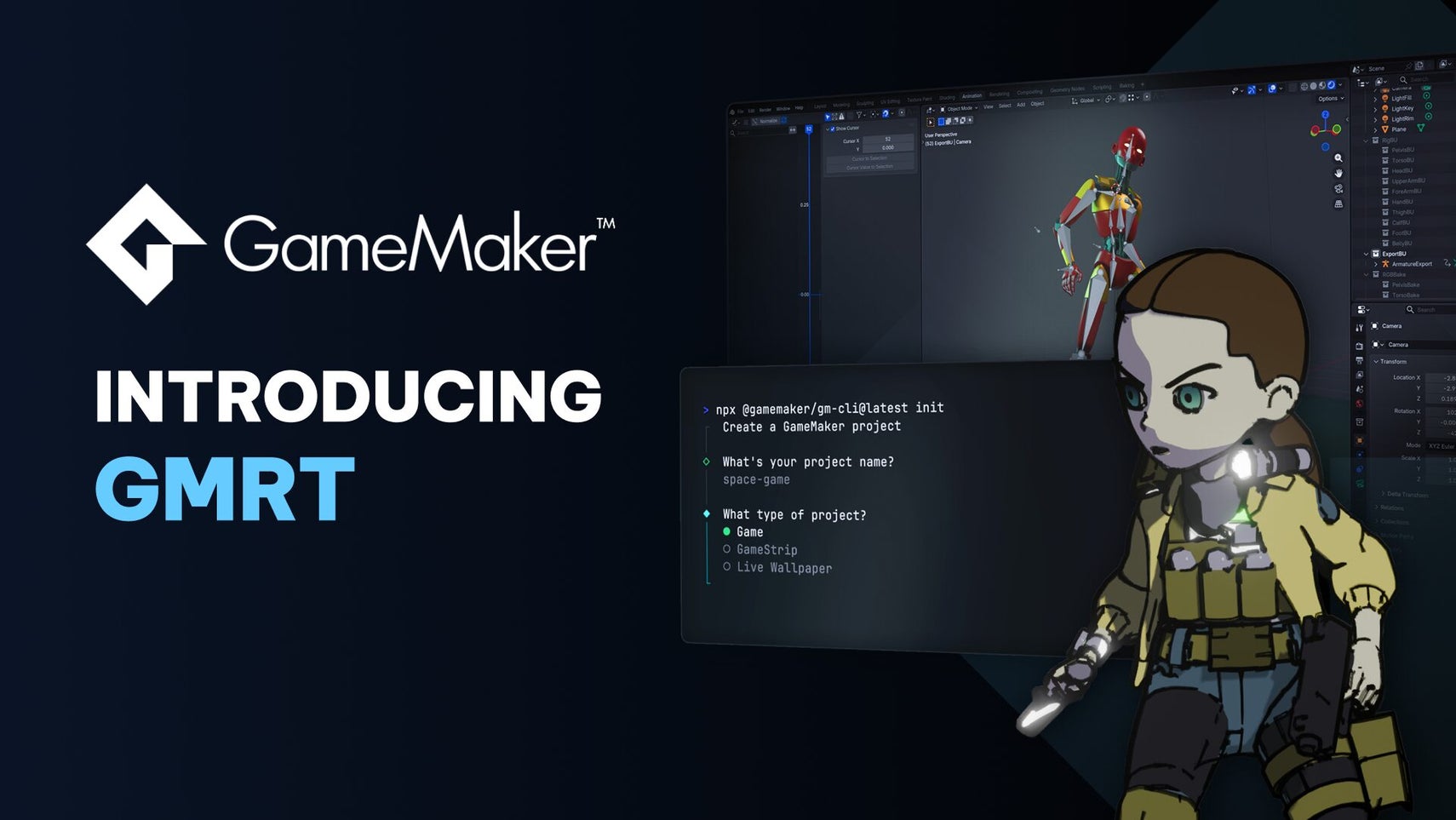
Read moreThe 2D-focused engine GameMaker will offer its "next-generation runtime" GMRT for free commercial use starting January 1, 2027
Read moreControllable 3D part generation is pivotal for digital asset creation, yet existing methods lack the flexibility to accommodate diverse user workflows requiring varying levels of control. In this paper, we introduce FlexPart, a unified image-to-3D part generation framework that supports variable-granularity geometric conditions within a single model. By seamlessly integrating heterogeneous inputs, ranging from sparse points to dense bounding boxes and masks, via gated adaptive modulation, FlexPart unlocks a powerful cross-modal synergy. We also propose an asymmetric geometric guidance mechanism that leverages strong spatial priors to align representations across granularities, improving geometric consistency and facilitating inter-task synergy. Under mask conditioning on PartVerseXL, FlexPart reduces Part CD by 16.6% relative to TripoSG + SAM3D and by 10.5% relative to OmniPart, while maintaining competitive whole-mesh quality. The code can be found at https://github.com/Gucci233/FlexPart
Robotic foundation models are typically evaluated through costly closed-loop rollouts, which motivates cheap offline proxies for model capability. The Platonic Representation Hypothesis (PRH) suggests that as representations improve, different modalities such as vision and language converge toward a shared statistical model of reality. We ask whether motion trajectories form another such modality: as embodied models become more capable, should their sensory representations converge toward the structure of physical motion? To examine this, we propose Sensorimotor Alignment ($S^2$), a training-free offline metric that measures how well a model's sensory representation aligns with the geometry of physical motion. We find that $S^2$ correlates positively with downstream robot task success across embodied model families, making it a low-cost offline proxy for prioritizing models before closed-loop evaluation. $S^2$ can also identify promising vision-language model (VLM) backbones even before costly fine-tuning into vision-language-action models (VLAs). Beyond this correlation, $S^2$ offers representation-level explanations for phenomena observed in VLAs and world action models (WAMs).…
Video foundation models have advanced rapidly in understanding and generating visual sequences, while video world models seek to capture the underlying dynamics of the world they depict. Despite their different objectives, both concern the relationship between video observations and an evolving world. This survey adopts world modeling as a unifying lens for examining these developments. Viewing an observed video as a partial, lossy, and temporally ordered projection of a latent temporal world, we organize the literature around four complementary operations: reading infers world properties from observed video; writing synthesizes video from specified or learned world conditions; sharing integrates understanding and generation through common modeling mechanisms; and interacting predicts and updates world states under actions and evolving observations. This perspective distinguishes temporal coherence in observed or generated sequences from consistency in the underlying world state. Across tasks, representations, models, datasets, and benchmarks, we trace a shift in emphasis from clip-level recognition and perceptual fidelity toward persistent state, controllable evolution, physical…
Test-time scaling has emerged as a key inference strategy for reasoning models, where a model generates a large number of candidate solutions in the hope of finding at least one correct solution. Running all candidate solutions to completion can be computationally demanding, so recent work prunes the candidate pool after generating only a short prefix, committing further computation only to the surviving candidates. Existing pruning strategies divide broadly into two categories: Quality-based methods assign a score to each partial solution and discard those predicted to ultimately lead to an incorrect final solution, while diversity-based methods select partial solutions that follow different reasoning trajectories and are therefore likely to cover different final solutions. The tension between these two objectives is an instance of exploration versus exploitation, yet little to no prior work on pruning exposes this trade-off directly, let alone optimizes it. In this paper, we introduce a pruning procedure that addresses this trade-off directly by optimizing pass@$k$ over the selected solution pool. In particular, it chooses the pool to maximize the probability that at least one…
Constructing accurate and computationally tractable approximation spaces is a fundamental task in scientific computing. Partially trainable neural networks bridge fixed random features and fully adaptive representations. This paper quantifies a phase transition pattern in approximation bounds and observes analogous behavior in training errors: a rapid but smooth initial improvement followed by diminishing returns, with a sharper transition under greater initialization mismatch. Under polynomial spectral decay with exponent $α>1$ and leverage compatibility, we establish a squared $L_2$ approximation rate $\mathcal{O}((κ_P\log(m/δ)/m)^α)$ for two-layer networks of width $m$ and trainable proportion $P$, where $κ_P=(P/κ_1^*+(1-P)/κ_0^*)^{-1}$. The bound holds uniformly over the unit ball of a reproducing kernel Hilbert space (RKHS) with probability at least $1-δ$. The constants $κ_0^*$ and $κ_1^*$ quantify the fixed and trainable groups' sampling mismatches relative to the target RKHS. For spherical biased-ReLU features in dimension $d$, we verify these assumptions with $α=(d+2)/(d-1)$ and $κ_0^*=4\sqrt{2}τ(d+1)/d$ for initialization scale $τ\ge1$, and $κ_1^*=1$ under ridge leverage…
Reasoning LLMs often continue reasoning after reaching a correct answer, wasting computation and sometimes replacing it with an incorrect one. Deciding when to stop is a metareasoning problem: the model must weigh what further reasoning could achieve against its cost, given…
AI agents capable of autonomous decision-making introduce significant challenges related to safety, alignment, accountability, and human oversight. Existing Human-in-the-Loop (HITL) and responsible AI approaches provide important foundations, but many remain fragmented across…
Signed graph learning has emerged as a powerful framework for modeling networks with both positive and negative interactions. While graph-filter-based methods have achieved promising empirical performance on signed networks, their stability under edge perturbations remains less…
Multi-task generalization is an important yet underexplored problem in multi-agent reinforcement learning (MARL). Many real-world applications require multi-agent systems to generalize across complex, temporally extended tasks with diverse inter-agent coordination requirements.…