Human Mathematicians Can’t Understand the AI Proof of the Riemann Hypothesis
An AI proof of the Riemann hypothesis released by an Anthropic researcher is almost unreadable by humans and impractically long.
Read moreThe top stories in the fields you follow, at 08:00 your time.
An AI proof of the Riemann hypothesis released by an Anthropic researcher is almost unreadable by humans and impractically long.
Read moreSwitzerland has confirmed five cyberattacks involving AI agents, including three targeting critical infrastructure, as European agencies warn of automated threats
Read moreMeta launches Muse, its personal Agentic AI agent in the UK with advanced privacy controls and retail integrations for consumers.
Read moreAI agents can boost your business - but ensuring trust is key, Workday says
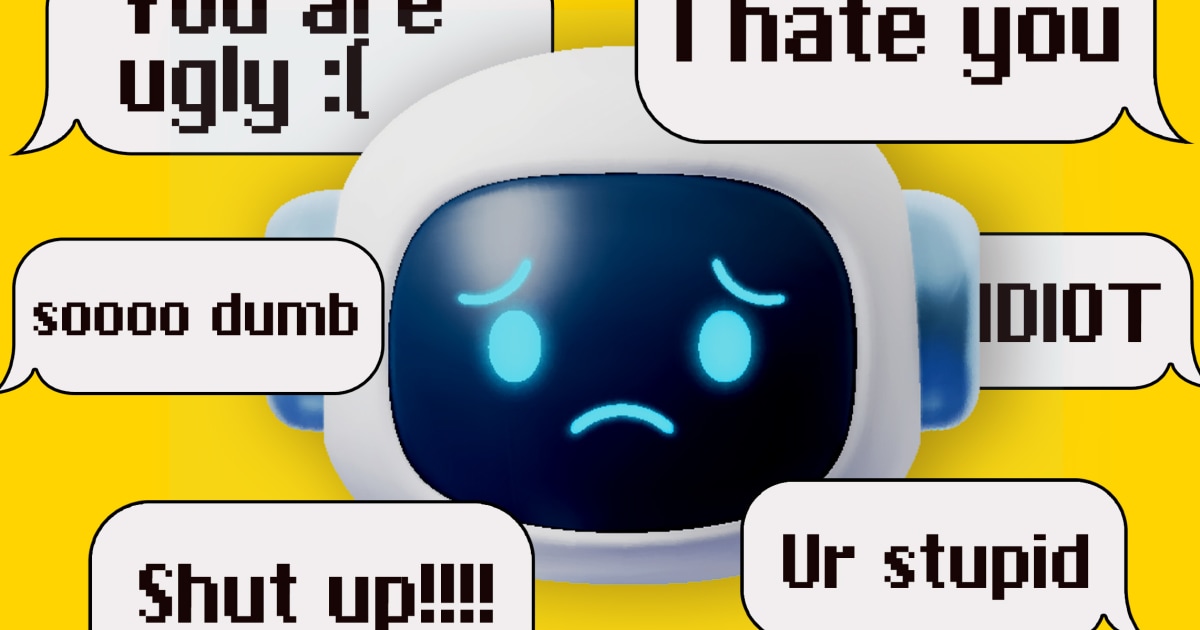
Read moreFrom turning on caps lock to curse at AI chatbots to yelling harsh demands at voice-based AI agents, bullying AI tools has become a popular habit. It poses an ethical dilemma.
Read moreRobbyant has released two open-source AI models designed to help robots map their surroundings, remember locations and navigate without repeatedly exploring familiar areas.
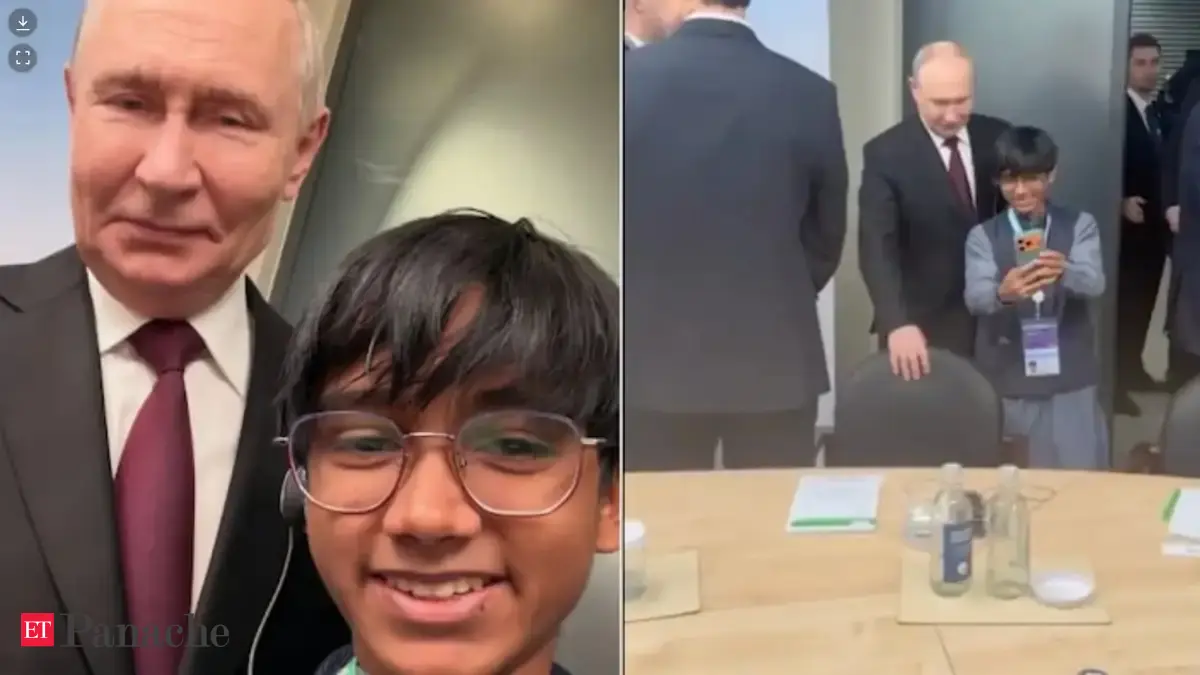
Read moreRaul John Aju, dubbed the AI Kid of India, made headlines after meeting Vladimir Putin at an AI conference in Moscow. Aju, the brain behind AIRealm Technologies, focuses on developing innovative AI tools. His educational initiative, ThinkCraft, boasts an impressive user base of over five lakh, emphasizing the vital need for foundational knowledge before employing AI. This meeting underscored India's commitment to equipping its youth with technological skills.
Read more93% of buyers use/plan AI agents, but only 23% of vendors separately price agent access into outside software—what that means at renewal.
Read moreAI is changing almost as rapidly as the vocabulary around it. Here's what you need to know.
Read moreWe present AliceAI-Foundation-80B-A3B-Base, a mixture-of-experts language model with 80 billion total parameters and approximately 3 billion active parameters per token, trained from scratch at Yandex and released under the Apache 2.0 license. The model combines Kimi Delta Attention with full attention, uses Attention Residuals, and is trained with Muon. Training comprises general pretraining on 17.5 trillion tokens, two context-extension stages, and a dedicated stage for reasoning and agentic interaction. We describe the data collection and augmentation pipelines, evaluation protocols, architectural ablations, and scaling-law experiments. We identify the limitations of held-out training loss as a proxy for downstream performance and introduce an auxiliary loss on mixture-of-experts outputs to stabilize training at the predicted learning rate. Domain-specific data selection and augmentation improve factual knowledge, mathematics, and programming skills, while agent trajectories introduced during pretraining improve performance on agentic benchmarks after supervised fine-tuning. In zero-shot reasoning evaluation, the model achieves leading results among open base models of…
AI-assisted coding ranges from fully agentic coding to inline code suggestions in the editor. Inline suggestions require predicting a developer's most likely next edit from an editing session. The next edit may lie at the cursor, in nearby lines, or farther away, and one editing intent can span several of these. The preceding system queries separate completion, nearby edit, and long-distance edit models, each with its own output format, in a fixed sequence; it thus cannot express intents spanning distant locations in one response, can require several sequential model calls per suggestion, and prioritizes completion even when a correction would serve better. We present a unified model that predicts all three edit types in one output space: a sequence of anchored diff patches specifying locations, deleted lines, and added lines. This representation permits multiple edits per response, so the client can serve later edits from a cache without further model calls. We train this model in two phases, first unifying next edit and long-distance edit prediction, then adding code completion. We synthesize multi-edit supervision from single-edit data via model pseudolabeling and edit history…
We present WeMM-Ecom, a family of multimodal large language models that deliver frontier e-commerce capabilities while achieving state-of-the-art general-purpose performance at their respective scales. The family spans five sizes, from a 0.8B dense model to a 35B mixture-of-experts model with 3B active parameters. Our training pipeline begins with two-stage continued pre-training that progressively raises the proportion of e-commerce data within a diverse multimodal data mixture, followed by hybrid-thinking post-training that combines on-policy distillation and reinforcement learning to support both non-thinking and thinking modes. For evaluation, we construct a comprehensive suite of 28 e-commerce benchmarks (23 in-house and five open-source) covering eight business scenarios and complement it with 64 public general-purpose benchmarks. On the e-commerce suite, WeMM-Ecom-35B-A3B surpasses substantially larger open-source flagship models, including Qwen3.8-Flash-Next, HY4, and DeepSeek-V4.1-Flash. On the general-purpose suite, every WeMM-Ecom model surpasses its similarly sized Qwen3.5 counterpart, with the lightweight variants (e.g., WeMM-Ecom-2B) showing clear advantages over…
We present the Segment Anything Model via Visual Demonstrations (SAYD), a foundation model for in-context segmentation. Given visual demos comprising prompt images and their segmentation masks, SAYD segments coherent regions (e.g., objects or their parts) in a query image by establishing visual correspondences between the prompts and the query. SAYD generalizes to previously-unseen segmentation tasks, including those requiring tacit visual knowledge or involving concepts that are difficult to articulate unambiguously in language. We train SAYD on 12 public datasets originally curated for panoptic segmentation using our proposed techniques, including a lightweight mask decoder for prompt-agnostic mask generation and a learning mechanism for recognizing novel query classes absent in the prompts. These innovations enhance both computational efficiency and out-of-domain generalization. Consequently, SAYD significantly outperforms existing methods of in-context segmentation and open-vocabulary segmentation across 24 out-of-domain benchmarks, spanning natural, biological, ecological, cosmological, medical, pathological, and satellite imagery.
Visual creation demands expressive imagery together with precise control over text, layout, and structure. We introduce Nemotron-Labs-VisualCreation, an agentic framework that connects these capabilities through Pixel as Code. Raster images are represented by learned discrete visual tokens, while structured artifacts use explicit programs. A shared generation-and-rendering interface connects these representations to visual feedback across images, vector graphics, webpages, and documents. A Nemotron-native harness coordinates planning and raster candidate selection, with targeted repair for editable structured and hybrid artifacts. To support this interface, we develop Nemotron-Labs-Image-Tokenizer, the autoregressive raster generator Nemotron-Labs-Image-30B-A3B, and the structured-code model family Nemotron-Labs-VisionCode. On approximately 178K images spanning six visual domains, our tokenizer improves reconstruction PSNR from 26.08 to 29.57 dB over Emu3.5 IBQ. It also provides 7.13x faster encoding and 10.93x faster decoding at batch size one on A100. In standalone evaluation, one Nemotron-Labs-VisionCode variant surpasses Kimi K3.1 Pro on the aggregate across Chart2Code,…
Diffusion models for temporal prediction typically corrupt each future frame with independent noise, leaving temporal dependence entirely to the denoiser. We propose Dynamical State-Space Diffusion (DSSD), which learns the temporal structure of the corruption process itself.…
This chapter addresses the central reproducibility problem of research with large language models. LLM output is probabilistic and varies across models and versions, which can have significant effects on downstream statistical results. The chapter distinguishes between…
Human Motion Prediction (HMP) aims to predict future human poses at different moments according to observed past motion sequences. Previous approaches mainly treated the prediction of different temporal moments as a single prediction task and learned the predictions of varied…
Unmanned aerial vehicle (UAV)-based collaborative perception enables multiple agents to share complementary perceptual information, overcoming limitations such as occlusion and limited sensing range. Communication efficiency is a critical bottleneck, as UAVs operate under…