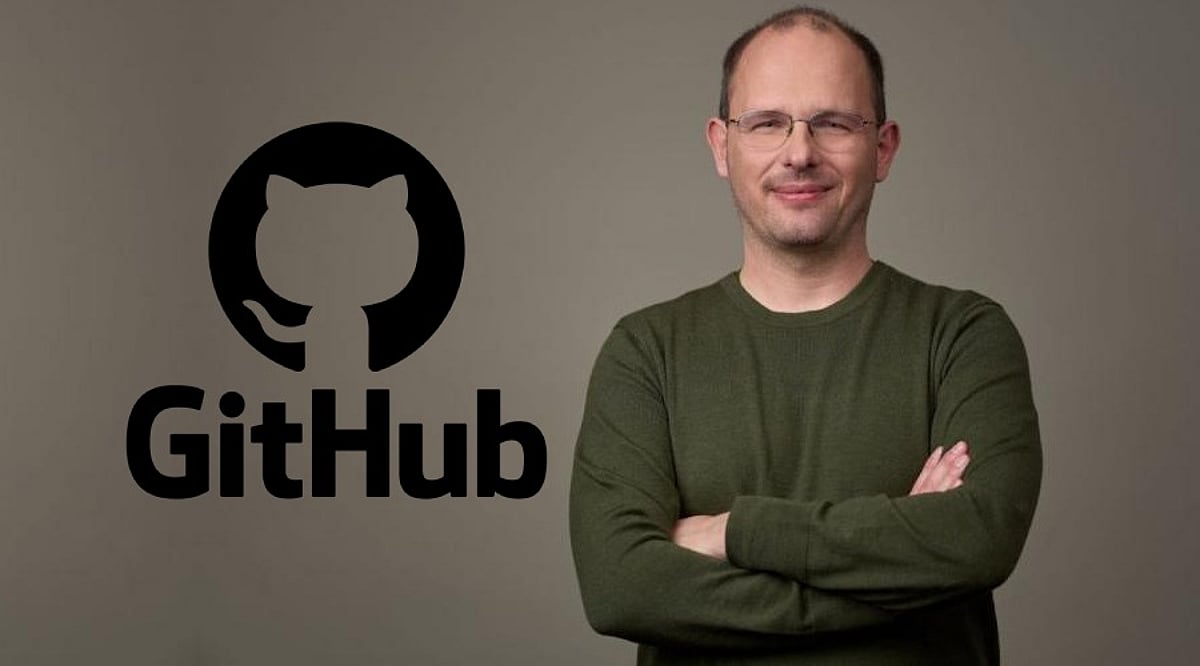
GitHub’s Former CEO Launches Rival Platform for AI-Driven Development
Thomas Dohmke, who led GitHub until 2025, launched Entire, a developer platform built for the age of AI coding agents. The startup positions itself as a direct
Read moreThe top stories in the fields you follow, at 08:00 your time.

Thomas Dohmke, who led GitHub until 2025, launched Entire, a developer platform built for the age of AI coding agents. The startup positions itself as a direct
Read moreAs AI-based development becomes more active, an increasing number of companies are seeking to hire "true AI natives" regardless of whether they attend college. This contrasts with the changes in the existing job market,
Read moreOn October 25, 30 high school students with youthful appearances gathered at the office of Vooy, an AI startup in Apgujeong, Seoul. They were participants in the "Under 20 (under 20) Hackathon," hosted by Vooy and sponsored by OpenAI.
Read moreThe platform combines automated code reviews, distributed repository hosting and persistent memory to help AI agents retain context across coding sessions.
Read moreWhile language models have become dramatically more capable, retrieval still largely relies on lexical matching or similarity in fixed embedding spaces. This creates a capability asymmetry: what the retriever fails to find, even the strongest generator cannot recover. We propose DecisionRAG, which brings the capabilities of pretrained language models to retrieval using decision models that jointly evaluate candidate branches in a single forward pass, without generating any tokens, and show that judging candidates in a shared context makes their relevance estimates comparable. Like a person browsing a library, DecisionRAG navigates the corpus's inherent structure from broad topics down to individual passages, deciding at each level which branches are worth exploring. Without task-specific training or a first-stage retriever, DecisionRAG outperforms dense retrieval with an 8B reranker by 13.8 R@1 points on MultiDoc2Dial and 17.4 Hit@1 points on Natural Questions. Across four benchmarks, including a corpus of 2.68 million Wikipedia paragraphs, retrieval takes just 0.7-1.8 seconds per query.
As autonomous research systems become more capable, benchmarks must both evaluate their performance and support meaningful research progress. We introduce Auto-Research Arena, a multi-target benchmark for evaluating autonomous research systems and discovering ideas in language modeling. Arena supports diverse research objectives within a shared experimental environment by separating admissibility from improvement: model quality and resource constraints determine whether a result qualifies, while the selected target measures progress among admissible results. We instantiate Arena in language model pretraining with nine targets spanning model, data, training, and inference efficiency, and evaluate seven research harnesses using two foundation models. Arena clearly differentiates existing harnesses across research objectives, with several sophisticated methods outperformed by our simple sequential search baseline, indicating substantial headroom in current auto-research systems. Beyond evaluation, Arena reveals a substantially broader frontier of model and system ideas aligned with active research directions. Reusing these discoveries in a new quality-driven search yields lower…
Evolution strategies (ES) update a model by sampling a population of perturbed copies, scoring each one, and moving in the reward-weighted direction of the perturbations. This update is usually presented as an estimate of a smoothed gradient. We present a geometrical interpretation of this update instead. Treat each perturbed model as a particle and its reward as the particle's mass. Before scoring, every particle has the same mass and the population balances at its centroid. Once rewards are assigned, it balances at its reward-weighted center of mass instead. We show that the mean-subtracted ES update is exactly this displacement, scaled by a scalar factor that depends on the mean reward, for any finite population. The physical reading needs nonnegative rewards, which can always be arranged by adding a constant to every reward without changing the update. In the limit of a large population or under antithetic sampling, the centroid sits on the model itself, so ES has an even simpler geometric interpretation: from its current location, the model moves towards the reward-weighted center of mass of its own population. The same picture explains what subtracting the mean reward does:…
Diffusion video models produce striking clips, but they cannot reliably render an exact formula, a correct chart, a ruleconsistent game or narration synchronized to on-screen events. A different route is emerging: multimodal agents that write code to render every frame and synthesize every sound. We introduce VibeVideoBench, a benchmark for evaluating agents on code-driven video generation. Its 239 self-contained tasks in English and Chinese span 12 categories, from data stories and music-driven pieces to classroom lessons and paper explainers; each asks an agent, running in its native harness inside a sandbox, to deliver a finished MP4 with sound within one hour. Evaluation is hierarchical and evidence-based: program checks of the delivery spec, about 13k task-specific rubric checks traced to the requirements they enforce, and five quality dimensions anchored per task, judged by three VLM judge panels and validated with blind human preferences. Across nine frontier agent systems and 2,151 scored rollouts, the benchmark is far from solved: GPT-6 Astra and Claude Opus 5.5 lead clearly, yet even the best system fails a core requirement on about a quarter of tasks. Whether a video…
Many everyday tasks require controlling contact force as well as motion. On a humanoid, this force must often be coordinated across both hands and the whole body, and cannot be specified by kinematic trajectories alone. Therefore, we present FLORE, a framework for learning force-reactive humanoid loco-manipulation. We collect robot-free demonstrations using two force-sensing UMI-style handheld grippers for hand motion and contact wrenches, and wearable trackers for body motion. A force-reactive diffusion policy takes vision, proprioception, and measured wrenches as input, then predicts actions and per-hand force commands. A hybrid compliance whole-body controller with force tracking executes these commands while maintaining balance: an integral of the force error measured by real force/torque (F/T) sensors lets each hand track force accurately along the commanded direction and remain compliant along the others. In simulation, the controller tracks per-hand force commands of varied magnitude and direction, with little loss in whole-body motion accuracy. Across three contact-rich tasks on the robot, the force-reactive policy succeeds in 80% of rollouts, compared with 26.7% for a…
There is a recurrent problem in the writing of Yorùbá on the internet and on the computer that has proven intractable over the years. The language, along with other African languages that depend on diacritics for disambiguation, requires a small set of precomposed characters…
The Model Context Protocol (MCP) isolates servers by design: only the host can orchestrate cross-server workflows. When the host is a large language model, the resulting orchestrations are non-deterministic, non-reproducible, and pay one inference round-trip per tool call. We…
Reliable world models should not only predict future states but express how actions change the world in an explicit, transparent and testable form, such as equations. Yet methods that rely on a fixed set of trajectories cannot distinguish equally good competing hypotheses,…
Knowledge Distillation (KD) has emerged as a vital paradigm for transferring the capabilities of high-capacity models to efficient ``student'' counterparts, addressing critical challenges in computational cost, deployment constraints, and privacy-sensitive settings. Although KD…