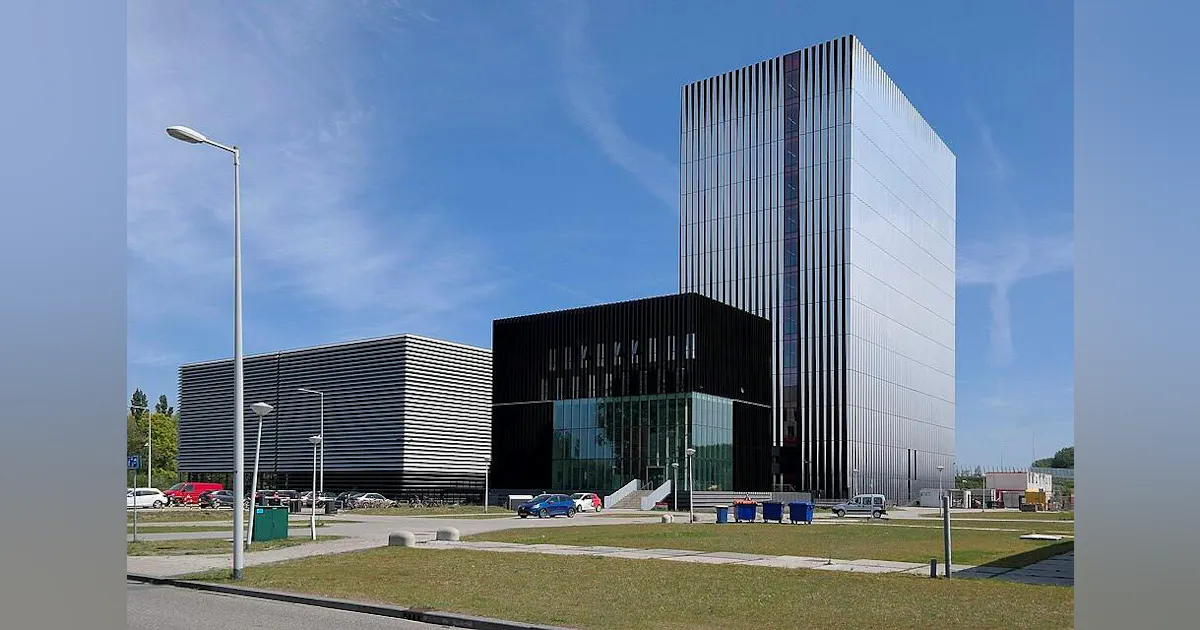
As governments pursue competing approaches to AI regulation and infrastructure development, data center operators face growing pressure to document security controls, verify workload...
DeepSeek-V4.1-Flash-1017 is a minor update to DeepSeek-V4.1-Flash, delivering substantial improvements across reasoning, coding, agentic tasks, and visual benchmarks. Alongside these gains, the model reduces task execution time and output length, enabling users to complete…
We present a dual-locking method for securing trained neural networks that combines key-driven index permutation with PIN-based watermarking based on Sparse Quantization Index Modulation (QIM). Cryptographic randomness is introduced by independently applying a uniform random…
Reliable breast ultrasound lesion segmentation requires accurate boundaries and evaluation that prevents patients or duplicate images from crossing data splits. We propose Channel Local Contrast (CLC), a compact refinement of the YOLO26 segmentation prototype head. CLC adds a…
Neural operators provide fast surrogates for time-dependent PDEs, but autoregressive deployment creates a refinement-allocation problem: prediction errors vary over space and time, while only a finite number of local corrections can be committed along a trajectory. We formulate…
Similarity-based retrieval is the dominant rule for conditioning large language models (LLMs) in in-context learning, retrieval-augmented generation, and prompt-based time series forecasting. The rule concentrates on near-duplicate candidates, an issue that has motivated…