Keybytes Modular Keyboard: $900 Full Size [2026]
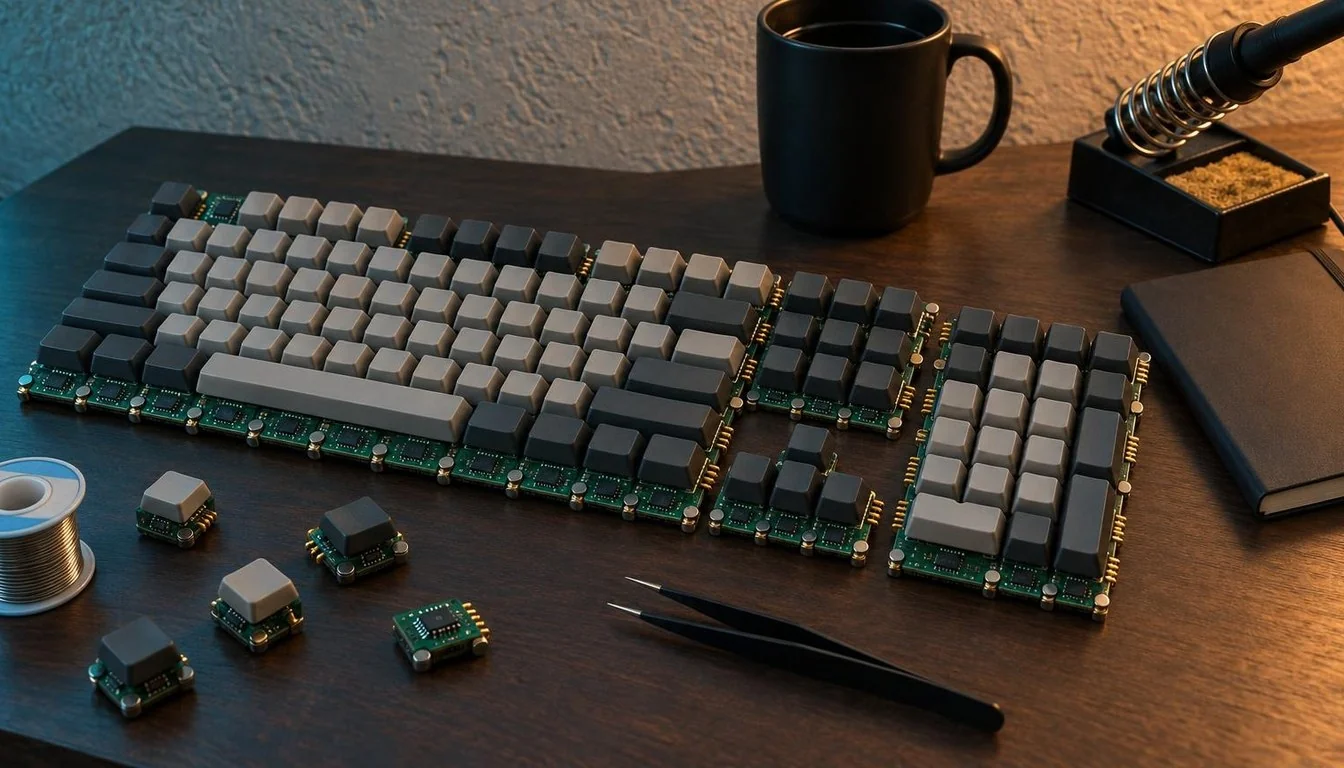
Keybytes is an open-source modular keyboard with magnetic keys, a RISC-V chip in each key, and a $900 full-size estimate. Here is what is confirmed.
Read moreThe top stories in the fields you follow, at 08:00 your time.

Keybytes is an open-source modular keyboard with magnetic keys, a RISC-V chip in each key, and a $900 full-size estimate. Here is what is confirmed.
Read moreOmnichat, an AI-native marketing and customer experience platform, today announced a US$10 million Series A funding round led by Openspace Capital, with participation from Darwin Ventures and Acorn Pacific Ventures.
Read moreOpenAI Group PBC today released GPT-6.1 Terra, an upgrade to the middle tier model in its lineup of frontier artificial intelligence systems. The new model, the successor to GTP-5.6 Terra, costs around 50% less while handling computer use tasks faster and with greater accuracy.
Read moreOmnichat, an AI-native marketing and customer experience platform, today announced a US$10 million Series A funding round led by Openspace Capital, with participation from Darwin Ventures and Acorn Pacific Ventures.
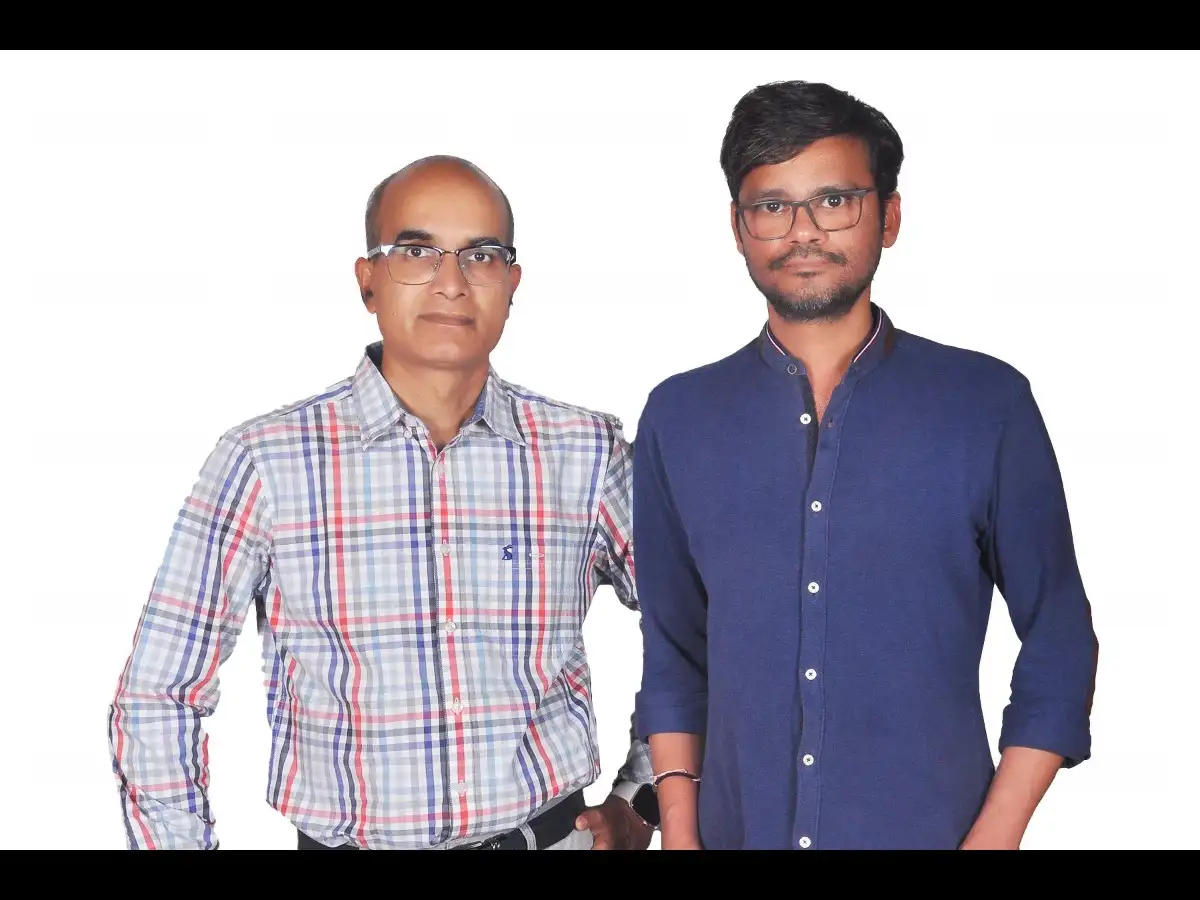
Read moreFounded by IIT Kanpur alumni Anish Priyadarshi and Sanjeev Kumar, the startup is developing a short-wave infrared (SWIR) sensor that can help cameras capture images in low light and through smoke, haze,
Read moreMicro LED optical interconnect is gaining momentum in 2026. Two recent developments highlight growing interest in the emerging field: S. AR
Read moreBy Aditya Soni, Prakhar Srivastava and Saeed Azhar Oct 26 (Reuters) - Bank of America, Blackstone, Citi and Morgan Stanley will provide $63 billion in financing to buy Broadcom's AI chips and networking gear for Anthropic,
Read moreBraiin launches Force AI for RADIUS. Understand model choices, Engage/Assist/Insight roles, enterprise-knowledge retrieval and workflow actions.
Read moreTemplate-based crystal structure prediction (CSP) transfers a known crystal structure to a new composition by element substitution, so its accuracy depends on retrieving suitable templates, mapping elements and ranking the resulting candidates correctly. Auditing the original TCSP2.0 implementation on the T180 benchmark, we found that 469 of its 2,347 selected structures (20%) have the wrong composition, caused by element mappings that ignore stoichiometric coefficients and by sequential text substitution that cascades or corrupts element symbols. We propose TCSP3.0, which enforces coefficient-preserving mappings, substitutes species simultaneously on parsed structures and validates every candidate's composition and cell. It further adds periodic-number retrieval, soft oxidation-state evidence, radius-compatibility scoring, structural deduplication, and ORB-v3 machine-learning-potential relaxation and energy ranking of its candidates, as used by deep generative CSP baselines. TCSP3.0 achieves Top-1 and Top-20 match rates of 72.2% and 90.6% on T180, compared with 28.3% and 45.6% for TCSP2.0, and a Top-20 match rate of 74.0% on a new 800-target benchmark (T800). On T180 it also…
As Vision-Language Models (VLMs) increasingly enable robots to follow language instructions, understanding their navigation decisions becomes important for reliable deployment. Existing explainability methods overlook a key challenge in Vision-Language Navigation (VLN): evidence for the current action may be distributed across historical and current observations and associated with different instruction stages. We identify instruction-stage insensitivity, where existing methods produce similar explanations despite changes across different navigation stages. To address this issue, we propose a stage-aware attribution framework for VLN. We first construct action-conditioned temporal instruction--visual attributions across observations. These attributions are projected into instruction space to estimate stage associations, which guide the aggregation of relevant historical evidence for refining the current explanation. An instruction-guided spatial filter further suppresses isolated responses while preserving compact, instruction-relevant regions. Experiments across multiple VLN policies and benchmarks show improved attribution quality over existing methods. We further demonstrate…
GEPA is among the strongest reflective prompt optimizers for language-model programs, but its system-aware merge operator is unstable across models: merge improves gpt-4.1-mini on average while degrading Qwen3-8B, an asymmetry noted but left unexplained by the GEPA paper. We investigate this instability across five datasets and two models. Our nine-configuration sweep over merge timing and merge operator shows that merge can improve both models when configured appropriately. This suggests that merge instability is better explained by configuration sensitivity than by an inherent flaw in the merge operator. We then test whether prompt-level features predict GEPA's merge-accept decisions and find that they do not, ruling out static-feature gating. As a proof of concept, a behavior-based probe built from these diagnostics avoids large merge failures in our multi-seed runs by abstaining on high-risk tasks, although it does not consistently outperform NoMerge. Code is available as GEPA-MergeProbe at https://github.com/ChongZZZZ/GEPA_MERGE .
The differential neural tangent kernel (DNTK) is a tool for analyzing the training dynamics of overparameterized physics informed neural networks. In this work, we investigate the symmetry of the infinite DNTK under an orthogonal group, for two layer and deep neural networks separately, based on the explicit expression of the DNTK and recursive formula, respectively. The results are for all activations with or without a bias term, and shed insight into the structure of the infinite width DNTK. Then we prove that the integral operators over the unit sphere induced by operators from the same group orbit share the spectrum, and their reproducing kernel Hilbert spaces differ only by an orthogonal transformation, and that the operator fixed DNTK exhibits zonal symmetry on the unit sphere for symmetric operators. Thus the eigenvalue decay rate of the associated integral operator can be derived for shallow networks with RePU activation and zero bias initialization.
Structured scientific spectra encode rich physical information while obeying hard constraints, such as conservation laws and characteristic spectral geometry. Accurate prediction of these spectra is central to materials discovery, yet existing methods often treat them as unconstrained sequences and therefore fail to enforce the underlying physical structure. Taking electronic density of states (eDOS) as the prototypical example, we introduce DeepSciReasoner, a general paradigm for predicting scientific spectra under physical constraints. The framework combines structure-aware spectrum decoding with constraint-preserving physical reasoning, allowing predictions to capture rich spectral structure while respecting the underlying physics. We evaluate DeepSciReasoner on eDOS, phonon density of states (phDOS), X-ray absorption near-edge structure (XANES), and Raman spectra, where it substantially improves prediction accuracy while maintaining physical consistency. These results establish DeepSciReasoner as a reusable blueprint for structured scientific spectrum prediction under hard physical constraints.
Engineering predictions require physical mechanisms to be translated consistently into equations, discretization, code, and validation, yet errors can propagate despite local checks. Artificial-intelligence (AI) agents automate scientific tasks, but coordinating and…
Bimanual interaction produces complementary tactile views of the same physical process, yet existing tactile representation learning largely models the two hands independently or combines them only for downstream prediction, leaving their cross-hand relationship unexplored. To…
As generative AI becomes increasingly used in anime-style image creation, distinguishing human-drawn, AI-inpainted, and text-to-image images is important for copyright attribution, visual provenance, and content governance. Existing AI-generated image detectors mainly target…
Byte-Pair Encoding (BPE) constructs subword vocabularies through greedy pair merging, but conventional BPE requires the number of merges or target vocabulary size to be specified externally. Significance-Gain Pair Encoding (SG-BPE) replaces frequency-only selection with a…