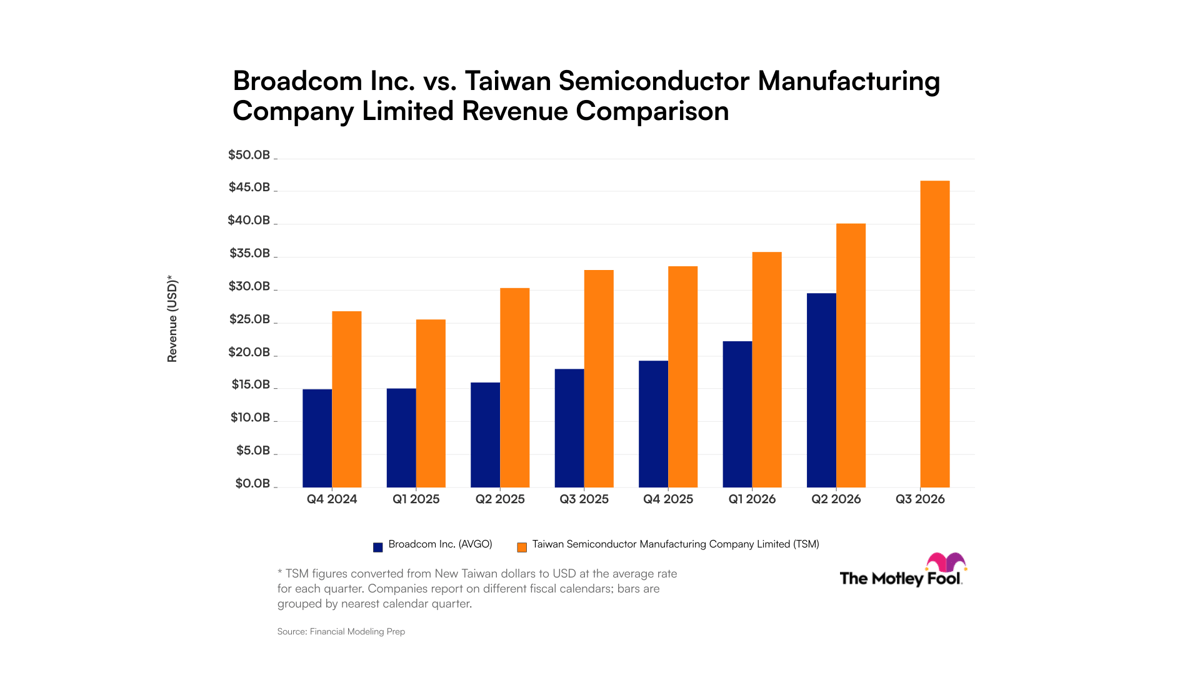
Broadcom and Taiwan Semiconductor are two of the biggest beneficiaries of the AI boom, but their revenue trends reveal a surprising difference in how quickly each business is growing.
While language models have become dramatically more capable, retrieval still largely relies on lexical matching or similarity in fixed embedding spaces. This creates a capability asymmetry: what the retriever fails to find, even the strongest generator cannot recover. We propose DecisionRAG, which brings the capabilities of pretrained language models to retrieval using decision models that jointly evaluate candidate branches in a single forward pass, without generating any tokens, and show that judging candidates in a shared context makes their relevance estimates comparable. Like a person browsing a library, DecisionRAG navigates the corpus's inherent structure from broad topics down to individual passages, deciding at each level which branches are worth exploring. Without task-specific training or a first-stage retriever, DecisionRAG outperforms dense retrieval with an 8B reranker by 13.8 R@1 points on MultiDoc2Dial and 17.4 Hit@1 points on Natural Questions. Across four benchmarks, including a corpus of 2.68 million Wikipedia paragraphs, retrieval takes just 0.7-1.8 seconds per query.
Flint is Recursive’s mixture-of-experts language model for coding agents, with 39.8 billion total parameters and approximately 2.5 billion active per token. It is designed to investigate codebases, fix bugs, implement features, and write tests.
Large language models (LLMs) increasingly mediate human decisions and communication, yet their behavioural regularities remain difficult to characterize systematically. We develop a cross-linguistic psychometric profiling framework and evaluate nine LLMs using seven…
Federated learning (FL) enables collaborative model training without centralizing private data, but performance often degrades under feature skew: clients share labels while the conditional input distributions $p_i(x\!\mid\!y)$ vary due to latent, client-specific appearance…
Reinforcement learning in real-life applications requires safety guarantees during exploration. Typical reinforcement learning algorithms do not provide such guarantees, and many modifications that do rely on Gaussian processes (GPs), which have a large computational cost. We…
Non-technical stakeholders frequently cannot write the SQL needed to extract insights from operational databases. We built and evaluated a Text-to-SQL agent that closes this gap end to end: a six-node LangGraph StateGraph checks question relevance, fetches the live schema,…