Late-stage and angel funding have fallen sharply from their peaks as tighter investment criteria, competition from US AI companies and regulatory changes reshape India's startup financing landscape.
Intel (NasdaqGS: INTC) has joined a US$700 million funding round for AI startup Hark, alongside Nvidia and AMD Ventures. Hark is building AI native hardware and digital assistant foundation models that require substantial computing resources.
People already use OpenAI’s ChatGPT for things like helping with homework and creating presentations. Now, the tech giant claims its AI models are getting…
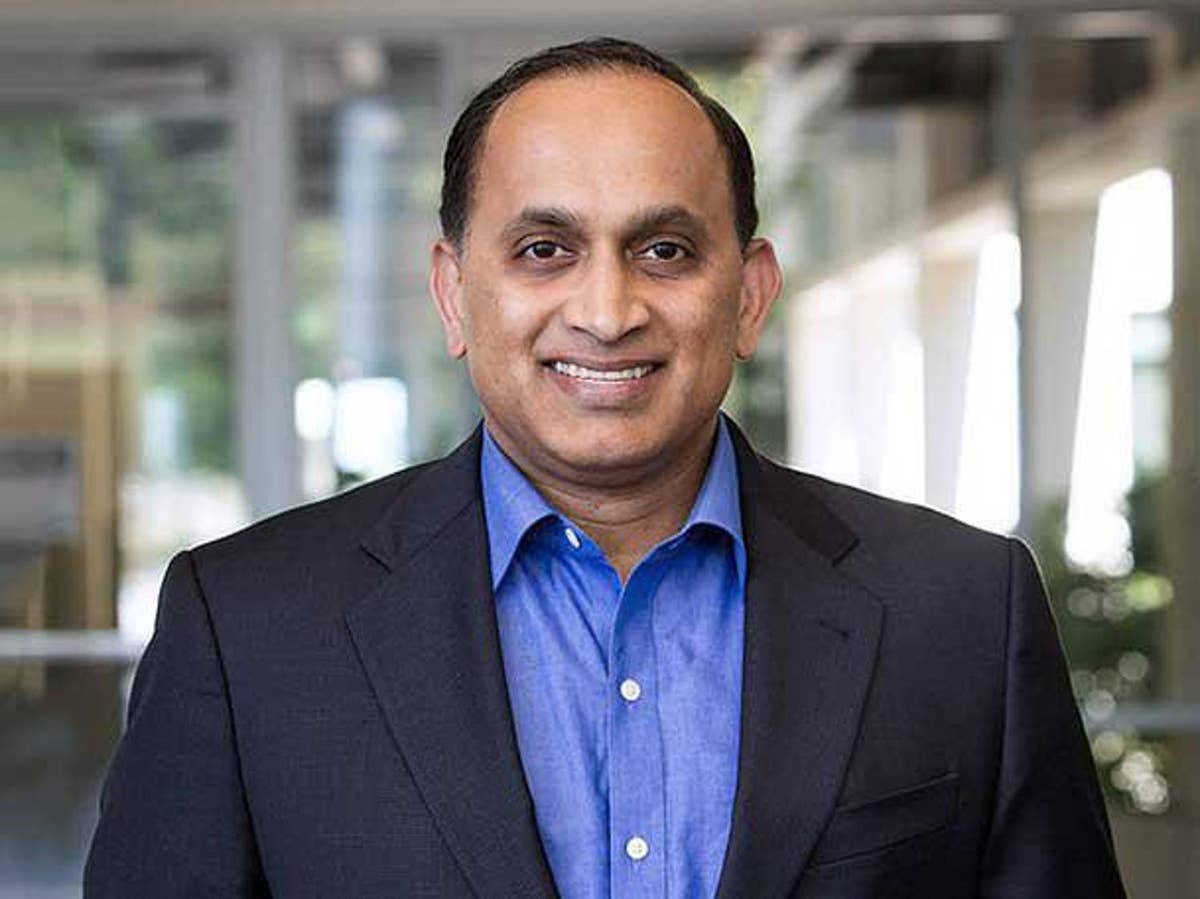
Cohesity CEO Sanjay Poonen outlines AI data security, cybersecurity resilience and Maestro plans for faster recovery and channel partner opportunities.
This voice experience is generated by AI. Learn more. This voice experience is generated by AI. Learn more. Marvell announced an all-stock deal to acquire Lumentum for approximately $115 billion. This transaction combines Marvell's networking silicon ...
Radiologists' visual attention can supervise medical image learning, but how reader panel composition affects its value remains untested. We evaluated GazeRIB (Gaze-guided Radiologist-Informed Blackout), which masks unviewed regions during training and uses unmasked images at inference. Eight experts repeatedly read the same 80 chest X-rays (CXRs). We compared individual readers with three-, five- and eight-reader panels across seven architectures and 10 seeds, evaluating 910 models on a separate 2,897-CXR cohort for four-class severity prediction. Every panel improved macro F1 over the no-gaze baseline by 5.33-7.47 percentage points (pp; Bonferroni-adjusted p < 0.007); no individual reader reached significance on this endpoint. Three readers captured 73-80% of the eight-reader gain in macro F1, the area under the receiver-operating-characteristic curve (ROC-AUC) and the area under the precision-recall curve (AU-PRC). On external validation without retraining, all four panels improved ROC-AUC on SIIM-FISABIO-RSNA by +1.93 to +4.24 pp (p <= 0.004); on MIMIC-Eye no panel differed significantly from baseline, whereas the single-reader average declined (-1.40 pp, p = 0.008). Reader…
Idol turns one picture of an object into a 3D Gaussian splat. Give it a render, a generated image or a photo: it removes the background, frames the object and generates up to 1,048,576 Gaussians, written as a standard 3DGS .ply. It runs on consumer GPUs, using 7.2 GB of VRAM…
Surface electromyography (sEMG)-based silent speech interfaces are limited by cross-user variability and calibration burden. We study a limited-data setting in which each of 27 speech-typical participants contributed less than 0.5 h of data (21.3 min on average) across Aloud…
Long-running AI agents outlive initiating processes through credentials, delegated tasks, queues, callbacks, reservations, and provider-side operations. Cancellation, process exit, and credential revocation neither close every pre-cut carrier nor distinguish independently…
Embedding-based retrieval on user-generated content at the trillion-document scale exposes a sharp conflict between two production demands: deep, expressive personalization for queries with rich user intent, and broad coverage of a massive inventory under fixed latency and…
Drug mechanism-of-action (MoA) modeling commonly relies on perturbational transcriptomes, but matched microRNA (miRNA) measurements are often unavailable. Inferred regulatory features offer a scalable way to reuse these data. Here, we present MIRCID, a framework comparing gene…