Nvidia (NasdaqGS:NVDA) has effectively lost its China AI accelerator market after U.S. export controls restricted advanced GPU shipments. Specialist financiers are structuring large facilities backed by Nvidia GPU inventory,
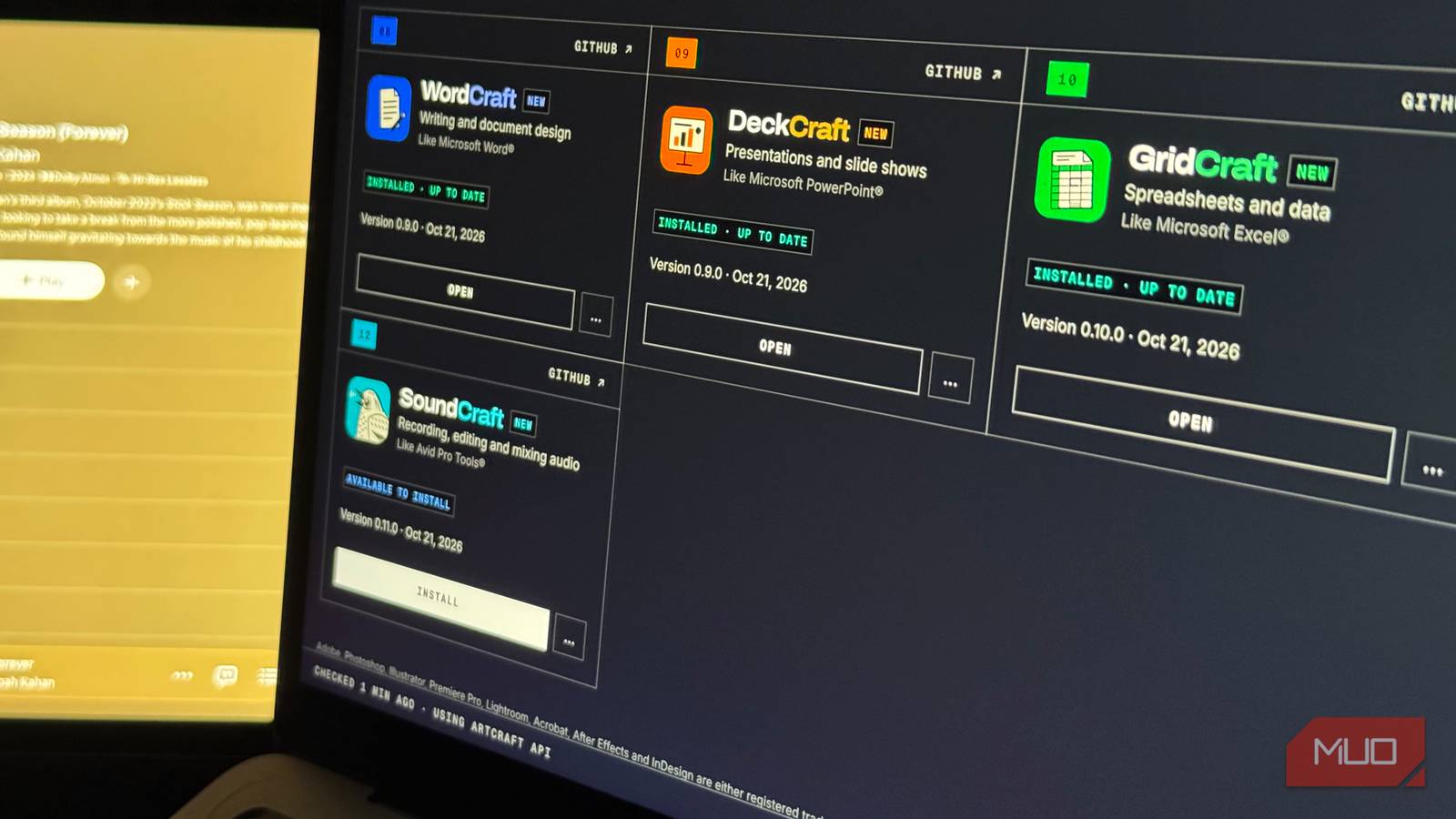
Nvidia is considering a $2,000 annual software fee per GPU for running AI agents. The proposed licensing model could generate billions in recurring revenue, adding to the company's existing AI software business,
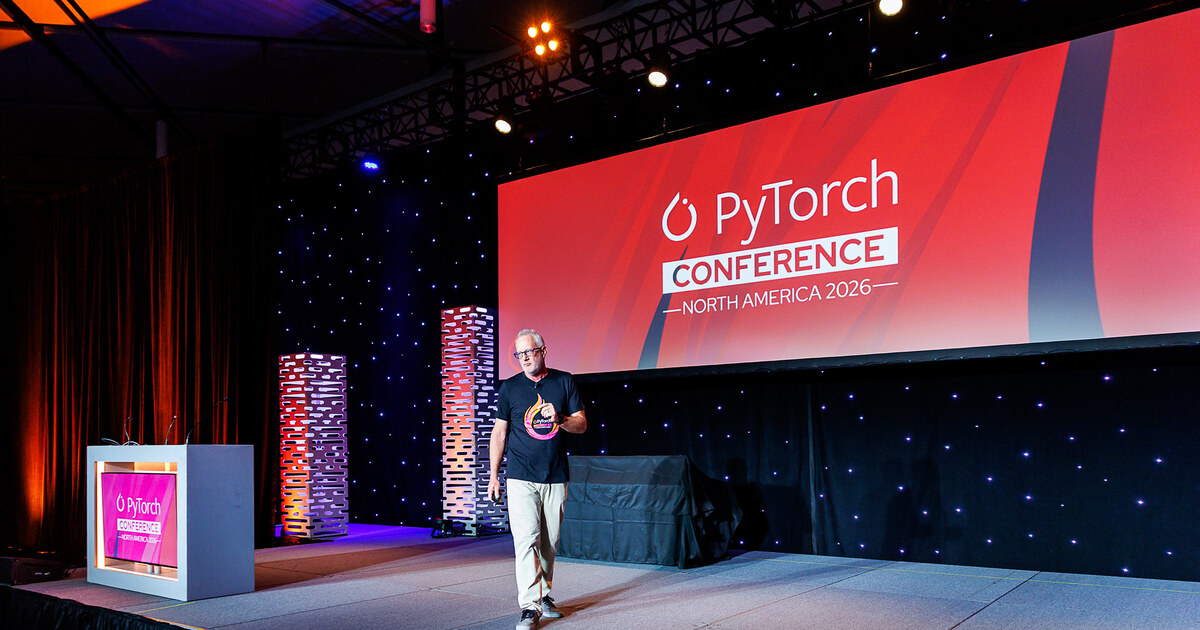
Google and Meta open-sourced TorchTPU, a native PyTorch backend for Google's TPUs, at PyTorch Conference North America 2026, and Meta said it plans to move larger LLM workloads onto TPUs with it. AWS released TorchNeuron for Trainium the same week, while developers questioned TPU availability and where vendor lock-in now sits.
Cardano trades near 0 21 https coinmarketcap com currencies cardano after another difficult week even as developers move closer to the Dijkstra upgrade The network has opened a public testnet but ADA buyers are still waiting for that progress to ...
Controllable 3D part generation is pivotal for digital asset creation, yet existing methods lack the flexibility to accommodate diverse user workflows requiring varying levels of control. In this paper, we introduce FlexPart, a unified image-to-3D part generation framework that supports variable-granularity geometric conditions within a single model. By seamlessly integrating heterogeneous inputs, ranging from sparse points to dense bounding boxes and masks, via gated adaptive modulation, FlexPart unlocks a powerful cross-modal synergy. We also propose an asymmetric geometric guidance mechanism that leverages strong spatial priors to align representations across granularities, improving geometric consistency and facilitating inter-task synergy. Under mask conditioning on PartVerseXL, FlexPart reduces Part CD by 16.6% relative to TripoSG + SAM3D and by 10.5% relative to OmniPart, while maintaining competitive whole-mesh quality. The code can be found at https://github.com/Gucci233/FlexPart
Flint is Recursive’s mixture-of-experts language model for coding agents, with 39.8 billion total parameters and approximately 2.5 billion active per token. It is designed to investigate codebases, fix bugs, implement features, and write tests.
Accurate segmentation of axons in 3D microscopy data is important for analyzing white-matter organization, but dense ground truth labels are expensive to obtain. Existing supervised axon segmentation methods rely on target-domain annotations and can be brittle when tissue type,…
Tool observations dominate the context of software-engineering agents, making long interaction histories costly to maintain. Existing context compression methods can discard information needed by later actions, while adapting agents to soft-token representations can compromise…
Large language model-based multi-agent debate (MAD) systems are being increasingly used as complex decision pipelines in distributed processes. However, their final synthesis phase still remains inadequately controlled. Even with detailed debate logs, summarizing models are…
Position-independent KV cache reuse aims to reduce latency in retrieval-augmented generation by reusing chunk-level KV caches across prompts. We show that current evaluations of KV cache reuse techniques rely on measurements that fail to faithfully capture the loss of accuracy…