As cases spread of generative AI being used to reverse-engineer games and churn out copycats in a short time, indie game developers are canceling demo…
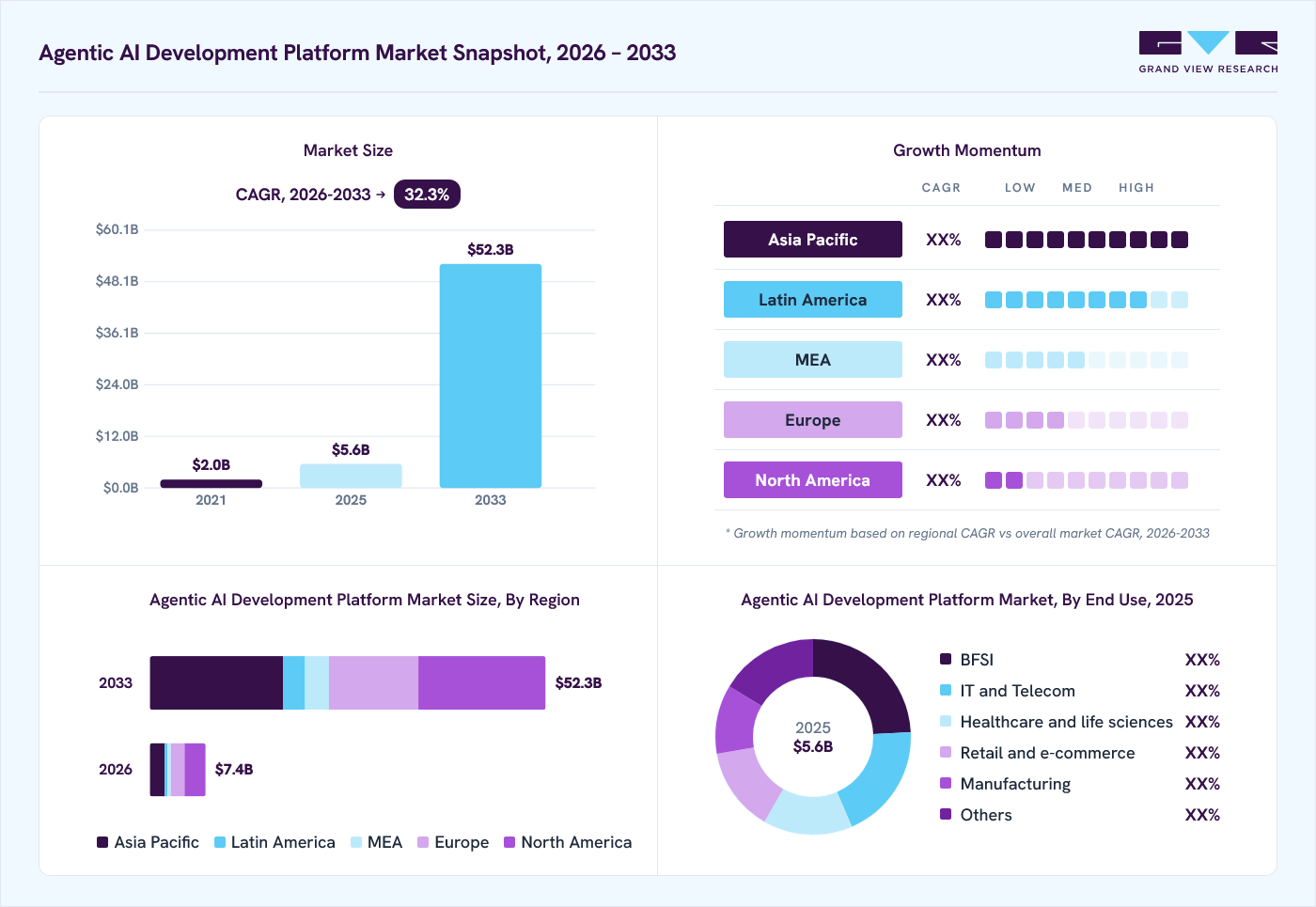
Agentic AI development platform market size was valued at $5.6B in 2025 and is projected to grow from $7.4B in 2026 to $52.3B by 2033, at a CAGR of 32.3%
After futurist Mike Walsh told the NDTV World Summit that AI agents could soon outnumber humans, we asked Indian AI experts how close that is and where the limits should be.
/PRNewswire/ -- Recently, Newborn Town's game-oriented social platform TopTop has launched "Slap Showdown", an AI-powered 3D interactive mini-game developed in...
NVIDIA’s RTX Spark could give Windows on Arm the boost it needs, and Qualcomm Snapdragon laptops might be among the biggest winners. Here’s why NVIDIA’s entry could reshape gaming, local AI, and app compatibility.
This article argues that instruction-fine-tuned language models should be understood as implementing a genre, what is proposed as the instructional-conversational genre. This genre is an amalgamation of discursive language from prior conversations between generative models and humans recursively run through these massive neural networks. It is instantiated in applications through instruction fine-tuning, the inclusion of a pretext known as a system prompt, and the formalization of inputs in mark-up languages characterized by the use of special tokens and role assignment in turntaking structures.
Flint is Recursive’s mixture-of-experts language model for coding agents, with 39.8 billion total parameters and approximately 2.5 billion active per token. It is designed to investigate codebases, fix bugs, implement features, and write tests.
Inserting advertisements (ads) into consumer-facing LLM output is emerging as a new business model, but there is little shared evidence on how such ad insertion should be evaluated or how it affects user preferences. We introduce LLMAdBench, a human-preference benchmark for…
A generalization gap in reinforcement learning, return on training levels minus return on held-out levels, is usually reported without a reference point. We argue that it should be read against a measured random floor: the return of a uniform-random policy on the same levels…
Difference-in-means steering requires activations recorded while a model shows the desired behavior, which a sandbagging model withholds by deliberately underperforming. We introduce Activation Flow (ActFlow), which manufactures these activations from $k$ correct labels without…
Large language models (LLMs) have enabled data-science agents to automate multi-step analyses over heterogeneous files. However, incorrect choices regarding data sources, scope, or statistical definitions often lead to silent errors: computations execute successfully but…