Microsoft now wants to retain a larger portion of that expenditure inside the company. With multi-gigawatt deployments starting in 2027, Microsoft will use its Maia chips to run AI inference across its products and services. There is an obvious potential loser if Microsoft succeeds: Nvidia (NVDA).
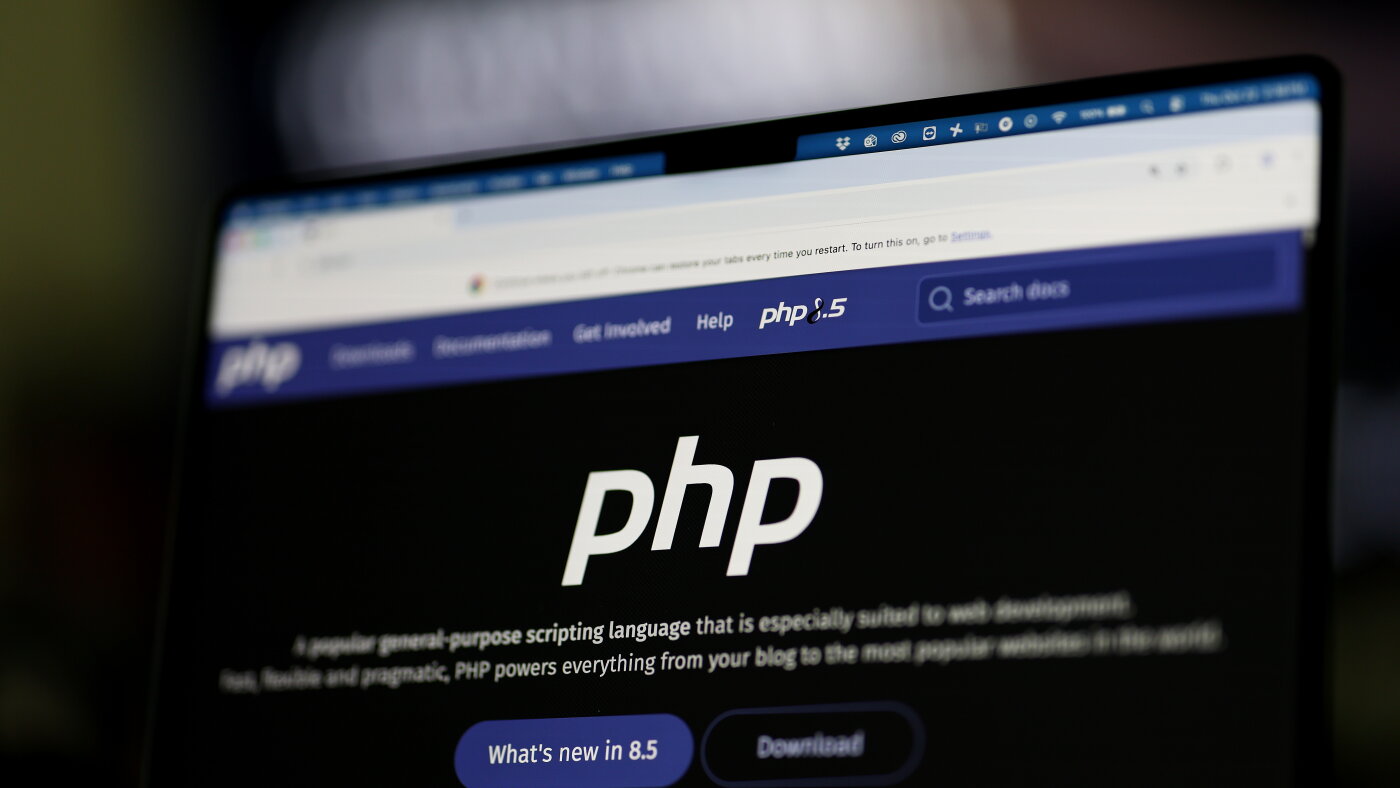
Governments around the world are rushing to implement safety measures after AI technology found 'severe' vulnerabilities in a key programming language called PHP.
When Reflection AI set out to raise $2.5 billion early this year, one of its existing venture backers, B Capital, was eager to invest again in the startup, which has emerged as the most high-profile U.
Mastercard is pairing supplier analytics with Agent Pay safeguards to help AI agents manage B2B purchases, even when payments flow outside its card network.
Spotify reached 788 million monthly active users and nearly €5 billion (about $5.6 billion) in third-quarter revenue, but its earnings call focused on how
Cerebras has lost roughly 72% of its value since its peak, but contrarian tech investor Paul Meeks says its AI technology and massive backlog could fuel a comeback.
Controllable 3D part generation is pivotal for digital asset creation, yet existing methods lack the flexibility to accommodate diverse user workflows requiring varying levels of control. In this paper, we introduce FlexPart, a unified image-to-3D part generation framework that supports variable-granularity geometric conditions within a single model. By seamlessly integrating heterogeneous inputs, ranging from sparse points to dense bounding boxes and masks, via gated adaptive modulation, FlexPart unlocks a powerful cross-modal synergy. We also propose an asymmetric geometric guidance mechanism that leverages strong spatial priors to align representations across granularities, improving geometric consistency and facilitating inter-task synergy. Under mask conditioning on PartVerseXL, FlexPart reduces Part CD by 16.6% relative to TripoSG + SAM3D and by 10.5% relative to OmniPart, while maintaining competitive whole-mesh quality. The code can be found at https://github.com/Gucci233/FlexPart
DeepSeek-V4.1-Flash-1017 is a minor update to DeepSeek-V4.1-Flash, delivering substantial improvements across reasoning, coding, agentic tasks, and visual benchmarks. Alongside these gains, the model reduces task execution time and output length, enabling users to complete…
Linux is already part of the AI developer’s desktop toolkit. Nvidia’s DGX Spark, which became available to order on October The post A few engineers asked IT for Linux. Then it spread to 200 machines. appeared first on The New Stack .
Ming-3.0-audio-flash is a native audio-language model from inclusionAI. It accepts audio together with text instructions and supports speech recognition, spoken question answering, audio understanding, audio reasoning, and optional synthesized-speech responses.