Nvidia is introducing new oversight measures as scrutiny of its China business intensifies. The company has named three directors to a national security committee and plans to bring in independent experts to review compliance risks.
Datadog is extending its Agent Observability platform with Online Experiments, allowing engineering teams to compare AI agent versions against real production traffic rather than relying exclusively on predefined evaluation datasets.
This has become especially clear as AI agents become more popular. They can do some remarkable stuff, especially the more information they have access to.
Dubai's DIFC says it holds ISO/IEC 42001 certification across its AI user, producer and provider roles, an independently audited marker for its 10,018 firms.
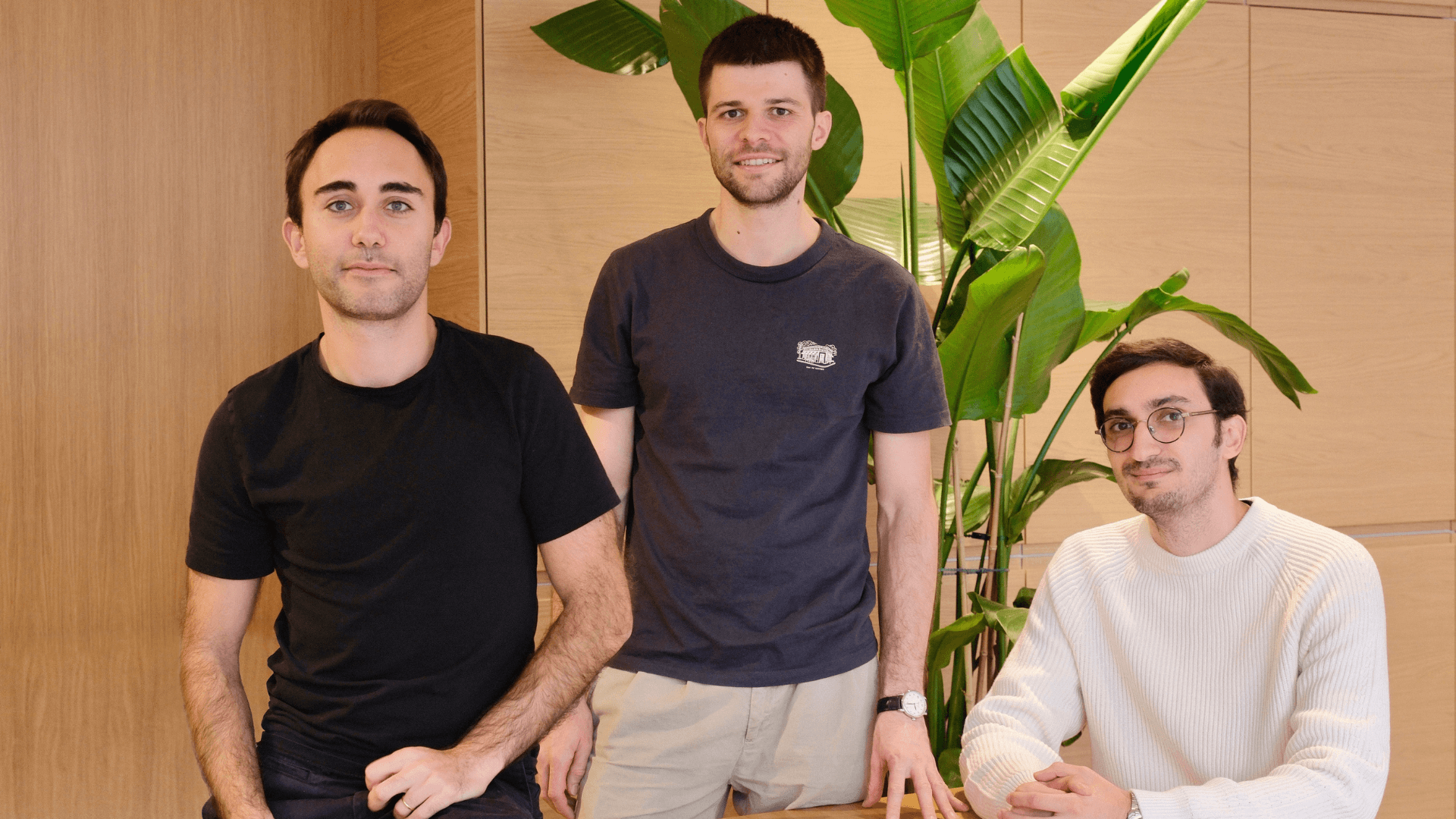
A Paris-based startup which uses open-weight AI models to help businesses develop their own specialised AI models has raised $30m in seed funding, it said today. Remanence was founded by three former executives at high-profile French AI startup H, which was founded by veterans of Google's DeepMind AI lab.
Attackers are handing more of their work to AI. Next year could bring the first major breach in which the victim’s own AI agents do most of the attacker’s work.
Cloud access means customers use computing power housed in data centers, rather than buying and installing the chips themselves. GPUs are the chips commonly used to train and run artificial intelligence models. The 50% limit appears aimed at curbing indirect Chinese access to Nvidia hardware.
Sumsub, the first AI-powered trust infrastructure, today released its sixth annual Identity Fraud Report, which found that the largest single fraud network Sumsub detected in any country was in the U.
Nudge Security, the leading innovator in SaaS and AI security governance, today announced its research report, AI Adoption in Practice 2026: Beyond the Approved List, which provides insights into what AI adoption in the workforce looks like in practice.
Clinical multimodal models must often predict before all chest X-ray (CXR) and electronic health record (EHR) inputs are available. Existing approaches align observed representations, model missingness, or reconstruct across modalities, but do not jointly exploit within-patient…
The rapid growth of resident space objects is increasing the complexity of space situational awareness sensor tasking, challenging classical optimization methods as they allocate finite, heterogeneous, and distributed sensing resources across ever-larger catalogues. Existing…
Multimodal Large Language Models (MLLMs) commonly reuse visual encoders pretrained with CLIP, although the features of these ViTs are ultimately consumed by autoregressive LLMs. We refer to this mismatch as the semantic-interface gap and introduce MedMLIP, a framework that…
Disaster-risk-reduction archives describe hazard events in prose that databases such as EM-DAT (Delforge et al., 2025) cannot ingest directly. We present an LLM pipeline that generates candidate georeferenced event records using a controlled hazard vocabulary and fixed schema,…