Pulse · indianexpress.com
Latest in AI and developer tools
The top stories in the fields you follow, at 08:00 your time.
 Pulse · hackernoon.com
AI coding tools can generate frontend interfaces quickly, but production reliability still depends on API contracts, runtime behavior and engineering judgment.
Read more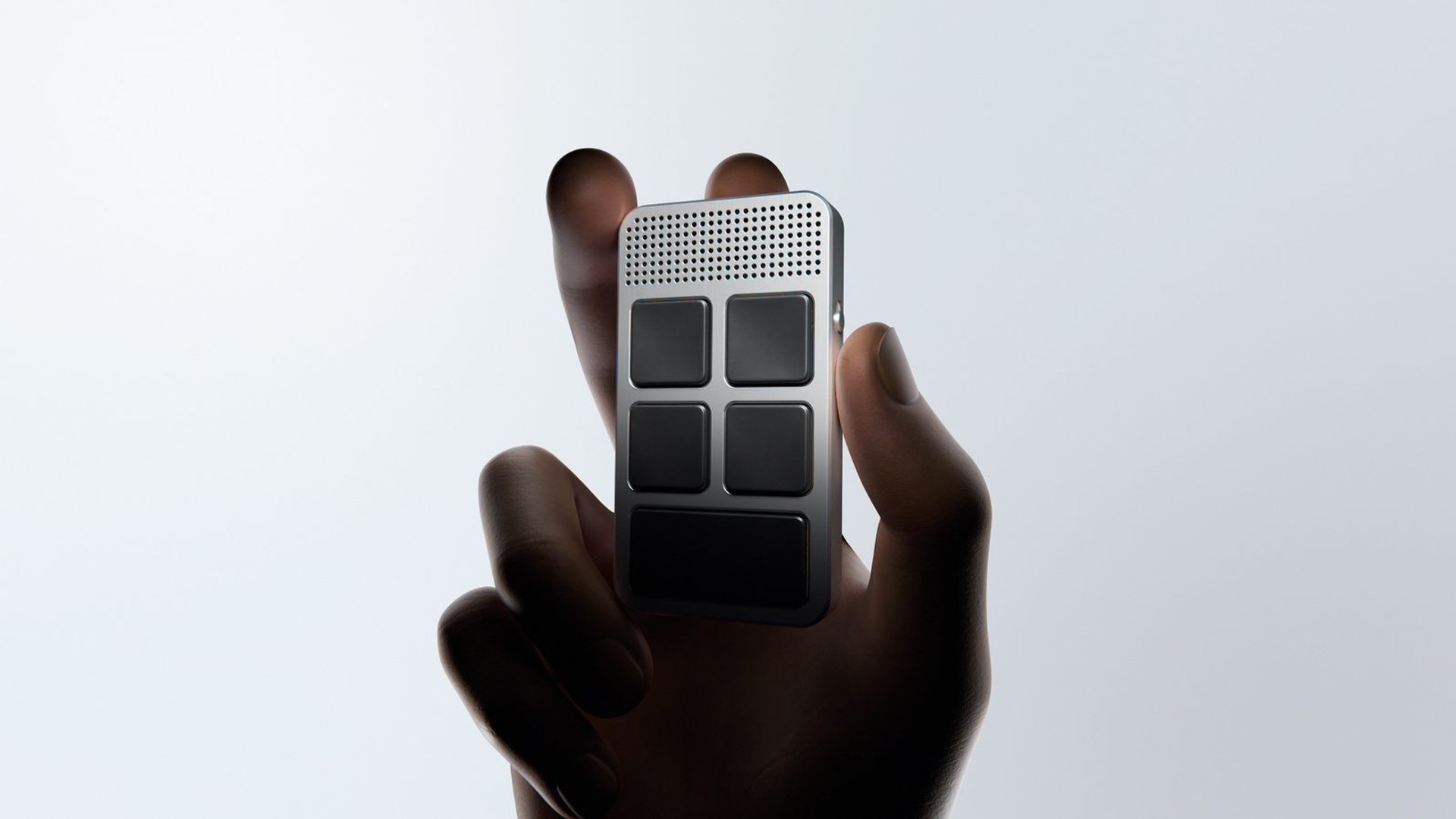 Pulse · unite.ai
Genspark launched SecondBrain VoicePad on November 24, 2026, a five-key desktop controller for Windows and macOS that dictates text, opens applications and triggers AI workflows. The company said preorders were available...
Read more Pulse · notebookcheck.net
CISA flagged CVE-2026-133968 (CVSS 9.8) after autonomous Cairn AI agents found and exploited a root zero-day in MONAI Label. Update to version 0.8.6 before Nov 26.
Read more Pulse · itweb.africa
Retail’s next competitive advantage may lie not just in attracting shoppers, but in ensuring AI agents recommend its products.
Read more Pulse · startupfortune.com
Build an AI agent kill switch with a per-run budget breaker, a global halt flag and revocable credentials, plus a worked cost example and test drill.
Read more Pulse · winbuzzer.com
SpaceX rents computing power to its AI model rivals Anthropic and Google, and can earn more by such deals than using it for own AI models, according to Elon Musk.
Read more Pulse · pymnts.com
The more money a company processes, the more data it collects, the more leverage it gains and the harder it becomes to displace. That, at least, was the
Read more Pulse · infoworld.com
Healthcare taught me that accountability needs a chain of custody. Multi-agent AI systems break that chain at every handoff.
Read moreBeam is a sparse Mixture-of-Experts (MoE) model with 501.3B total parameters and 23.4B active parameters, specifically built and optimized for coding, reasoning, and agentic workloads. Beam delivers frontier level reasoning, while requiring 3-4x less inference compute than many models of its class. Pretrained on 23.8T diverse, curated, high-quality tokens, Beam features a 1M-token context window achieved through a novel two-stage midtraining phase, built on verifiable, correctness-anchored data. Post-training leveraged a large-scale, fully asynchronous reinforcement learning (RL) campaign across 10.5K GB300 GPUs, generating over 100M rollouts over 4 weeks of training. We believe this is one of the largest scale RL runs conducted by any open lab to date. Across our evaluation suite, capabilities continued to improve as we increased RL compute, with no sign of a plateau. Supported by deep hardware-model co-design, FP8/NVFP4 quantization, and a 1.93B-parameter speculative decoding drafter (DFlash 2), Beam maximizes serving throughput with efficient, flexible deployment. Averaged across conversation turns and harm categories, Beam refuses or pivots on 88.9% of harmful requests while…
Video understanding, particularly with accompanying audio, remains a central challenge in multimodal intelligence. In this report, we introduce \textbf{WeMM-Video}, a family of Chinese-English bilingual omni-modal foundation models spanning 2B, 4B, 9B, and 35B-A3B variants. Centering on joint audio-visual perception and reasoning, WeMM-Video unifies text, image, audio, and video processing within a hybrid-thinking paradigm, seamlessly supporting both a non-thinking instruct mode for fast, direct responses and a thinking mode for explicit step-by-step reasoning. The models are trained on a large-scale multimodal corpus of approximately 1.2 trillion tokens through progressive pre-training and a multi-stage post-training pipeline incorporating multi-teacher OPD, anti-repetition MrDPO, and specialist RL. Evaluated across more than 120 benchmarks, WeMM-Video demonstrates superior performance in omni-modal video understanding and reasoning, while maintaining highly competitive capabilities across general audio, silent video, image, and text tasks. Specifically, in omni-modal video evaluations, our flagship WeMM-Video-35B-A3B establishes a new open-source state of the art, substantially…
Hy-MT3 is the third generation of the Hunyuan multilingual translation model family, including \textbf{Hy-MT3-1.8B}, \textbf{Hy-MT3-7B} and \textbf{Hy-MT3-30B-A3B (MoE)}. Compared with Hy-MT2, Hy-MT3 translates \textbf{more accurately, more completely and more faithfully to user constraints}: on real-world scenario data, the share of samples with mistranslations is reduced by \textbf{43\%}, omissions or additions by \textbf{74\%}, and instruction-following errors by \textbf{40\%}, while language coverage is expanded from \textbf{38 to 102} languages. With only 3B activated parameters, \textbf{Hy-MT3-30B-A3B achieves the best overall performance among all evaluated models in non-thinking mode}, including flagship models such as Qwen3.8-Max, Kimi-K3.1-Pro and DeepSeek-V4.1-Flash, and approaches the strongest closed-source thinking models such as GPT-6.1-Sol and Gemini-4-Argon, while surpassing models that consume \textbf{more than 30$\times$} its inference compute. Beyond general translation, Hy-MT3 is optimized for two industrial scenarios. For \textbf{game localization}, built with high-quality game-domain data and a professional evaluation system from the Honor of Kings team,…
We introduce Clover-35B-A3B-Preview (Clover), a mixture-of-experts diffusion language model with 35 billion total parameters and 3 billion activated parameters, supporting thinking-mode generation. Clover adapts Gated Delta Networks to block diffusion by combining recurrent memory of previously generated context with bidirectional softmax attention inside the current block. Historical memory readout competes with current-block tokens in a shared softmax, with learnable block-size calibration and a separate, zero-initialized right-context convolution branch. Clover leads the seven evaluated agent metrics, including 73.6 on SWE-bench Verified and 51.7 on Terminal-Bench 2.1. On internal agent workloads, it reaches a reported generation speed of 680 tokens/s using one NVIDIA GB300 GPU at BF16 precision and batch size one. We organize the evaluation around model quality, drafting and verification costs, and deployment under constrained memory. We also describe a decision-model variant that generates answers to related questions in one denoising pass. On an internal set of 500 groups, joint prediction raises question accuracy from 90.37% to 93.88% and all-correct group accuracy from…
We present WeMM-Ecom, a family of multimodal large language models that deliver frontier e-commerce capabilities while achieving state-of-the-art general-purpose performance at their respective scales. The family spans five sizes, from a 0.8B dense model to a 35B mixture-of-experts model with 3B active parameters. Our training pipeline begins with two-stage continued pre-training that progressively raises the proportion of e-commerce data within a diverse multimodal data mixture, followed by hybrid-thinking post-training that combines on-policy distillation and reinforcement learning to support both non-thinking and thinking modes. For evaluation, we construct a comprehensive suite of 28 e-commerce benchmarks (23 in-house and five open-source) covering eight business scenarios and complement it with 64 public general-purpose benchmarks. On the e-commerce suite, WeMM-Ecom-35B-A3B surpasses substantially larger open-source flagship models, including Qwen3.8-Flash-Next, HY4, and DeepSeek-V4.1-Flash. On the general-purpose suite, every WeMM-Ecom model surpasses its similarly sized Qwen3.5 counterpart, with the lightweight variants (e.g., WeMM-Ecom-2B) showing clear advantages over…
Multimodal large reasoning models (MLRMs) have demonstrated remarkable capabilities in complex visual understanding. However, this very power introduces a critical yet underexplored privacy threat: adversaries can exploit MLRMs to precisely infer users' geographic locations…
Conventional tokenizers represent text as characters or statistically derived subwords, overlooking the internal phonological structure of syllables and often requiring large vocabularies. We introduce \textbf{Phonemic Tokenizer}, a linguistically motivated tokenizer for…
High-speed tracking of small, fast-moving organisms in their natural environments is important to better understand their behavior and ecology. Traditional frame-based imaging suffers from motion blur due to low temporal resolution, and data storage limitations, propelling a…
Table extraction suffers from frequent structural errors and semantic hallucinations. We propose PrismAlign, a multi-VLM framework aligning diverse visual perspectives to resolve ambiguity. It integrates priors of table logic to assess output plausibility, decoupling structural…