Akedo has turned AI game creation into a hot crypto trade while NEAR Protocol is pushing deeper into AI services for businesses Both have working ideas but retail buyers face a familiar problem AlphaPepe enters this fight with a more ...
Leveraging an innovative attack vector that targeted thousands of AI servers, a recent botnet used poetry to build a network of interconnected crypto miners.
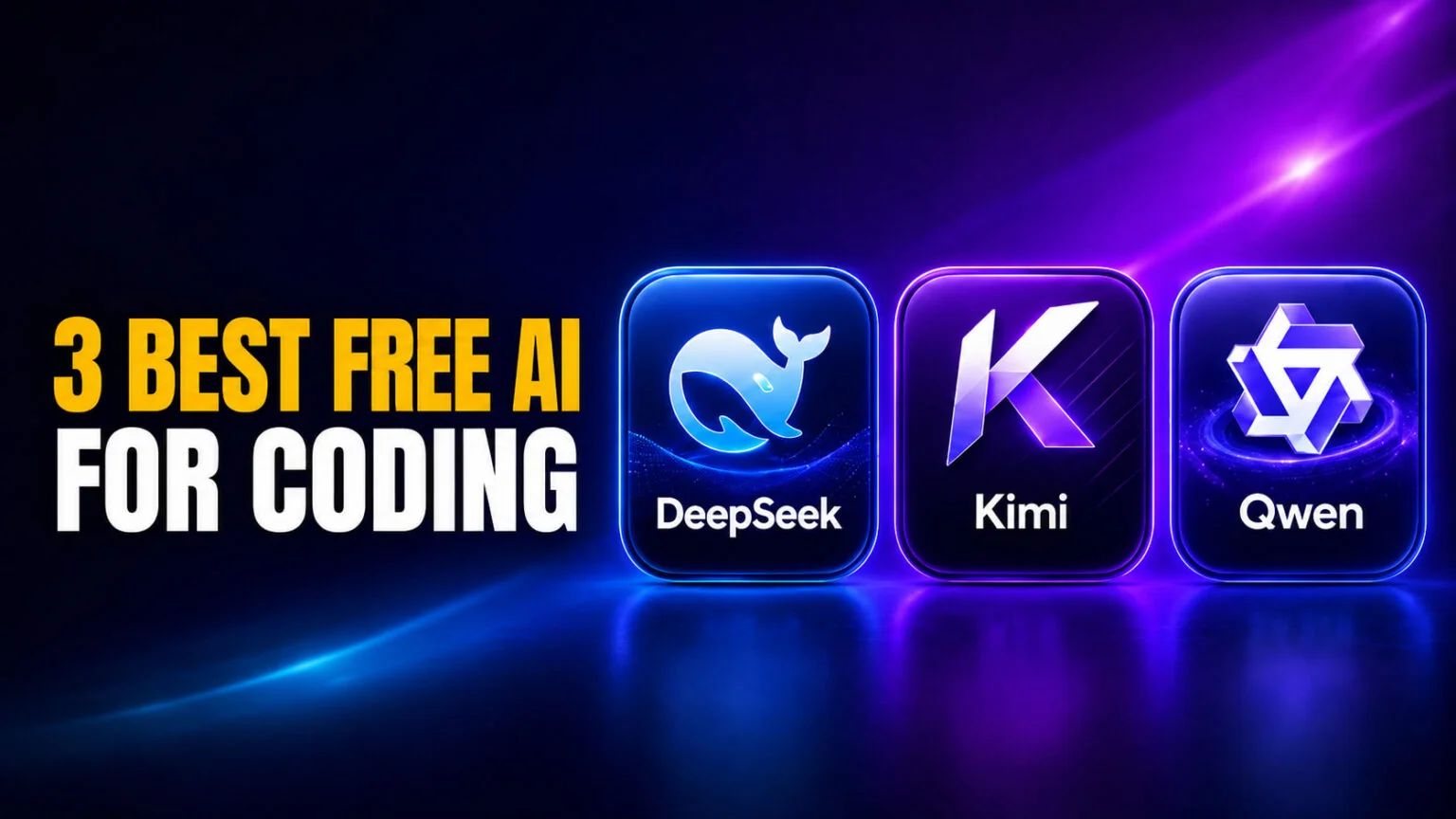
DeepSeek V4 Pro, Kimi K2.6 and Qwen 3.6 are the best free AI for coding in 2026. Compare SWE-Bench scores, free access paths, and pick the right model.
Controllable 3D part generation is pivotal for digital asset creation, yet existing methods lack the flexibility to accommodate diverse user workflows requiring varying levels of control. In this paper, we introduce FlexPart, a unified image-to-3D part generation framework that supports variable-granularity geometric conditions within a single model. By seamlessly integrating heterogeneous inputs, ranging from sparse points to dense bounding boxes and masks, via gated adaptive modulation, FlexPart unlocks a powerful cross-modal synergy. We also propose an asymmetric geometric guidance mechanism that leverages strong spatial priors to align representations across granularities, improving geometric consistency and facilitating inter-task synergy. Under mask conditioning on PartVerseXL, FlexPart reduces Part CD by 16.6% relative to TripoSG + SAM3D and by 10.5% relative to OmniPart, while maintaining competitive whole-mesh quality. The code can be found at https://github.com/Gucci233/FlexPart
Flint is Recursive’s mixture-of-experts language model for coding agents, with 39.8 billion total parameters and approximately 2.5 billion active per token. It is designed to investigate codebases, fix bugs, implement features, and write tests.
Conversational AI systems produce fluent, socially appropriate responses, yet whether they participate in cooperative communication or merely simulate its surface forms remains unclear - a question central to how these systems are evaluated, trusted, and designed. This study…
Open-vocabulary 3D scene mapping aims to build a persistent representation of the objects in an environment. Existing systems typically rely on engineered mapping pipelines to associate observations, merge information across views, and maintain a consistent scene representation…
Operators for interfacial problems are trained on reference solutions produced by the solver they are intended to replace. This work develops a data-free physics-informed neural operator for level-set interface advection, in which the interface is the equation's unknown and the…
Natural audio-visual interaction is emerging as an important interface for AI assistants, allowing users to communicate through speech and vision rather than carefully composed text prompts. However, existing benchmarks of interactive capabilities still focus primarily on…